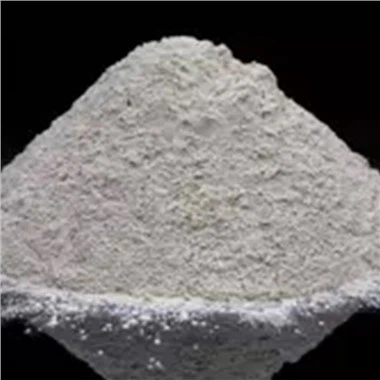
Hey there! As a supplier of Pating Grade Organoclay, I often get asked about the wear resistance of Pating Grade Organoclay - modified materials. So, I thought I'd take some time to break it down for you all.
First off, let's understand what Pating Grade Organoclay is. It's a special type of organoclay that's been formulated for use in painting applications. You can check out our Fine Powder Organoclay and Guanual Painting Grade Organoclay on our website for more details. These organoclays are used to modify various materials, enhancing their properties and performance.
Now, let's dive into wear resistance. Wear resistance refers to a material's ability to withstand the effects of wear, such as abrasion, friction, and erosion. When we talk about Pating Grade Organoclay - modified materials, the addition of this organoclay can significantly improve their wear - resistant properties.
One of the main reasons for this improvement is the unique structure of Pating Grade Organoclay. It has a layered structure that can intercalate with the polymer matrix of the material being modified. This intercalation creates a kind of reinforcement within the material. When the material is subjected to wear, the organoclay layers act as a barrier, preventing the rapid removal of the polymer matrix. It's like having a shield within the material that protects it from the forces of wear.
For example, in paint applications, when Pating Grade Organoclay is added to the paint formulation, it can enhance the paint's ability to resist scratches and abrasions. Imagine a painted surface in a high - traffic area, like a hallway or a commercial building. Without the addition of organoclay, the paint might start to show signs of wear very quickly, like chipping or peeling. But when Pating Grade Organoclay is present, the paint can maintain its integrity for a much longer time.
In coating materials, the wear - resistant property provided by Pating Grade Organoclay is also crucial. Coatings are often used to protect the underlying substrate from damage. A coating with good wear resistance can ensure that the substrate, whether it's metal, wood, or plastic, remains protected for an extended period. The organoclay - modified coating can withstand the mechanical forces that would otherwise cause it to break down, such as rubbing against other objects or being exposed to harsh environmental conditions.
Another aspect to consider is the dispersion of Pating Grade Organoclay in the material. Proper dispersion is key to achieving the best wear - resistant results. When the organoclay is well - dispersed in the polymer matrix, it can form a more uniform reinforcement network. This uniform network provides consistent protection against wear throughout the material. If the dispersion is poor, there might be areas in the material where the wear resistance is compromised, leading to uneven wear and potentially premature failure of the material.
To achieve good dispersion, we need to use appropriate processing techniques. For instance, in some cases, high - shear mixing can be used to break down the organoclay aggregates and ensure that the individual layers are evenly distributed in the polymer. This might involve using specialized mixing equipment, like a high - speed disperser or an extruder, depending on the type of material being modified.
The amount of Pating Grade Organoclay added to the material also plays a role in its wear - resistant performance. Generally, within a certain range, increasing the amount of organoclay can lead to an improvement in wear resistance. However, there's a limit. Adding too much organoclay can cause issues such as increased viscosity of the material, which can make it difficult to process. It can also lead to agglomeration of the organoclay particles, which is counterproductive for wear resistance. So, finding the optimal amount of organoclay is a balancing act that requires some experimentation and knowledge of the specific material system.
In real - world applications, the wear - resistant properties of Pating Grade Organoclay - modified materials have been proven time and time again. For example, in the automotive industry, where paint and coatings need to withstand the rigors of daily use, Pating Grade Organoclay - modified products are being used. The paint on cars needs to resist scratches from rocks and debris on the road, as well as the friction from car washes. By using organoclay - modified paint, car manufacturers can ensure that the exterior of the car looks good for a longer time, which is important for both the aesthetic and resale value of the vehicle.


In the furniture industry, Pating Grade Organoclay - modified coatings can be used to protect wooden furniture. Wood is a relatively soft material, and it can be easily damaged by scratches and abrasions. A coating with good wear resistance can keep the furniture looking new for years, even with regular use.
If you're in an industry that requires materials with high wear - resistant properties, Pating Grade Organoclay could be the solution you're looking for. Whether you're in the paint, coating, or any other related industry, our Pating Grade Organoclay products can help you enhance the performance of your materials. We've been supplying high - quality Pating Grade Organoclay for years, and we have a team of experts who can provide you with technical support and guidance on how to use our products effectively.
If you're interested in learning more about our Pating Grade Organoclay or want to discuss potential applications for your business, don't hesitate to get in touch. We're always happy to have a chat and see how we can work together to meet your needs. Let's explore the world of wear - resistant materials with Pating Grade Organoclay!
References:
- "Organoclay - Polymer Nanocomposites: Synthesis, Properties, and Applications" - A comprehensive book on the topic of organoclay - modified polymers, which provides in - depth knowledge about the structure and performance of these materials.
- "Advances in Coating Technology" - This journal often publishes research on the improvement of coating properties, including wear resistance, through the use of additives like organoclay.
- "Paint and Coating Formulation for High - Performance Applications" - A valuable resource that discusses how different additives, such as Pating Grade Organoclay, can be used to enhance the performance of paint and coating materials.