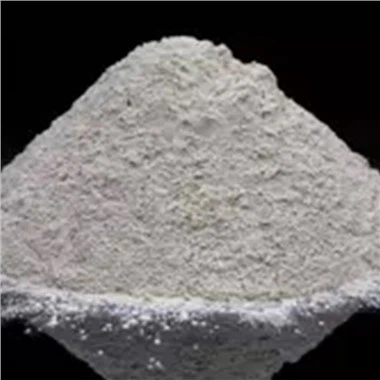
Hey there! As a supplier of Sodium Carboxymethyl, I often get asked about the viscosity of Sodium Carboxymethyl solution. So, I thought I'd write this blog to share some insights on this topic.


First off, let's understand what Sodium Carboxymethyl is. It's also known as CMC (Carboxymethyl Cellulose). CMC is a cellulose derivative where some of the hydroxyl groups in the cellulose are replaced with carboxymethyl groups. This makes it water - soluble and gives it some really useful properties. You can find more about it here: CMC Carboxymethyl Cellulose.
What is Viscosity?
Before we dig into the viscosity of Sodium Carboxymethyl solution, let's quickly talk about what viscosity is. Viscosity is basically a measure of a fluid's resistance to flow. Think of it this way: honey is more viscous than water. Honey flows slowly because it has a high resistance to flow, while water flows easily because it has a low resistance to flow.
Factors Affecting the Viscosity of Sodium Carboxymethyl Solution
There are several factors that can affect the viscosity of a Sodium Carboxymethyl solution.
Concentration
One of the most significant factors is the concentration of the Sodium Carboxymethyl in the solution. As you increase the concentration of CMC in water, the viscosity of the solution goes up. This is because more CMC molecules are present in the solution, and they start to interact with each other. These interactions create a sort of network within the solution, which makes it more difficult for the fluid to flow. For example, a 1% CMC solution will have a lower viscosity compared to a 3% CMC solution.
Degree of Substitution (DS)
The degree of substitution refers to the number of carboxymethyl groups that have replaced the hydroxyl groups in the cellulose molecule. A higher degree of substitution generally leads to a higher viscosity in the solution. When there are more carboxymethyl groups, the CMC molecules can form stronger interactions with water molecules and with each other. This results in a more viscous solution.
Molecular Weight
The molecular weight of the Sodium Carboxymethyl also plays a role. Higher molecular weight CMC has longer polymer chains. These long chains can entangle with each other, creating a more complex structure in the solution. As a result, the solution becomes more viscous. So, if you're looking for a highly viscous solution, you might want to choose a CMC with a high molecular weight.
Temperature
Temperature has an inverse relationship with the viscosity of Sodium Carboxymethyl solution. As the temperature increases, the viscosity decreases. When you heat the solution, the molecules gain more energy and start to move more freely. This reduces the interactions between the CMC molecules and the water molecules, making the solution flow more easily. For instance, if you have a CMC solution at room temperature and then heat it up, you'll notice that it becomes less thick and flows more readily.
Measuring the Viscosity of Sodium Carboxymethyl Solution
There are different methods to measure the viscosity of a Sodium Carboxymethyl solution. One common method is using a viscometer. A viscometer works by measuring the force required to rotate a spindle or a ball in the solution. The more viscous the solution, the more force is needed to rotate the spindle or ball.
Another method is the capillary viscometer. In this method, the solution is made to flow through a narrow tube (capillary). The time it takes for the solution to flow through the capillary is measured. A more viscous solution will take longer to flow through the capillary.
Applications Based on Viscosity
The viscosity of Sodium Carboxymethyl solution makes it suitable for a wide range of applications.
Food Industry
In the food industry, CMC is used as a thickening, stabilizing, and emulsifying agent. For example, in ice cream, CMC helps to prevent the formation of ice crystals and gives it a smooth texture. You can check out our Food Grade Granular CMC and Food Grade Powder CMC products, which are great for food applications. The viscosity of the CMC solution helps to hold the ingredients together and maintain the consistency of the product.
Pharmaceutical Industry
In pharmaceuticals, CMC is used as a binder in tablets. The viscosity of the CMC solution helps to hold the tablet together and control the release of the active ingredients. It can also be used as a suspending agent in liquid medications to keep the particles evenly distributed.
Cosmetics Industry
In cosmetics, CMC is used in lotions, creams, and shampoos. The viscosity of the solution gives these products the right consistency. It helps the product to spread easily on the skin or hair while also keeping the ingredients well - mixed.
How to Choose the Right Viscosity for Your Application
When you're choosing a Sodium Carboxymethyl product, you need to consider the viscosity requirements of your application. If you need a highly viscous solution, you should look for a CMC with a high molecular weight and a high degree of substitution. You can also adjust the concentration of the solution to get the desired viscosity.
On the other hand, if you need a less viscous solution, you can choose a CMC with a lower molecular weight and a lower degree of substitution. You can also use a lower concentration of CMC in the solution.
Contact Us for Your Sodium Carboxymethyl Needs
If you're in the market for Sodium Carboxymethyl and have questions about the viscosity or which product is right for you, don't hesitate to reach out. We're here to help you find the perfect CMC solution for your specific application. Whether you're in the food, pharmaceutical, or cosmetics industry, we've got the products and expertise to meet your needs.
References
- "Cellulose Derivatives: Properties and Applications" by John Wiley & Sons
- "Handbook of Food Additives" by CRC Press