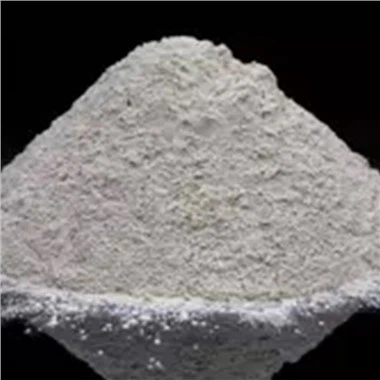
The swelling capacity of fine powder organoclay is a crucial property that significantly influences its performance and applications across various industries. As a leading supplier of fine powder organoclay, I am excited to delve into this topic and shed light on its importance and implications.
Understanding Fine Powder Organoclay
Fine powder organoclay is a type of organically modified clay that exhibits unique properties due to its surface modification with organic cations. This modification enhances its compatibility with organic solvents and polymers, making it an ideal additive in a wide range of applications, including paints, coatings, adhesives, and lubricants. The fine powder form of organoclay offers several advantages, such as easy dispersion, high surface area, and improved rheological properties.


What is Swelling Capacity?
The swelling capacity of fine powder organoclay refers to its ability to absorb and retain a certain amount of liquid, typically an organic solvent or a polymer matrix. When organoclay comes into contact with a compatible liquid, the organic cations on its surface interact with the liquid molecules, causing the clay platelets to separate and expand. This expansion results in an increase in volume and a change in the physical properties of the system, such as viscosity, thixotropy, and sedimentation stability.
Factors Affecting Swelling Capacity
Several factors influence the swelling capacity of fine powder organoclay, including the type of clay, the degree of organic modification, the nature of the liquid medium, and the processing conditions.
- Type of Clay: Different types of clay minerals, such as montmorillonite, bentonite, and hectorite, have varying swelling capacities due to their unique crystal structures and surface properties. Montmorillonite, for example, is known for its high swelling capacity and is commonly used in the production of organoclay.
- Degree of Organic Modification: The amount and type of organic cations used to modify the clay surface play a crucial role in determining its swelling capacity. A higher degree of organic modification generally results in increased compatibility with organic solvents and polymers, leading to enhanced swelling and dispersion properties.
- Nature of the Liquid Medium: The polarity, viscosity, and solubility of the liquid medium can significantly affect the swelling behavior of organoclay. Polar solvents, such as water and alcohols, tend to promote swelling, while non - polar solvents may have a limited effect. Additionally, the presence of other additives or polymers in the liquid medium can also influence the swelling capacity.
- Processing Conditions: The method of mixing and dispersion, temperature, and shear rate during the processing of organoclay in the liquid medium can impact its swelling capacity. Adequate mixing and high shear forces are often required to ensure proper dispersion and activation of the organoclay, leading to optimal swelling.
Importance of Swelling Capacity in Applications
The swelling capacity of fine powder organoclay is of utmost importance in various applications, as it directly affects the performance and quality of the final product.
- Paints and Coatings: In paints and coatings, organoclay is used as a rheological additive to control viscosity, prevent sagging, and improve pigment dispersion. The swelling capacity of organoclay determines its ability to thicken the paint film and provide the desired flow and leveling properties. A higher swelling capacity can result in better suspension of pigments and fillers, reducing sedimentation and improving the overall stability of the paint. For more information on Guanual Painting Grade Organoclay, you can visit our website.
- Adhesives and Sealants: Organoclay is also used in adhesives and sealants to enhance their viscosity, thixotropy, and adhesion properties. The swelling of organoclay in the adhesive matrix helps to improve the bonding strength and prevent the adhesive from flowing or dripping during application. A proper swelling capacity ensures that the adhesive maintains its shape and performance under different conditions.
- Lubricants: In lubricants, organoclay can be used as a thickener to improve the viscosity and stability of the lubricating oil. The swelling of organoclay in the oil forms a three - dimensional network structure, which helps to prevent oil leakage and provide better lubrication at high temperatures and pressures.
Measuring Swelling Capacity
There are several methods available to measure the swelling capacity of fine powder organoclay. One common method is the sediment volume test, where a known amount of organoclay is dispersed in a specific volume of liquid, and the volume of the sediment is measured after a certain period of time. A higher sediment volume indicates a greater swelling capacity. Another method is the viscosity measurement, where the change in viscosity of the liquid medium containing organoclay is monitored as a function of time. An increase in viscosity is an indication of organoclay swelling.
Optimizing Swelling Capacity
As a supplier of Fine Powder Organoclay, we are committed to providing high - quality products with optimal swelling capacity. To achieve this, we carefully select the raw materials, control the degree of organic modification, and optimize the processing conditions. Additionally, we offer technical support and guidance to our customers to ensure that they can achieve the best results in their applications.
Conclusion
The swelling capacity of fine powder organoclay is a critical property that has a significant impact on its performance in various applications. Understanding the factors that affect swelling capacity and how to measure and optimize it is essential for achieving the desired results in paints, coatings, adhesives, lubricants, and other industries. As a reliable supplier of fine powder organoclay, we are dedicated to providing our customers with products that meet their specific requirements and deliver excellent performance. If you are interested in learning more about our fine powder organoclay or would like to discuss your specific application needs, please feel free to contact us for procurement and further discussions.
References
- "Organoclay - Based Nanocomposites: Preparation, Properties, and Applications" by X. Chen and J. Huang.
- "Rheological Properties of Organoclay - Polymer Nanocomposites" by R. Krishnamoorti and E. P. Giannelis.
- "Swelling Behavior of Organically Modified Montmorillonite in Organic Solvents" by S. A. Hassan and M. A. Amer.