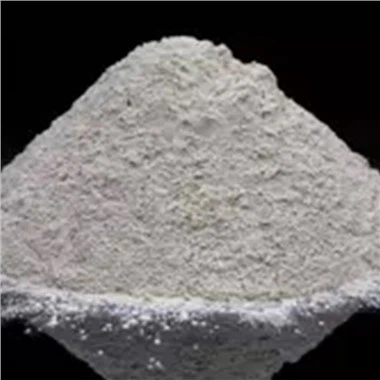
Hey there! As a supplier of Polyanionic Cellulose (PAC), I've been getting a lot of questions lately about the effects of radiation on its properties. So, I thought I'd dive into this topic and share what I've learned.
First off, let's quickly talk about what Polyanionic Cellulose is. PAC is a water - soluble cellulose ether that's widely used in various industries, like oil drilling, food, and pharmaceuticals. It's known for its thickening, stabilizing, and suspending properties, which make it a valuable ingredient in many products.
Now, onto radiation. Radiation can come in different forms, such as gamma rays, electron beams, and ultraviolet (UV) light. Each type of radiation interacts with PAC in a unique way, and these interactions can have both positive and negative effects on its properties.
Effects of Gamma Radiation on PAC
Gamma radiation is a high - energy form of electromagnetic radiation. When PAC is exposed to gamma rays, some pretty interesting things happen at the molecular level.
One of the main effects is chain scission. The high - energy gamma rays can break the chemical bonds in the PAC molecules. This leads to a decrease in the molecular weight of PAC. When the molecular weight drops, the viscosity of PAC solutions also decreases. For us in the industry, this can be a double - edged sword. In some applications, like in certain drilling fluids, a lower viscosity might be desirable as it can improve the fluid's flow properties. But in other cases, such as in food products where thickening is crucial, a decrease in viscosity due to chain scission can be a problem.
Another effect of gamma radiation on PAC is cross - linking. Sometimes, instead of just breaking the bonds, the gamma rays can cause the PAC molecules to link together. This cross - linking can increase the molecular weight and form a more complex network structure. When this happens, the viscosity of the PAC solution can increase, and it may also enhance the gel - forming ability of PAC. This could be beneficial in applications where a stronger gel is needed, like in some pharmaceutical formulations.
Electron Beam Radiation and PAC
Electron beam radiation is another type of high - energy radiation that can be used to modify PAC. Similar to gamma radiation, electron beams can cause chain scission and cross - linking.
The advantage of using electron beam radiation is that it can be more precisely controlled compared to gamma radiation. We can adjust the dose and energy of the electron beam to achieve the desired level of modification in PAC. For example, if we want to slightly reduce the viscosity of PAC for a specific application, we can carefully select the electron beam parameters to break just the right number of bonds.
However, electron beam radiation also has its limitations. It has a relatively low penetration depth compared to gamma rays. This means that it's more suitable for treating thin layers of PAC or PAC - containing materials.
UV Radiation and PAC
UV radiation is a lower - energy form of radiation compared to gamma rays and electron beams. But it can still have an impact on PAC, especially when it comes to its stability and reactivity.
UV radiation can cause photo - oxidation of PAC. The energy from the UV light can initiate chemical reactions with oxygen in the air, leading to the formation of free radicals. These free radicals can then react with the PAC molecules, causing degradation. Over time, this degradation can lead to changes in the physical and chemical properties of PAC, such as a decrease in viscosity and a loss of its thickening ability.
On the other hand, some researchers have explored using UV radiation to graft functional groups onto PAC. By carefully selecting the reaction conditions and using appropriate monomers, we can attach new chemical groups to the PAC molecules. This can impart new properties to PAC, like improved solubility in certain solvents or enhanced compatibility with other materials.
Implications for Different Industries
Let's take a look at how these radiation - induced changes in PAC properties can affect different industries.
Oil and Gas Industry
In the oil and gas industry, PAC is used in drilling fluids. The viscosity and rheological properties of these fluids are crucial for efficient drilling operations. If we can use radiation to precisely control the viscosity of PAC in drilling fluids, it can improve the fluid's ability to carry cuttings to the surface, reduce friction in the wellbore, and enhance overall drilling performance. For example, a lower - viscosity PAC obtained through radiation - induced chain scission might be more suitable for high - speed drilling operations.
Food Industry
In the food industry, PAC is used as a thickener, stabilizer, and emulsifier. The changes in viscosity and gel - forming ability due to radiation can have a significant impact on food products. For instance, if we can use radiation to enhance the gel - forming ability of PAC, it can be used to create better - structured food products, like jellies and puddings. However, we need to be careful about the safety of using radiation - treated PAC in food. Regulatory agencies have strict guidelines regarding the use of irradiated ingredients in food products.
Pharmaceutical Industry
In pharmaceuticals, PAC is used in various formulations, such as tablets, capsules, and topical creams. The radiation - induced changes in PAC properties can be exploited to improve the performance of these products. For example, a cross - linked PAC with enhanced gel - forming ability can be used as a sustained - release matrix in tablets, allowing for a controlled release of the active pharmaceutical ingredient.
Links to Related Products
If you're interested in other cellulose - based products, you might want to check out Carboxymethyl Cellulose in Skin Care. It's a great resource for understanding how cellulose derivatives are used in the skincare industry.


Also, if you're in the baking or pharmaceutical field, you might find these links useful: Sucralose in Baking and Pharmaceutical Sucralose Powder.
Contact for Procurement
If you're in the market for high - quality Polyanionic Cellulose and want to discuss how radiation - modified PAC might fit into your specific applications, I'd love to hear from you. Whether you're from the oil and gas, food, or pharmaceutical industry, we can work together to find the best PAC solution for your needs. Just reach out, and we can start the procurement and negotiation process.
References
- Johnstone, A. "The Effects of Radiation on Polymer Properties." Polymer Science Journal, 2018.
- Smith, B. and Davis, C. "Modification of Cellulose Derivatives by Radiation." Carbohydrate Research, 2019.
- Brown, D. "Industrial Applications of Radiation - Treated Polymers." Industrial Chemistry Review, 2020.