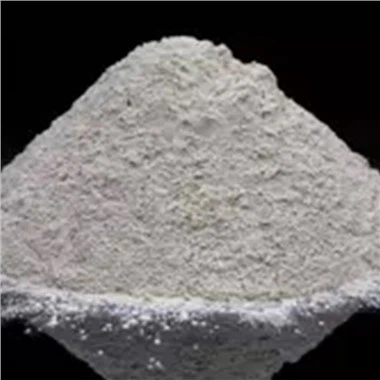
As a supplier of Food Grade Granular CMC, I've witnessed firsthand the crucial role this ingredient plays in the food industry. Food Grade Granular CMC, also known as Carboxymethyl Cellulose E466, is a versatile additive widely used for its thickening, stabilizing, and emulsifying properties. However, its performance in food can be influenced by various factors. In this blog, I'll explore these factors to help you understand how to optimize the use of Food Grade Granular CMC in your food products.
Chemical Structure and Degree of Substitution
The chemical structure of Food Grade Granular CMC, specifically its degree of substitution (DS), significantly impacts its performance. The DS refers to the average number of carboxymethyl groups substituted per anhydroglucose unit in the cellulose backbone. A higher DS generally results in better solubility, viscosity, and stability.
For instance, in acidic food products like fruit juices and yogurt, a CMC with a higher DS is more resistant to acid hydrolysis. This means it can maintain its thickening and stabilizing properties even in low - pH environments. On the other hand, a lower DS CMC may be more suitable for products where a slower dissolution rate or a more gel - like structure is desired.
Viscosity
Viscosity is a key performance indicator of Food Grade Granular CMC in food. The viscosity of CMC solutions is affected by several factors, including the concentration of CMC, temperature, and the presence of other ingredients.
- Concentration: As the concentration of CMC increases, the viscosity of the solution also increases. However, this relationship is not always linear. At higher concentrations, the increase in viscosity may be more pronounced due to the formation of a more entangled polymer network. For example, in salad dressings, a higher concentration of CMC can provide a thicker and more stable texture.
- Temperature: Temperature has a significant impact on the viscosity of CMC solutions. Generally, as the temperature rises, the viscosity of CMC solutions decreases. This is because higher temperatures increase the molecular motion of the CMC molecules, reducing the entanglement between them. In food processing, this property can be exploited. For example, during the cooking or pasteurization process, the lower viscosity at higher temperatures allows for easier mixing and processing. Once the product cools down, the viscosity increases again, providing the desired thickening effect.
- Other Ingredients: The presence of salts, sugars, and other polymers can also affect the viscosity of CMC solutions. Salts can cause a decrease in viscosity by screening the charges on the CMC molecules, reducing the electrostatic repulsion between them. Sugars, on the other hand, can increase the viscosity by interacting with the CMC molecules and promoting their entanglement. In bakery products, the addition of sugar can enhance the thickening effect of CMC, improving the texture and shelf - life of the products.
Purity and Impurities
The purity of Food Grade Granular CMC is crucial for its performance in food. Impurities such as heavy metals, residual solvents, and microbial contaminants can not only affect the safety of the food product but also its performance.
- Heavy Metals: Heavy metals like lead, mercury, and cadmium are toxic and can have harmful effects on human health. In addition, they can also react with the CMC molecules, altering their structure and properties. For example, heavy metals can cause cross - linking of CMC molecules, leading to an increase in viscosity and a change in the rheological properties of the solution.
- Residual Solvents: During the production process of CMC, solvents may be used. Residual solvents in the final product can affect the taste and odor of the food. Moreover, they can also interact with the CMC molecules and other ingredients in the food, potentially altering the performance of CMC.
- Microbial Contaminants: Microbial contaminants can cause spoilage of the food product and also affect the stability of CMC. For example, some bacteria can produce enzymes that break down CMC, reducing its thickening and stabilizing properties. Therefore, it is essential to ensure that the Food Grade Granular CMC meets the strict purity standards.
Particle Size
The particle size of Food Grade Granular CMC can influence its dissolution rate and performance in food. Smaller particle sizes generally result in faster dissolution rates.
In dry - mix applications such as instant soups and powdered beverages, a CMC with a smaller particle size can dissolve more quickly when mixed with water. This ensures a more uniform distribution of the CMC in the product and a faster development of the desired thickening and stabilizing properties. On the other hand, larger particle sizes may be more suitable for products where a slower release of the CMC is required, such as in some slow - release food supplements.
Compatibility with Other Ingredients
Food Grade Granular CMC is often used in combination with other ingredients in food products. Its compatibility with these ingredients is crucial for its performance.
- Proteins: CMC can interact with proteins in food products. In dairy products, for example, CMC can form complexes with casein proteins, improving the stability of the emulsion and preventing the separation of the fat phase. However, the interaction between CMC and proteins can also be affected by factors such as pH and temperature. At certain pH values, the electrostatic interactions between CMC and proteins may change, leading to either an enhancement or a reduction in the stabilizing effect.
- Gums and Polysaccharides: CMC is often used in combination with other gums and polysaccharides such as xanthan gum and guar gum. These combinations can have synergistic effects, resulting in improved thickening, stabilizing, and emulsifying properties. For example, the combination of CMC and xanthan gum can provide a more stable gel structure in salad dressings and sauces.
Processing Conditions
The processing conditions during food production can also affect the performance of Food Grade Granular CMC.
- Mixing: Proper mixing is essential to ensure the uniform distribution of CMC in the food product. Insufficient mixing can result in the formation of lumps, which can affect the texture and appearance of the final product. High - shear mixing can break down the CMC particles and improve their dispersion, but it may also cause a decrease in viscosity if the mixing is too intense.
- Heat Treatment: Heat treatment is a common step in food processing. As mentioned earlier, temperature affects the viscosity of CMC solutions. During heat treatment, the CMC may undergo thermal degradation, especially at high temperatures and long exposure times. This can lead to a decrease in its thickening and stabilizing properties. Therefore, it is important to optimize the heat treatment conditions to minimize the degradation of CMC.
Storage Conditions
The storage conditions of Food Grade Granular CMC can also impact its performance. CMC should be stored in a cool, dry place to prevent moisture absorption. Moisture can cause the CMC particles to agglomerate, making it difficult to dissolve and reducing its effectiveness. In addition, exposure to high temperatures and humidity during storage can accelerate the degradation of CMC, leading to a loss of its thickening and stabilizing properties.


In conclusion, understanding the factors that affect the performance of Food Grade Granular CMC in food is essential for its successful application. By carefully considering these factors, food manufacturers can optimize the use of CMC to achieve the desired texture, stability, and quality in their products. As a supplier of Food Grade Granular CMC, we are committed to providing high - quality products and technical support to help you make the most of this versatile ingredient. If you are interested in learning more about our products or have any questions regarding the use of Food Grade Granular CMC in your food products, please feel free to contact us for procurement and further discussion.
References
- Davidson, R. L. (1980). Handbook of Water - Soluble Gums and Resins. McGraw - Hill.
- Whistler, R. L., & BeMiller, J. N. (1993). Industrial Gums: Polysaccharides and Their Derivatives. Academic Press.
- Imeson, A. (2009). Thickening and Gelling Agents for Food. Royal Society of Chemistry.