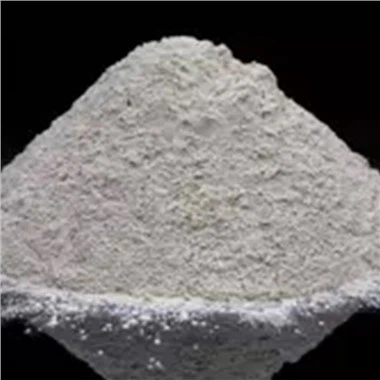
As a supplier of Pating Grade Organoclay, I'm excited to share with you the numerous advantages of using this remarkable product. Pating Grade Organoclay is a high - performance additive that has been revolutionizing various industries, and in this blog, we'll delve deep into its benefits.
Enhanced Rheological Properties
One of the most significant advantages of Pating Grade Organoclay is its ability to improve the rheological properties of a wide range of formulations. Rheology refers to the study of the flow and deformation of materials. In coatings, paints, and adhesives, controlling the flow behavior is crucial.
Pating Grade Organoclay acts as a thickening and thixotropic agent. Thixotropy means that the material becomes less viscous when agitated or sheared and returns to its original, more viscous state when the agitation stops. This property is extremely useful in painting applications. For example, when a painter is applying a paint with Pating Grade Organoclay, the paint flows smoothly onto the surface under the shear force of the brush or roller. Once the application is done and the shear force is removed, the paint quickly thickens. This prevents dripping and sagging, ensuring a smooth and even finish.


In the case of Guanual Painting Grade Organoclay, its unique structure allows for precise control of the rheological properties. It can be tailored to meet the specific requirements of different types of paints, whether they are water - based, solvent - based, or high - solids formulations.
Improved Suspension and Dispersion
Another key advantage is its excellent suspension and dispersion capabilities. In many industrial formulations, there are solid particles that need to be evenly distributed throughout the liquid phase. For instance, in paints, pigments and fillers need to be well - dispersed to ensure consistent color and performance.
Pating Grade Organoclay forms a three - dimensional network structure in the liquid medium. This network entraps the solid particles, preventing them from settling at the bottom of the container over time. As a result, the product remains homogeneous, and the end - user doesn't have to worry about uneven color or inconsistent performance due to particle sedimentation.
The Fine Powder Organoclay is particularly effective in this regard. Its fine particle size allows for a more extensive network formation, leading to better suspension and dispersion of even the smallest solid particles. This is especially important in high - quality coatings and paints where a flawless finish is required.
Chemical and Thermal Stability
Pating Grade Organoclay offers outstanding chemical and thermal stability. In harsh chemical environments, many additives can break down or react with other components in the formulation, leading to a loss of performance. However, Pating Grade Organoclay is resistant to a wide range of chemicals, including acids, bases, and solvents.
This chemical stability makes it suitable for use in various industrial applications, such as in the production of chemical - resistant coatings for pipelines, storage tanks, and industrial equipment. Additionally, it can withstand high temperatures without significant degradation. This thermal stability is crucial in applications where the product may be exposed to heat during processing or in service, such as in automotive coatings or high - temperature adhesives.
Environmental Friendliness
In today's world, environmental concerns are at the forefront of many industries. Pating Grade Organoclay is a relatively environmentally friendly option. Compared to some traditional additives, it can be formulated to be low in volatile organic compounds (VOCs). VOCs are harmful chemicals that can be released into the atmosphere during the application and drying of paints and coatings, contributing to air pollution and health problems.
By using Pating Grade Organoclay, manufacturers can produce more environmentally friendly products that meet strict environmental regulations. This not only benefits the environment but also allows companies to market their products as more sustainable, appealing to environmentally conscious consumers.
Cost - Effectiveness
From a cost perspective, Pating Grade Organoclay offers great value. Although the initial cost of the additive may seem relatively high, its performance benefits can lead to significant cost savings in the long run.
For example, its ability to improve the rheological properties reduces the amount of other additives that may be required to achieve the same level of performance. It also helps in reducing waste due to dripping and sagging during the application process. In addition, its excellent suspension and dispersion properties mean that less pigment and filler may be needed to achieve the desired color and performance, as they are more effectively utilized in the formulation.
Compatibility with Other Materials
Pating Grade Organoclay is highly compatible with a wide range of polymers, resins, and other additives. This compatibility allows it to be easily incorporated into existing formulations without the need for major modifications to the manufacturing process.
Whether it is used in epoxy resins, polyurethanes, or acrylic polymers, Pating Grade Organoclay can enhance the performance of the final product. This versatility makes it a popular choice among manufacturers who are looking to improve the quality of their products without significant investment in new equipment or processes.
Application in Various Industries
The advantages of Pating Grade Organoclay make it suitable for a diverse range of industries. In the paint and coating industry, as mentioned earlier, it is used to improve the quality and performance of both decorative and industrial coatings. It can also be found in the ink industry, where it helps in controlling the flow and drying properties of inks, resulting in better print quality.
In the adhesives and sealants industry, Pating Grade Organoclay is used to enhance the viscosity, thixotropy, and adhesion of the products. It ensures that the adhesives can be easily applied and remain in place until they cure, providing a strong and reliable bond.
Conclusion
In conclusion, the advantages of using Pating Grade Organoclay are numerous and far - reaching. From enhancing rheological properties and improving suspension and dispersion to offering chemical and thermal stability, environmental friendliness, cost - effectiveness, and compatibility with other materials, it is a valuable additive for various industries.
If you are interested in exploring the benefits of Pating Grade Organoclay for your specific application, I encourage you to reach out to us for a detailed discussion. We can provide samples, technical support, and customized solutions to meet your requirements. Let's work together to take your products to the next level with the power of Pating Grade Organoclay.
References
- "Rheology of Polymer Systems: Principles and Applications" by Robert B. Bird, Warren E. Stewart, and Edwin N. Lightfoot.
- "Handbook of Industrial Coatings Technology" edited by T. R. Crompton.
- "Environmental Impact of Chemical Additives in the Coatings Industry" - Journal of Sustainable Coatings and Films.