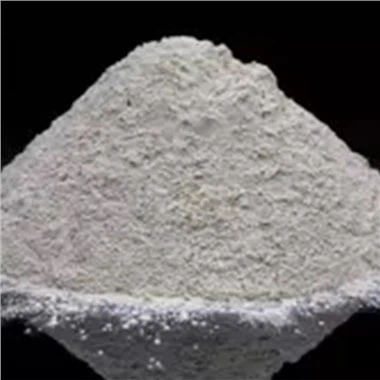
Sucralose, a well - known artificial sweetener, has gained significant popularity in recent years due to its zero - calorie nature and high sweetness intensity. As a sucralose supplier, I'm excited to share with you the detailed process of how sucralose is made.
Starting Materials
The production of sucralose begins with a common and readily available starting material: sucrose, which is ordinary table sugar. Sucrose is a disaccharide composed of glucose and fructose units linked together. It has a chemical formula of (C_{12}H_{22}O_{11}). The reason for using sucrose as the starting point is that it provides a suitable molecular framework that can be chemically modified to create sucralose.


Protection of Hydroxyl Groups
The first major step in the synthesis of sucralose involves protecting certain hydroxyl ((-OH)) groups on the sucrose molecule. Sucrose has several hydroxyl groups, and these need to be selectively protected to ensure that the subsequent chlorination steps occur at the desired positions.
Typically, acetic anhydride is used in the presence of a catalyst such as pyridine. The reaction results in the acetylation of the hydroxyl groups. Acetyl groups ((-COCH_{3})) are attached to the hydroxyl groups, effectively "shielding" them from unwanted reactions during the chlorination process. This protection step is crucial because it allows for the controlled introduction of chlorine atoms later on.
Chlorination
After the protection of the relevant hydroxyl groups, the next step is chlorination. Chlorine atoms are introduced into the sucrose molecule at specific positions. The chlorination reaction is carried out using a chlorinating agent, such as thionyl chloride ((SOCl_{2})) or phosphorus pentachloride ((PCl_{5})).
During this step, the chlorine atoms replace some of the hydroxyl groups that were not protected in the previous step. The substitution occurs at the 4, 1', and 6' positions of the sucrose molecule. This selective chlorination is what gives sucralose its unique properties. The introduction of chlorine atoms changes the electronic and steric properties of the molecule, making it much sweeter than sucrose while also reducing its ability to be metabolized by the body, resulting in its zero - calorie nature.
Deprotection
Once the chlorination is complete, the next step is to remove the protecting acetyl groups. This is achieved through a deprotection reaction. A mild base, such as sodium methoxide ((NaOCH_{3})) in methanol, is commonly used for this purpose. The base reacts with the acetyl groups, hydrolyzing them and releasing the original hydroxyl groups at the positions where they were protected earlier.
The deprotection step restores the hydroxyl groups at the non - chlorinated positions, resulting in the formation of the final sucralose molecule, with the chemical formula (C_{12}H_{19}Cl_{3}O_{8}).
Purification
After the sucralose molecule is formed, it needs to be purified to remove any impurities, by - products, or unreacted starting materials. Purification is typically carried out using a combination of techniques, including crystallization, chromatography, and filtration.
Crystallization is a common method for purifying sucralose. The crude sucralose is dissolved in a suitable solvent, and then the solution is cooled or the solvent is slowly evaporated. As the solution becomes supersaturated, pure sucralose crystals form, which can be separated from the remaining solution by filtration.
Chromatography, such as column chromatography, may also be used to further purify the sucralose. This technique separates the different components of a mixture based on their relative affinities for a stationary phase and a mobile phase. By passing the crude sucralose through a chromatography column, impurities can be removed, resulting in a highly pure product.
Different Forms of Sucralose
As a sucralose supplier, we offer various forms of sucralose to meet different customer needs. One of our products is Pharmaceutical Sucralose Powder. This form is highly pure and is suitable for use in the pharmaceutical industry, where strict quality standards are required. It can be used as a sweetening agent in medications, especially those for patients who need to control their sugar intake.
Another popular product is Granulated Sucralose. The granulated form is convenient for use in food and beverage applications. It has a similar appearance and handling properties to sugar, making it easy to incorporate into recipes. It can be used in baking, cooking, and as a table - top sweetener.
Sucralose in Baking
Sucralose is also widely used in baking. For those who are looking for a low - calorie alternative to sugar in their baked goods, sucralose is an excellent choice. When using sucralose in baking, it is important to note that it does not have the same physical properties as sugar. Sugar plays multiple roles in baking, such as providing structure, moisture, and browning.
However, with the right techniques and additional ingredients, sucralose can still be used to create delicious baked goods. You can find more information about Sucralose in Baking on our website.
Why Choose Our Sucralose
Our company is committed to providing high - quality sucralose products. We follow strict quality control measures throughout the production process, from the selection of starting materials to the final purification step. Our sucralose is produced in state - of - the - art facilities, ensuring consistent quality and purity.
Whether you are a food manufacturer, a pharmaceutical company, or an individual looking for a healthy sweetener, our sucralose products can meet your needs. We offer competitive prices and excellent customer service.
Contact Us for Procurement
If you are interested in purchasing our sucralose products, we encourage you to contact us for further discussion. We can provide you with detailed product information, samples, and pricing. Our team of experts is ready to assist you in finding the right sucralose solution for your specific requirements.
References
- "Sweeteners and Sugar Alternatives in Food Technology" by George Reineccius.
- Journal articles on the synthesis and properties of sucralose, such as those published in the Journal of Agricultural and Food Chemistry.