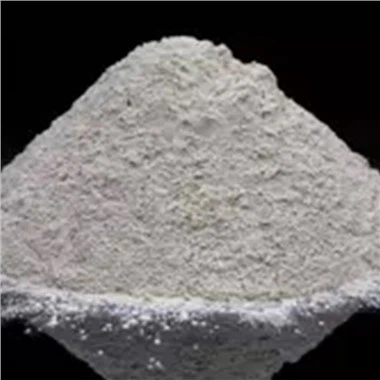
As a supplier of Pating Grade Organoclay, I am often asked about the production process of this remarkable material. In this blog post, I will take you through the detailed steps of how Pating Grade Organoclay is produced, from the raw materials to the final product.
Raw Materials
The primary raw material for Pating Grade Organoclay is bentonite clay, which is a type of clay that is rich in montmorillonite. Bentonite clay is found in various locations around the world, and the quality of the clay can vary depending on its source. We carefully select high - quality bentonite clay deposits to ensure the best starting material for our Pating Grade Organoclay.
In addition to bentonite clay, we also use organic cations. These organic cations are typically quaternary ammonium salts. The choice of organic cations is crucial as it determines the organophilic properties of the final product. Different organic cations can be used to achieve specific performance characteristics, such as improved dispersion in organic solvents, enhanced rheological properties, and better compatibility with various polymers.
Purification of Bentonite Clay
Once the bentonite clay is mined, it undergoes a purification process. This is necessary because the raw bentonite clay may contain impurities such as sand, silt, and other minerals. The purification process usually involves the following steps:
- Washing: The bentonite clay is washed with water to remove large particles of sand and other debris. This can be done using a series of tanks or hydrocyclones, where the clay is suspended in water and the heavier particles settle to the bottom.
- Centrifugation: After washing, the clay - water suspension is centrifuged. Centrifugation helps to separate the fine clay particles from the remaining impurities. The centrifugal force causes the heavier impurities to move towards the outer edge of the centrifuge, while the fine clay particles remain in the suspension.
- Sedimentation: The centrifuged clay suspension is then allowed to sediment in large tanks. During sedimentation, the clay particles gradually settle to the bottom, forming a thick layer of purified clay. The supernatant water is removed, and the purified clay is ready for the next step.
Ion Exchange Process
The next crucial step in the production of Pating Grade Organoclay is the ion exchange process. In the natural state, the montmorillonite in bentonite clay has negatively charged sites on its surface, which are balanced by inorganic cations such as sodium, calcium, or potassium. In the ion exchange process, these inorganic cations are replaced with organic cations (quaternary ammonium salts).
The ion exchange process is carried out in a reaction vessel. The purified bentonite clay is first dispersed in water to form a homogeneous suspension. Then, the organic cations are added to the suspension. The reaction between the inorganic cations on the clay surface and the organic cations occurs over a period of time, usually under controlled temperature and agitation conditions.
The reaction can be represented by the following general equation:
[ Clay - M + R_4N^+X^- \rightarrow Clay - R_4N^+ + MX ]
where ( Clay - M ) represents the clay with inorganic cations ( M ) (e.g., ( Na^+ ), ( Ca^{2+} )), ( R_4N^+X^- ) is the quaternary ammonium salt, ( Clay - R_4N^+ ) is the organoclay, and ( MX ) is the inorganic salt formed as a by - product.
After the ion exchange reaction is complete, the suspension is washed again to remove the by - product inorganic salts. This washing step is important to ensure the purity of the final organoclay product.
Drying and Milling
Once the ion exchange and washing steps are completed, the organoclay suspension needs to be dried. There are several methods for drying the organoclay, including spray drying, flash drying, and tray drying.
- Spray Drying: In spray drying, the organoclay suspension is atomized into fine droplets and then sprayed into a hot air stream. The droplets quickly lose their moisture and form dry organoclay particles. Spray drying is a fast and efficient method that can produce uniform particle sizes.
- Flash Drying: Flash drying involves passing the organoclay suspension through a high - velocity hot gas stream. The rapid evaporation of water occurs in a very short time, resulting in dry organoclay.
- Tray Drying: Tray drying is a more traditional method where the organoclay suspension is placed in trays and dried in an oven at a controlled temperature. This method is slower but can be suitable for small - scale production.
After drying, the organoclay is milled to achieve the desired particle size. Milling can be done using various types of mills, such as ball mills, jet mills, or hammer mills. The particle size of the Pating Grade Organoclay is an important factor that affects its performance in different applications. A finer particle size generally leads to better dispersion and rheological properties.


Quality Control
Throughout the production process, strict quality control measures are implemented. We test the raw materials for their chemical composition, particle size distribution, and other physical properties. During the ion exchange process, we monitor the reaction conditions to ensure complete ion exchange.
After the production of the Pating Grade Organoclay, we conduct a series of tests on the final product. These tests include:
- Rheological Testing: We measure the viscosity, yield stress, and thixotropy of the organoclay in different solvents to ensure its proper performance in coating applications.
- Chemical Analysis: We analyze the chemical composition of the organoclay to ensure that the organic cation content is within the specified range and that there are no harmful impurities.
- Particle Size Analysis: We use techniques such as laser diffraction to determine the particle size distribution of the organoclay.
Types of Pating Grade Organoclay
We offer different types of Pating Grade Organoclay to meet the diverse needs of our customers. You can explore our Guanual Painting Grade Organoclay and Fine Powder Organoclay on our website. These products have unique properties and are suitable for different painting and coating applications.
Applications of Pating Grade Organoclay
Pating Grade Organoclay has a wide range of applications in the painting and coating industry. It can be used as a thickener, thixotropic agent, and anti - settling agent. In paints, it helps to prevent pigment settling during storage, improve the flow and leveling properties during application, and enhance the overall stability of the paint film.
Conclusion
The production of Pating Grade Organoclay is a complex process that involves multiple steps, from the purification of raw materials to the final quality control. By carefully controlling each step of the process, we are able to produce high - quality Pating Grade Organoclay that meets the strict requirements of our customers in the painting and coating industry.
If you are interested in purchasing Pating Grade Organoclay for your painting or coating applications, we invite you to contact us for further discussion. Our team of experts is ready to assist you in finding the most suitable product for your needs.
References
- Grim, R. E. (1968). Clay Mineralogy. McGraw - Hill Book Company.
- Lagaly, G., & Weiss, A. (1976). Intercalation chemistry of smectites. In Crystal Chemistry and Properties of Clay Minerals (pp. 47 - 70). Springer, Dordrecht.
- Van Olphen, H. (1977). An Introduction to Clay Colloid Chemistry. John Wiley & Sons.