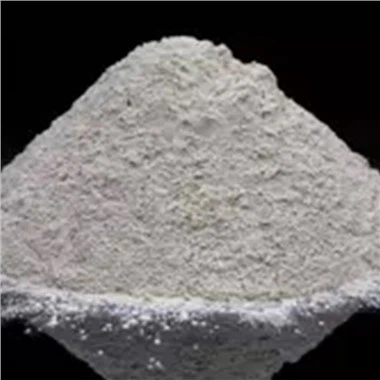
In the dynamic realm of aerospace engineering, the pursuit of high - performance materials is unending. One such material that has been making significant inroads is Fine Powder Organoclay. As a supplier of Fine Powder Organoclay, I am excited to delve into how this remarkable substance enhances the performance of aerospace composites.
Understanding Aerospace Composites
Aerospace composites are materials composed of two or more distinct constituents with significantly different physical or chemical properties. These composites typically consist of a matrix material, such as a polymer resin, and a reinforcement material, like carbon fibers. The combination of these materials results in a product that offers superior strength - to - weight ratios, corrosion resistance, and fatigue resistance compared to traditional metals. However, to meet the ever - increasing demands of the aerospace industry, continuous improvement of these composites is essential.
What is Fine Powder Organoclay?
Fine Powder Organoclay is a modified clay material. Naturally occurring clays are often hydrophilic, which means they have an affinity for water. Through a process of organophilization, these clays are treated with organic cations to make them organophilic, or compatible with organic polymers. The fine powder form of organoclay offers a large surface area, which is crucial for its interaction with the polymer matrix in composites. You can find more about our Fine Powder Organoclay on our website.
Mechanisms of Enhancement
Reinforcement at the Nanoscale
One of the primary ways Fine Powder Organoclay enhances aerospace composites is through nanoscale reinforcement. When incorporated into the polymer matrix, the fine particles of organoclay disperse at the nanometer level. This dispersion creates a large interfacial area between the clay particles and the polymer. As a result, the stress transfer from the polymer to the clay particles is more efficient. Under mechanical loading, the clay particles can bear a portion of the load, enhancing the overall strength and stiffness of the composite. For example, in carbon fiber - reinforced polymer composites used in aircraft wings, the addition of Fine Powder Organoclay can increase the flexural strength and modulus, allowing the wings to withstand higher aerodynamic forces.
Barrier Properties
Aerospace components are often exposed to harsh environments, including moisture, chemicals, and gases. Fine Powder Organoclay can significantly improve the barrier properties of composites. The platelet - like structure of the organoclay particles creates a tortuous path for the diffusion of molecules. When a gas or liquid tries to penetrate the composite, it has to navigate around the clay platelets, which increases the diffusion distance and reduces the rate of penetration. This is particularly important for fuel tanks and hydraulic lines in aircraft, where preventing leakage of fluids is critical for safety and performance.
Flame Retardancy
Fire safety is a top priority in the aerospace industry. Fine Powder Organoclay can contribute to the flame retardancy of composites. When exposed to high temperatures, the clay particles form a protective char layer on the surface of the composite. This char layer acts as a barrier, preventing oxygen from reaching the underlying polymer and reducing the heat transfer. As a result, the composite is less likely to ignite and burn, and the spread of fire is slowed down. This property is essential for interior components of aircraft, such as seat cushions and cabin panels.


Improved Processing
In addition to enhancing the final properties of composites, Fine Powder Organoclay can also improve the processing of composites. It can reduce the viscosity of the polymer resin during the manufacturing process. Lower viscosity allows for better impregnation of the reinforcement fibers with the resin, resulting in a more uniform distribution of the matrix material. This is beneficial for processes like resin transfer molding and autoclave curing, where proper resin flow is crucial for producing high - quality composites.
Case Studies
Several real - world applications demonstrate the effectiveness of Fine Powder Organoclay in aerospace composites. For instance, in a recent project involving the development of a new generation of unmanned aerial vehicles (UAVs), the addition of Fine Powder Organoclay to the carbon fiber - epoxy composites used in the airframe led to a 15% increase in the tensile strength and a 20% improvement in the moisture resistance. This not only extended the service life of the UAV but also reduced the maintenance requirements.
Another example is in the manufacturing of helicopter rotor blades. By incorporating Fine Powder Organoclay into the fiberglass - polyester composites, the blades showed enhanced fatigue resistance. The clay particles helped to dissipate the stress concentrations that occur during the cyclic loading of the blades, reducing the likelihood of crack initiation and propagation.
Comparison with Other Additives
When compared to other additives commonly used in aerospace composites, Fine Powder Organoclay offers several advantages. For example, some traditional flame retardants can be heavy and may negatively affect the mechanical properties of composites. In contrast, Fine Powder Organoclay is lightweight and can enhance both the mechanical and fire - resistant properties simultaneously. Similarly, compared to some types of nanofillers, Fine Powder Organoclay is more cost - effective and easier to process, making it a more practical choice for large - scale aerospace manufacturing.
Our Guanual Painting Grade Organoclay
In addition to our Fine Powder Organoclay, we also offer Guanual Painting Grade Organoclay. This product is specifically designed for applications where a smooth and uniform coating is required. It can be used in the painting of aerospace components to improve the adhesion and durability of the paint. The fine particles of the organoclay help to fill in the micro - pores on the surface of the component, creating a better surface for paint application.
Conclusion
Fine Powder Organoclay is a versatile and valuable additive for aerospace composites. It enhances the mechanical properties, barrier properties, flame retardancy, and processing characteristics of composites. As a supplier, we are committed to providing high - quality Fine Powder Organoclay to meet the demanding requirements of the aerospace industry. If you are involved in the aerospace sector and are looking to improve the performance of your composites, we invite you to contact us for a procurement discussion. Our team of experts is ready to assist you in finding the best solution for your specific needs.
References
- Morgan, A. B., & Gilman, J. W. (2003). Flame retardancy mechanisms of polymer - layered silicate nanocomposites. Polymer Degradation and Stability, 80(3), 413 - 419.
- Alexandre, M., & Dubois, P. (2000). Polymer - layered silicate nanocomposites: preparation, properties and uses of a new class of materials. Materials Science and Engineering: R: Reports, 28(1 - 2), 1 - 63.
- Ray, S. S., & Okamoto, M. (2003). Polymer/layered silicate nanocomposites: a review from preparation to processing. Progress in Polymer Science, 28(11), 1539 - 1641.