Hey there! As a CMC Cellulose supplier, I've seen firsthand how this amazing stuff can transform the rheology of fluids. So, let's dive into the nitty - gritty of how CMC Cellulose affects fluid rheology.
What is CMC Cellulose?
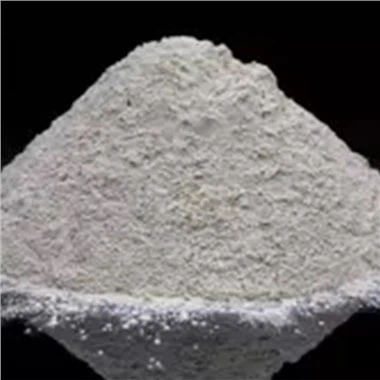
Before we get into the effects on rheology, let's quickly go over what CMC Cellulose is. CMC, or Carboxymethyl Cellulose, is a cellulose derivative. It's made by chemically modifying natural cellulose. You can find different types like Sodium Carboxymethyl, which is widely used in various industries. It's water - soluble, non - toxic, and has some really cool properties that make it a go - to additive in many applications.
Rheology Basics
Rheology is all about how materials flow and deform under stress. When we talk about fluids, we're looking at things like viscosity (how thick or thin a fluid is), shear thinning or thickening behavior, and how the fluid behaves when it's at rest or in motion. For example, honey has a high viscosity, so it flows slowly, while water has a low viscosity and flows easily.
How CMC Cellulose Affects Viscosity
One of the most significant ways CMC Cellulose impacts fluid rheology is by increasing viscosity. When you add CMC to a fluid, it forms a network structure. The long chains of CMC molecules entangle with each other and with the molecules of the fluid. This entanglement creates resistance to flow, making the fluid thicker.
In food products, this thickening effect is super useful. Take salad dressings, for instance. Without CMC, the oil and vinegar in a dressing would separate quickly. But when you add CMC, it thickens the dressing, keeping the oil droplets suspended in the vinegar and preventing separation. In the pharmaceutical industry, CMC is used to thicken liquid medications. This not only makes it easier to dispense the right dose but also improves the stability of the medication.
The degree of viscosity increase depends on several factors. The concentration of CMC is a big one. The more CMC you add, the higher the viscosity will be. But it's not a linear relationship. At low concentrations, the increase in viscosity might be relatively small. As you keep adding more CMC, there comes a point where the viscosity shoots up rapidly.
The type of CMC also matters. Different grades of CMC have different molecular weights and degrees of substitution (how many of the hydroxyl groups on the cellulose chain have been replaced with carboxymethyl groups). Higher molecular weight CMCs generally lead to a greater increase in viscosity because their longer chains can form more extensive networks.


Shear Thinning Behavior
Another interesting aspect of how CMC affects fluid rheology is its shear thinning property. Shear thinning means that as you apply more shear stress (like stirring or pumping the fluid), the viscosity of the fluid decreases.
When a fluid with CMC is at rest, the entangled CMC network is intact, and the fluid has a high viscosity. But when you start applying shear stress, the CMC chains start to align in the direction of the flow. This alignment reduces the entanglement between the chains, and the resistance to flow decreases, making the fluid thinner.
This behavior is very beneficial in many industrial processes. In paint manufacturing, for example, paint needs to be thick enough to stay on the brush without dripping when it's not being used. But when you're applying the paint with a brush or a roller, you want it to flow easily. CMC - containing paints exhibit this shear thinning behavior, allowing for easy application.
Gel Formation
Under certain conditions, CMC can cause a fluid to form a gel. A gel is a semi - solid material that has some properties of both a solid and a liquid. When the concentration of CMC is high enough and the conditions are right (like the right temperature and pH), the CMC chains can form a three - dimensional network that traps the fluid molecules within it.
In personal care products like creams and lotions, gel formation is important. It gives these products a smooth, spreadable texture. The gel structure also helps to keep the active ingredients in the product evenly distributed and prevents them from separating.
Influence on Suspension and Emulsion Stability
Fluids often contain suspended particles or emulsified droplets. CMC can play a crucial role in stabilizing these suspensions and emulsions.
In a suspension, like a suspension of solid particles in a liquid, CMC helps to keep the particles suspended. The increased viscosity due to CMC slows down the settling of the particles. Also, the CMC molecules can adsorb onto the surface of the particles, creating a repulsive force between the particles. This repulsive force prevents the particles from clumping together and settling at the bottom.
In emulsions, which are mixtures of two immiscible liquids (like oil and water), CMC helps to stabilize the droplets of one liquid in the other. As mentioned earlier, it thickens the continuous phase, reducing the mobility of the droplets. It also forms a protective layer around the droplets, preventing them from coalescing.
Factors Affecting CMC's Rheological Impact
The impact of CMC on fluid rheology isn't just about the CMC itself. Other factors in the fluid system can also have an effect.
Temperature is a key factor. As the temperature increases, the viscosity of a CMC - containing fluid generally decreases. This is because the increased thermal energy makes the CMC chains more mobile, reducing the entanglement between them. In some applications, this temperature - dependent behavior needs to be carefully controlled. For example, in a hot - filled food product, the CMC has to maintain its thickening ability even at high temperatures.
pH also matters. CMC is sensitive to pH changes. In acidic conditions, the carboxymethyl groups on the CMC chains can protonate, which can change the solubility and the rheological properties of CMC. In alkaline conditions, the CMC chains are more negatively charged, which can affect the interactions between the chains and the fluid molecules.
Applications in Different Industries
Food Industry
As we've already touched on, CMC is widely used in the food industry. Besides salad dressings, it's used in ice creams, jams, and bakery products. In ice cream, CMC helps to prevent ice crystal formation, giving the ice cream a smooth texture. In jams, it thickens the fruit mixture and helps to set the jam. And in bakery products, it can improve the dough's texture and moisture retention. You can learn more about Carboxymethyl Cellulose E466 and its food applications.
Pharmaceutical Industry
In pharmaceuticals, CMC is used in a variety of products. In tablets, it can be used as a binder to hold the tablet together. In liquid medications, as mentioned earlier, it thickens the solution. And in topical creams and ointments, it helps to control the release of the active ingredients.
Oil and Gas Industry
In the oil and gas industry, CMC is used in drilling fluids. Drilling fluids need to have the right rheological properties to carry the drill cuttings to the surface and to prevent the wellbore from collapsing. CMC helps to increase the viscosity of the drilling fluid, improving its ability to suspend the cuttings.
Conclusion
CMC Cellulose is an incredibly versatile additive that has a profound impact on the rheology of fluids. Whether it's thickening a fluid, providing shear thinning behavior, forming gels, or stabilizing suspensions and emulsions, CMC plays a vital role in many industries.
If you're in an industry that could benefit from the unique rheological properties of CMC Cellulose, I'd love to talk to you. As a CMC Cellulose supplier, I can offer you high - quality products and expert advice on how to use CMC in your specific applications. Whether you need Sodium Carboxymethyl Cellulose for food products or another grade for industrial use, I'm here to help. So, don't hesitate to reach out if you're interested in discussing your CMC needs and exploring the possibilities.
References
- Barnes, H. A., Hutton, J. F., & Walters, K. (1989). An Introduction to Rheology. Elsevier.
- Morrison, I. D., & Ross, S. (2002). Colloidal Dispersions. John Wiley & Sons.
- Whistler, R. L., & BeMiller, J. N. (1993). Industrial Gums: Polysaccharides and Their Derivatives. Academic Press.