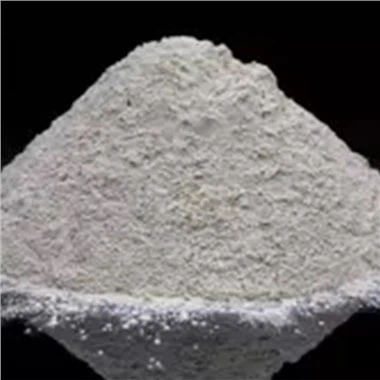
Hey there! As a supplier of Granular Polyanionic Cellulose (GPAC), I've been getting a lot of questions lately about its role in controlled - release drug delivery systems. So, I thought I'd take some time to break it down for you.
First off, let's talk about what controlled - release drug delivery systems are. These systems are designed to release drugs into the body at a controlled rate over a specific period. This is super important because it helps maintain a steady level of the drug in the bloodstream, which can improve the drug's effectiveness and reduce side effects.
Now, where does Granular Polyanionic Cellulose fit into all of this? Well, GPAC has some unique properties that make it an excellent candidate for use in these systems.
One of the key features of GPAC is its high swelling capacity. When GPAC comes into contact with water or body fluids, it swells up. This swelling forms a gel - like matrix around the drug particles. The drug has to diffuse through this gel matrix to be released into the body. By adjusting the amount and properties of the GPAC, we can control how fast the drug diffuses out of the matrix. For example, if we use a higher concentration of GPAC, the gel matrix will be denser, and the drug will be released more slowly.
Another important property of GPAC is its biocompatibility. It's non - toxic and can be safely used in the human body. This is crucial because any material used in a drug delivery system has to be well - tolerated by the body. If a material causes an immune response or other adverse reactions, it's not going to be suitable for use in drugs.
GPAC also has good mechanical properties. It can form stable matrices that can withstand the mechanical stresses in the body, such as the movement of the gastrointestinal tract. This ensures that the drug delivery system remains intact and functions as intended throughout its time in the body.


Let's take a closer look at how GPAC can be used in different types of controlled - release drug delivery systems.
Oral Drug Delivery
Oral drug delivery is one of the most common routes of drug administration. GPAC can be used to make tablets or capsules that release drugs in a controlled manner. For example, in a matrix tablet, the drug and GPAC are mixed together and compressed into a tablet. Once the tablet is swallowed and reaches the stomach or intestines, the GPAC swells and forms a gel layer. The drug then diffuses through this gel layer and is absorbed into the bloodstream.
We can also use GPAC to make enteric - coated tablets. Enteric coatings are designed to protect the drug from the acidic environment of the stomach and release it in the more alkaline environment of the intestines. GPAC can be part of the enteric coating formulation, helping to control the release of the drug in the intestines.
Transdermal Drug Delivery
Transdermal drug delivery involves applying a patch to the skin to deliver the drug into the body. GPAC can be used in the adhesive layer of the patch. It can form a gel - like structure that holds the drug and controls its release through the skin. The swelling and diffusion properties of GPAC can be adjusted to optimize the rate of drug delivery through the skin.
Implantable Drug Delivery Systems
Implantable drug delivery systems are devices that are placed inside the body, usually under the skin or in a specific organ. GPAC can be used to make the matrix of these implants. For example, a GPAC - based implant can be designed to release a drug over a period of months or even years. This is especially useful for drugs that need to be administered continuously, such as some hormonal therapies.
Now, I want to mention two of our popular products. If you're interested in fast - acting and well - performing GPAC, check out our Fast Dispersed Polyanionic Cellulose PAC LV and Fast Dispersed Polyanionic Cellulose PAC HV. These products have been carefully formulated to provide excellent performance in controlled - release drug delivery systems.
The PAC LV is great for applications where a relatively fast release of the drug is desired. It has a lower viscosity, which means the gel matrix it forms is less dense, allowing the drug to diffuse out more quickly. On the other hand, the PAC HV has a higher viscosity. It forms a denser gel matrix, which is ideal for applications where a slow and sustained release of the drug is needed.
In conclusion, Granular Polyanionic Cellulose plays a vital role in controlled - release drug delivery systems. Its unique properties, such as swelling capacity, biocompatibility, and mechanical stability, make it a valuable material for designing drug delivery systems that can release drugs in a controlled and predictable manner.
If you're in the pharmaceutical industry and are looking for a reliable GPAC supplier for your controlled - release drug delivery projects, I'd love to have a chat with you. We can discuss your specific needs and how our products can meet them. Whether you're working on oral, transdermal, or implantable drug delivery systems, we've got the expertise and high - quality GPAC products to support your research and development.
References
- Peppas, N. A., & Bures, P., & Leobandung, W., & Ichikawa, H. (2000). Hydrogels in pharmaceutical formulations. European Journal of Pharmaceutics and Biopharmaceutics, 50(1), 27 - 46.
- Singh, B., & Kim, K. (2009). Polymers for controlled drug delivery. Progress in Polymer Science, 34(1), 99 - 135.
- Li, Y., & Mooney, D. J. (2016). Designing materials to direct stem - cell fate. Nature, 442(7101), 364 - 371.