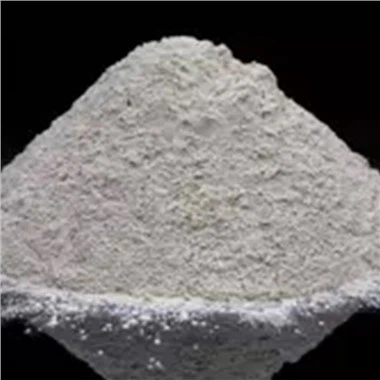
Food Grade Powder CMC, also known as Carboxymethyl Cellulose, is a widely used additive in the food industry. As a leading supplier of Food Grade Powder CMC, I am often asked about how it acts as a stabilizer in food. In this blog post, I will delve into the science behind its stabilizing properties and explain why it is such a valuable ingredient in food production.
Understanding Food Grade Powder CMC
Before we explore its stabilizing functions, let's first understand what Food Grade Powder CMC is. CMC is a derivative of cellulose, which is the most abundant polymer on Earth and is found in the cell walls of plants. Through a chemical process, cellulose is modified to introduce carboxymethyl groups, resulting in Carboxymethyl Cellulose. When it comes to food applications, only food - grade quality is used, ensuring it meets strict safety and quality standards.


The structure of CMC is characterized by a long - chain polymer backbone with carboxymethyl groups attached at regular intervals. These carboxymethyl groups can dissociate in water, giving the molecule a negative charge. This charged nature is crucial for its various functions in food systems, including its role as a stabilizer.
How Food Grade Powder CMC Acts as a Stabilizer
Viscosity Modification
One of the primary ways Food Grade Powder CMC acts as a stabilizer is by modifying the viscosity of food products. When CMC is added to a liquid food system, such as a sauce, dressing, or beverage, it dissolves and forms a viscous solution. This increase in viscosity helps to prevent the separation of different components in the food.
For example, in a salad dressing, oil and water are immiscible substances. Without a stabilizer, the oil would separate from the water over time. However, when Food Grade Powder CMC is added, it thickens the aqueous phase. The increased viscosity creates a physical barrier that slows down the movement of oil droplets, preventing them from coalescing and rising to the surface. This results in a more stable and homogeneous dressing that maintains its texture and appearance for a longer period.
The degree of viscosity increase depends on several factors, including the concentration of CMC, the degree of substitution (DS) of carboxymethyl groups, and the pH and temperature of the food system. A higher concentration of CMC generally leads to a greater increase in viscosity. The DS affects the solubility and the ability of CMC to interact with other components in the food. Sodium Carboxymethyl with a higher DS may have different viscosity - building properties compared to those with a lower DS.
Emulsion and Foam Stabilization
Food Grade Powder CMC is also effective in stabilizing emulsions and foams. In an emulsion, such as mayonnaise, which is an oil - in - water emulsion, CMC adsorbs at the oil - water interface. The hydrophilic carboxymethyl groups interact with the water phase, while the hydrophobic parts of the CMC molecule interact with the oil droplets. This creates a protective layer around the oil droplets, preventing them from coming together and coalescing.
In the case of foams, like whipped cream or meringue, CMC can increase the viscosity of the continuous phase. This helps to support the gas bubbles and prevent them from collapsing. The charged nature of CMC also contributes to foam stability by creating electrostatic repulsion between the gas bubbles, keeping them well - dispersed in the food matrix. Carboxymethyl Cellulose Sodium is commonly used in these applications due to its excellent emulsifying and foaming properties.
Suspension Stabilization
In foods that contain solid particles in a liquid medium, such as fruit juices with pulp or dairy products with added particles, Food Grade Powder CMC can act as a suspension stabilizer. The increased viscosity of the liquid phase caused by CMC slows down the sedimentation of solid particles.
For instance, in a fruit juice with pulp, the pulp particles tend to sink to the bottom over time. By adding CMC, the juice becomes more viscous, and the pulp particles are suspended throughout the liquid. The charged CMC molecules can also interact with the surface of the solid particles, creating a repulsive force that further prevents particle aggregation and sedimentation.
Gel Formation
Under certain conditions, Food Grade Powder CMC can form gels. Gels are three - dimensional networks that can trap water and other components, providing stability to food products. In some dairy desserts, for example, CMC can be used to form a gel structure. The gel network holds the milk proteins and other ingredients in place, preventing syneresis (the separation of liquid from the gel).
The gelation process of CMC is influenced by factors such as the presence of salts, pH, and temperature. In the presence of divalent cations like calcium, CMC can form stronger gels through cross - linking reactions. The ability to form gels makes CMC a valuable stabilizer in products where a firm texture and long - term stability are required.
Benefits of Using Food Grade Powder CMC as a Stabilizer
Improved Shelf Life
By preventing the separation, sedimentation, and coalescence of components in food products, Food Grade Powder CMC significantly extends the shelf life of these products. Consumers can enjoy products that maintain their quality and appearance for a longer time, reducing food waste.
Enhanced Texture
The viscosity - modifying and stabilizing properties of CMC contribute to an improved texture in food products. Sauces become smoother, dressings are more creamy, and beverages have a better mouthfeel. This enhanced texture can make the products more appealing to consumers.
Compatibility with Other Ingredients
Food Grade Powder CMC is highly compatible with a wide range of other food ingredients, including proteins, carbohydrates, and fats. It can be used in combination with other stabilizers, emulsifiers, and thickeners to achieve the desired stability and texture in food products. CMC Cellulose can work synergistically with other additives to provide even better results.
Applications of Food Grade Powder CMC as a Stabilizer
Dairy Products
In dairy products such as yogurt, ice cream, and cheese, CMC is used to stabilize the emulsion, prevent whey separation, and improve the texture. In yogurt, it helps to maintain a smooth and creamy consistency, while in ice cream, it reduces ice crystal formation and improves the melting resistance.
Bakery Products
In bakery products, CMC can be used to improve the volume, texture, and shelf life. It can prevent staling by retaining moisture in the bread and cakes, and it also helps to keep the filling in pastries from leaking.
Beverages
In fruit juices, soft drinks, and energy drinks, CMC is used to suspend pulp, prevent sedimentation, and improve the mouthfeel. It can also be used in alcoholic beverages to stabilize flavors and prevent haze formation.
Conclusion
Food Grade Powder CMC is a versatile and effective stabilizer in the food industry. Its ability to modify viscosity, stabilize emulsions, foams, and suspensions, and form gels makes it an essential ingredient in a wide range of food products. As a supplier of high - quality Food Grade Powder CMC, we are committed to providing our customers with products that meet their specific needs.
If you are in the food production business and are looking for a reliable stabilizer for your products, we invite you to contact us for more information and to discuss your procurement requirements. Our team of experts can help you select the right grade of CMC for your applications and provide technical support to ensure the best results.
References
- Davidson, R. L. (1980). Handbook of Water - Soluble Gums and Resins. McGraw - Hill.
- Whistler, R. L., & BeMiller, J. N. (1993). Industrial Gums: Polysaccharides and Their Derivatives. Academic Press.
- Imeson, A. (2010). Thickening and Gelling Agents for the Food Industry. Leatherhead Publishing.