Can Pating Grade Organoclay be used in aerospace materials?
As a supplier of Pating Grade Organoclay, I've often been asked about the potential applications of our product in various industries, especially aerospace. The aerospace sector demands materials that offer exceptional performance, reliability, and safety. In this blog, I'll explore whether Pating Grade Organoclay can meet the stringent requirements of aerospace materials.


Understanding Pating Grade Organoclay
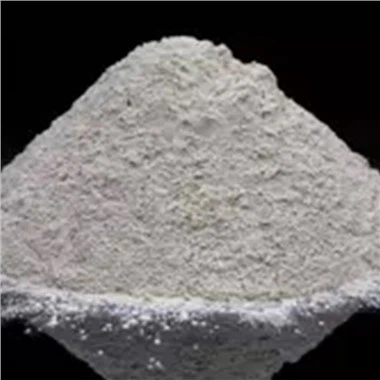
Pating Grade Organoclay is a type of organophilic clay that has been modified to enhance its compatibility with organic solvents and polymers. It is commonly used in paints, coatings, and adhesives to improve viscosity, thixotropy, and sag resistance. Our Guanual Painting Grade Organoclay and Fine Powder Organoclay are two of our flagship products, known for their high quality and consistent performance.
Key Properties of Pating Grade Organoclay
- Viscosity Control: One of the primary functions of Pating Grade Organoclay is to control the viscosity of liquid systems. In aerospace applications, precise viscosity control is crucial for ensuring proper coating application and performance. By adjusting the amount of organoclay added to a paint or adhesive formulation, manufacturers can achieve the desired viscosity for spraying, brushing, or dipping processes.
- Thixotropy: Thixotropy is the property of a material to become less viscous when subjected to shear stress and return to its original viscosity when the stress is removed. This characteristic is highly beneficial in aerospace coatings, as it allows for easy application during spraying or brushing while preventing sagging or dripping on vertical surfaces. Pating Grade Organoclay can impart excellent thixotropic behavior to coatings, ensuring uniform coverage and a smooth finish.
- Rheological Stability: Aerospace materials are often exposed to extreme temperature and pressure conditions. Pating Grade Organoclay provides excellent rheological stability, maintaining its viscosity and thixotropic properties over a wide range of temperatures and shear rates. This stability ensures that coatings and adhesives perform consistently under varying environmental conditions, which is essential for the safety and reliability of aerospace components.
- Reinforcement: In addition to its rheological properties, Pating Grade Organoclay can also act as a reinforcement filler in polymer matrices. When incorporated into composites, the organoclay particles can enhance the mechanical properties of the material, such as strength, stiffness, and impact resistance. This reinforcement effect can contribute to the overall durability and performance of aerospace structures.
Potential Applications in Aerospace
- Coatings: Aerospace coatings play a vital role in protecting aircraft surfaces from corrosion, abrasion, and environmental damage. Pating Grade Organoclay can be used in primer, topcoat, and specialty coatings to improve their application properties and performance. For example, in anti - corrosion coatings, the organoclay can help to enhance the barrier properties of the coating, preventing the penetration of moisture and corrosive agents. In high - temperature coatings, it can provide thermal stability and prevent cracking or peeling under extreme heat.
- Adhesives: Adhesives are used extensively in aerospace assembly to bond various components together. Pating Grade Organoclay can be added to adhesive formulations to improve their viscosity, thixotropy, and bonding strength. By controlling the flow of the adhesive during application, the organoclay ensures proper wetting and adhesion between surfaces. Additionally, its reinforcement effect can enhance the mechanical properties of the adhesive joint, making it more resistant to shear and peel forces.
- Composites: Composites are widely used in aerospace structures due to their high strength - to - weight ratio. Pating Grade Organoclay can be incorporated into composite materials, such as carbon fiber - reinforced polymers (CFRP) or glass fiber - reinforced polymers (GFRP), to improve their processing and mechanical properties. The organoclay can help to disperse the fibers more evenly in the polymer matrix, reducing voids and improving the overall quality of the composite. It can also enhance the interfacial bonding between the fibers and the matrix, leading to better mechanical performance.
Challenges and Considerations
While Pating Grade Organoclay shows great potential for aerospace applications, there are also some challenges and considerations that need to be addressed.
- Compatibility: Ensuring the compatibility of Pating Grade Organoclay with other aerospace materials, such as polymers, solvents, and additives, is essential. Incompatibility can lead to issues such as phase separation, reduced performance, and poor adhesion. Extensive testing and formulation optimization are required to ensure that the organoclay works well with the specific materials used in aerospace applications.
- Regulatory Compliance: The aerospace industry is highly regulated, and all materials used in aircraft must meet strict safety and performance standards. Pating Grade Organoclay suppliers need to ensure that their products comply with relevant aerospace regulations, such as those related to flammability, toxicity, and environmental impact.
- Cost - Effectiveness: Aerospace manufacturers are always looking for cost - effective solutions without compromising on quality and performance. While Pating Grade Organoclay offers many benefits, its cost needs to be carefully evaluated in the context of overall production costs. Suppliers need to work closely with manufacturers to optimize formulations and find the most cost - effective ways to incorporate organoclay into aerospace materials.
Conclusion
In conclusion, Pating Grade Organoclay has significant potential for use in aerospace materials. Its unique rheological properties, such as viscosity control, thixotropy, and rheological stability, make it a valuable additive in coatings, adhesives, and composites. Additionally, its reinforcement effect can enhance the mechanical properties of aerospace structures. However, to fully realize its potential, challenges related to compatibility, regulatory compliance, and cost - effectiveness need to be addressed.
As a supplier of Pating Grade Organoclay, we are committed to working with aerospace manufacturers to develop innovative solutions that meet the industry's demanding requirements. If you are interested in exploring the use of our Pating Grade Organoclay in your aerospace applications, we would be delighted to discuss your specific needs and provide technical support. Please feel free to contact us to start a procurement discussion.
References
- Xiong, J., & Huang, Y. (2018). Rheological behavior and application of organoclay in polymer composites. Journal of Polymer Science Part B: Polymer Physics, 56(22), 1629 - 1642.
- Zhou, Z., & Zhang, L. (2019). Effect of organoclay on the performance of aerospace coatings. Progress in Organic Coatings, 134, 105247.
- Lee, S. H., & Park, C. B. (2020). Organoclay - reinforced polymer composites for aerospace applications. Composites Part A: Applied Science and Manufacturing, 131, 105889.