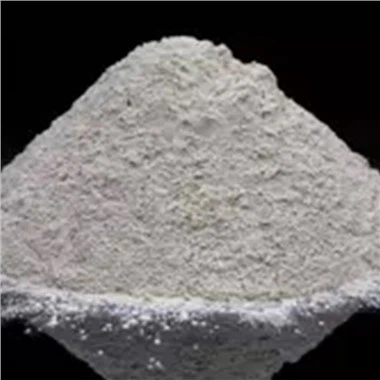
Hey there! As a supplier of Carboxymethyl Cellulose E466, I've been getting a bunch of questions lately about how it affects the drying time of coatings. So, I thought I'd dive into this topic and share what I know.
First off, let's talk a bit about Carboxymethyl Cellulose E466. It's a widely - used additive in various industries, and it goes by different names like CMC Carboxymethyl Cellulose, Food Grade Granular CMC, and Sodium Carboxymethyl Cellulose. In the coating industry, it plays a crucial role in altering the properties of coatings, and one of the key aspects is the drying time.
How Carboxymethyl Cellulose E466 Works in Coatings
When you add Carboxymethyl Cellulose E466 to a coating formulation, it acts as a thickening agent. It increases the viscosity of the coating. This increase in viscosity has a direct impact on how the coating dries.
You see, a coating dries mainly through two processes: evaporation of the solvent and the formation of a film. In a coating with a low viscosity, the solvent can evaporate relatively quickly. But when we add Carboxymethyl Cellulose E466, the thickened coating slows down the evaporation rate.
The thickening effect is due to the long - chain structure of Carboxymethyl Cellulose E466. These chains entangle with each other and with the other components in the coating, creating a sort of network. This network traps the solvent molecules, making it harder for them to escape into the atmosphere. As a result, the drying time is extended.
Factors Affecting the Impact on Drying Time
The effect of Carboxymethyl Cellulose E466 on the drying time of coatings isn't a one - size - fits - all situation. There are several factors that can influence how much it affects the drying time.
Concentration of Carboxymethyl Cellulose E466
The more Carboxymethyl Cellulose E466 you add to the coating, the greater the increase in viscosity. And as I mentioned earlier, higher viscosity means slower solvent evaporation. So, if you use a high concentration of Carboxymethyl Cellulose E466, the drying time will be significantly longer compared to using a lower concentration.
For example, in a small - scale experiment, when we added just 1% of Carboxymethyl Cellulose E466 to a water - based acrylic coating, the drying time increased by about 10 - 15 minutes compared to the coating without it. But when we increased the concentration to 3%, the drying time went up by almost 30 minutes.
Type of Coating
Different types of coatings react differently to Carboxymethyl Cellulose E466. Water - based coatings are more commonly affected because the water acts as the solvent, and Carboxymethyl Cellulose E466 has a good solubility in water. In solvent - based coatings, the effect might be less pronounced because the solvents used have different evaporation rates and chemical properties compared to water.
For instance, in a water - based latex paint, the addition of Carboxymethyl Cellulose E466 can cause a noticeable delay in drying. But in a solvent - based alkyd paint, the change in drying time might be minimal.
Environmental Conditions
The environment in which the coating is applied also matters. Temperature and humidity play a huge role. In a warm and dry environment, the solvent in the coating will evaporate faster, even with the presence of Carboxymethyl Cellulose E466. On the other hand, in a cool and humid environment, the drying process is already slow, and the addition of Carboxymethyl Cellulose E466 can make it even slower.
Let's say you're applying a coating with Carboxymethyl Cellulose E466 on a sunny day with low humidity. The drying time might only be slightly longer than a coating without it. But if it's a rainy and cool day, the difference in drying time can be quite significant.
Benefits of Altered Drying Time
Even though it might seem like extending the drying time is a negative thing, it actually has some benefits.
Improved Workability
A longer drying time gives the applicator more time to work with the coating. They can spread it evenly, correct any mistakes, and achieve a better finish. This is especially important for large - scale coating projects where it takes time to cover a big area.


Reduced Sagging
When a coating dries too quickly, it can sag or drip before it sets properly. By extending the drying time with Carboxymethyl Cellulose E466, the coating has more time to level out, reducing the chances of sagging. This results in a more uniform and professional - looking finish.
Drawbacks of Extended Drying Time
Of course, there are also some drawbacks to consider.
Longer Project Completion Time
In a commercial setting, longer drying times mean longer project completion times. This can lead to increased labor costs and potential delays in getting a project done. For example, if you're painting a building and the coating takes twice as long to dry as usual, the workers will have to wait longer between coats, which can slow down the entire painting process.
Increased Risk of Contamination
The longer the coating is wet, the more time there is for dust, dirt, or insects to land on it. This can contaminate the coating and affect its final appearance and performance.
Controlling the Impact on Drying Time
As a supplier, I understand that you might want to control the impact of Carboxymethyl Cellulose E466 on the drying time. Here are some ways to do it.
Adjusting the Concentration
You can play around with the concentration of Carboxymethyl Cellulose E466 in the coating. If you want a shorter drying time, use a lower concentration. If you need more workability and reduced sagging, a higher concentration might be appropriate.
Combining with Other Additives
There are other additives available that can counteract the effect of Carboxymethyl Cellulose E466 on drying time. For example, some drying accelerators can be added to the coating to speed up the evaporation process.
Conclusion
In conclusion, Carboxymethyl Cellulose E466 has a significant effect on the drying time of coatings. It extends the drying time mainly by increasing the viscosity of the coating and slowing down solvent evaporation. However, this effect can be influenced by factors such as concentration, type of coating, and environmental conditions.
While there are benefits like improved workability and reduced sagging, there are also drawbacks such as longer project completion times and increased risk of contamination. But with proper control and adjustment, you can make the most of the properties of Carboxymethyl Cellulose E466 in your coating formulations.
If you're interested in using Carboxymethyl Cellulose E466 in your coating projects or have any questions about how it can be tailored to your specific needs, feel free to reach out. We can have a detailed discussion about your requirements and find the best solution for you.
References
- Paint and Coating Technology Handbook, Second Edition
- Journal of Coatings Technology and Research, various issues on additives in coatings