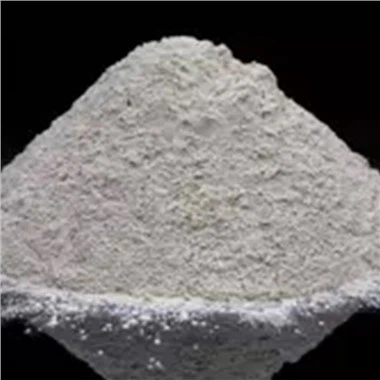
Carboxymethyl cellulose (CMC), also known as cellulose gum and designated as E466 in the European food additive system, is a water - soluble derivative of cellulose. As a leading supplier of Carboxymethyl Cellulose E466, I've witnessed its wide - ranging applications across various industries. One of the particularly interesting uses is in the ink industry, where its influence on pigment dispersion is of great significance.
The Basics of Pigment Dispersion in Inks
Inks are complex formulations that typically consist of pigments, binders, solvents, and additives. Pigments are the coloring agents that give the ink its characteristic hue. However, pigments in their raw form tend to agglomerate due to intermolecular forces such as van der Waals forces. Agglomerated pigments can lead to uneven color distribution, poor print quality, and clogging of printing equipment.
The process of pigment dispersion involves breaking down these agglomerates into individual particles and preventing them from re - agglomerating. A well - dispersed pigment suspension ensures consistent color intensity, better flow properties of the ink, and improved printability.
How Carboxymethyl Cellulose E466 Facilitates Pigment Dispersion
Steric Stabilization
Carboxymethyl Cellulose E466 can adsorb onto the surface of pigment particles. The long - chain polymer structure of CMC forms a steric barrier around the pigment particles. When two pigment particles approach each other, the adsorbed CMC chains repel each other due to the physical presence of the polymer chains. This repulsion prevents the particles from coming close enough for van der Waals forces to cause re - agglomeration. For example, in water - based inks, the hydrophilic nature of CMC allows it to interact with water molecules while the hydrophobic parts can interact with the pigment surface, creating a stable dispersion.


Electrostatic Repulsion
The carboxymethyl groups in Carboxymethyl Cellulose E466 are ionizable in water, giving the polymer a negative charge. When CMC adsorbs onto pigment particles, it imparts a negative charge to the particle surface. Particles with the same charge repel each other according to the electrostatic principle. This electrostatic repulsion further aids in maintaining the separation of pigment particles in the ink formulation.
Viscosity Modification
CMC is a well - known thickening agent. By increasing the viscosity of the ink medium, it reduces the mobility of pigment particles. Slower - moving particles are less likely to collide and form agglomerates. In addition, the increased viscosity can also help in suspending the pigment particles in the ink, preventing sedimentation. For instance, in screen printing inks, the appropriate viscosity provided by CMC ensures that the ink stays on the screen and transfers evenly onto the substrate.
Advantages of Using Carboxymethyl Cellulose E466 for Pigment Dispersion in Inks
Improved Color Quality
A well - dispersed pigment results in more uniform color distribution in the ink. This means that printed materials have a consistent and vibrant color, which is crucial for high - quality printing applications such as packaging, magazines, and posters. For example, in the printing of food packaging, accurate and consistent color representation is essential for brand recognition and consumer appeal.
Better Printability
Inks with well - dispersed pigments have better flow properties. They can be applied more evenly onto the printing substrate, whether it is paper, plastic, or fabric. This reduces the likelihood of streaks, blurs, or uneven coverage during the printing process. In flexographic printing, for instance, the use of CMC - dispersed inks ensures smooth ink transfer from the printing plate to the substrate.
Enhanced Stability
Carboxymethyl Cellulose E466 helps to maintain the stability of the ink over time. It prevents pigment sedimentation, which can occur during storage or transportation. This means that the ink retains its quality and performance characteristics for a longer period, reducing waste and the need for frequent ink adjustments.
Applications in Different Types of Inks
Water - Based Inks
Water - based inks are becoming increasingly popular due to their environmental friendliness. Carboxymethyl Cellulose E466 is highly compatible with water - based systems. Its ability to dissolve in water and provide effective pigment dispersion makes it an ideal additive. In water - based inkjet inks, for example, CMC can help to keep the pigment particles well - dispersed, ensuring smooth ink flow through the printhead and high - resolution printing.
Solvent - Based Inks
Although CMC is water - soluble, modified forms of CMC can also be used in solvent - based inks. These modified CMCs can be designed to be compatible with organic solvents. They still provide the benefits of pigment dispersion and viscosity control in solvent - based systems, which are commonly used in applications such as gravure printing.
UV - Curable Inks
In UV - curable inks, where the ink is cured rapidly under ultraviolet light, pigment dispersion is crucial for achieving a uniform cured film. Carboxymethyl Cellulose E466 can be incorporated into the ink formulation to ensure that the pigments are evenly distributed before and during the curing process. This results in a cured ink film with consistent color and properties.
Our Offerings as a Carboxymethyl Cellulose E466 Supplier
As a supplier, we offer high - quality Carboxymethyl Cellulose E466 that is specifically formulated for ink applications. Our products are available in different grades, with varying degrees of substitution and viscosity, to meet the specific requirements of different ink formulations.
We also provide Food Grade Powder CMC and Sodium Carboxymethyl Cellulose options. These products are manufactured under strict quality control standards to ensure their purity and performance. Our technical support team is always ready to assist customers in selecting the most suitable CMC product for their ink formulations and providing guidance on the optimal usage levels.
Contact Us for Procurement and Collaboration
If you are in the ink manufacturing industry and are looking for a reliable supplier of Carboxymethyl Cellulose E466, we would love to hear from you. Our products can significantly enhance the pigment dispersion in your inks, leading to improved product quality and performance. Whether you are developing new ink formulations or looking to optimize existing ones, our expertise and high - quality products can be of great value to you. Contact us to start a procurement discussion and explore how we can work together to meet your specific needs.
References
- R. J. Hunter, "Foundations of Colloid Science", Oxford University Press, 2001.
- C. E. Carraher Jr., "Polymer Chemistry: An Introduction", Marcel Dekker, 2000.
- G. A. Odian, "Principles of Polymerization", John Wiley & Sons, 2004.