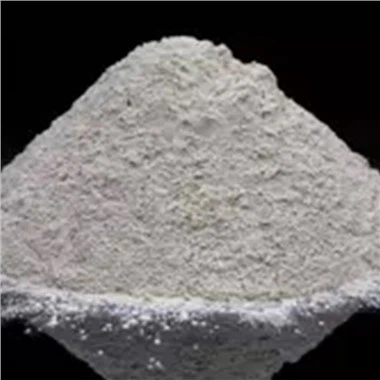
In the realm of industrial materials, organoclays play a pivotal role, especially in applications such as paints, coatings, and adhesives. As a supplier of Fine Powder Organoclay, I've witnessed firsthand the transformative impact of modified organoclays compared to their unmodified counterparts. In this blog, I'll delve into the performance differences between modified and unmodified Fine Powder Organoclay, exploring the science behind these materials and their practical implications for various industries.
Understanding Organoclays
Before we compare modified and unmodified Fine Powder Organoclay, it's essential to understand what organoclays are. Organoclays are clay minerals that have been chemically modified to make them compatible with organic solvents and polymers. This modification involves replacing the natural inorganic cations on the clay surface with organic cations, typically quaternary ammonium salts. The result is a material with enhanced hydrophobicity and affinity for organic matrices.
Unmodified clay minerals, such as bentonite, are hydrophilic and have limited compatibility with organic materials. They tend to form aggregates in organic solvents, leading to poor dispersion and reduced performance in applications. On the other hand, modified organoclays can disperse easily in organic systems, providing improved rheological properties and other benefits.
Performance in Rheology
One of the most significant differences between modified and unmodified Fine Powder Organoclay lies in their rheological behavior. Rheology is the study of the flow and deformation of materials, and it plays a crucial role in many industrial applications.
Unmodified organoclays have a relatively low viscosity in organic solvents, which can lead to poor suspension and settling issues. They may not provide sufficient thickening or thixotropy, which are essential properties in paints, coatings, and adhesives. Thixotropy refers to the ability of a material to become less viscous when subjected to shear stress and then return to its original viscosity when the shear stress is removed. This property is crucial for preventing sagging in vertical applications and ensuring proper leveling and flow during application.
Modified Fine Powder Organoclay, on the other hand, exhibits excellent rheological properties. The organic modification enhances the interaction between the clay particles and the organic matrix, resulting in a higher viscosity and better suspension. The modified organoclay forms a three-dimensional network structure in the organic solvent, which provides significant thickening and thixotropy. This network structure can effectively prevent the settling of pigments and fillers in paints and coatings, ensuring a uniform distribution and improved appearance.
For example, in a Guanual Painting Grade Organoclay formulation, the use of modified Fine Powder Organoclay can significantly improve the sag resistance and leveling properties of the paint. The paint will have a better consistency, making it easier to apply and providing a smoother finish.
Compatibility with Organic Matrices
Another key aspect of performance is the compatibility of the organoclay with the organic matrix. Unmodified organoclays have limited compatibility with organic solvents and polymers due to their hydrophilic nature. This can lead to phase separation, poor adhesion, and reduced mechanical properties in the final product.


Modified Fine Powder Organoclay, however, is designed to be highly compatible with a wide range of organic materials. The organic modification on the clay surface allows it to interact more effectively with the organic matrix, forming a stable and homogeneous dispersion. This compatibility is essential for achieving optimal performance in various applications.
In adhesives, for instance, the use of modified organoclay can improve the bonding strength and durability of the adhesive. The organoclay can enhance the interaction between the adhesive and the substrate, providing better adhesion and resistance to environmental factors.
Chemical and Thermal Stability
Chemical and thermal stability are also important considerations when evaluating the performance of organoclays. Unmodified organoclays may be susceptible to chemical degradation and thermal decomposition, especially in harsh environments. This can lead to a loss of performance and a reduction in the lifespan of the final product.
Modified Fine Powder Organoclay offers improved chemical and thermal stability compared to its unmodified counterpart. The organic modification on the clay surface provides a protective layer that can prevent chemical attack and thermal degradation. This makes the modified organoclay more suitable for applications in high-temperature or chemically aggressive environments.
In industrial coatings, for example, the use of modified organoclay can enhance the corrosion resistance and weatherability of the coating. The organoclay can act as a barrier, preventing the penetration of water, oxygen, and other corrosive agents into the substrate.
Impact on Mechanical Properties
The mechanical properties of a material can also be significantly affected by the use of modified or unmodified Fine Powder Organoclay. Unmodified organoclays may not provide sufficient reinforcement to the organic matrix, resulting in poor mechanical strength and stiffness.
Modified organoclays, on the other hand, can act as reinforcing fillers in the organic matrix. The interaction between the clay particles and the polymer chains can enhance the mechanical properties of the composite material. This can lead to improved tensile strength, flexural strength, and impact resistance.
In composite materials used in the automotive and aerospace industries, the addition of modified Fine Powder Organoclay can significantly improve the mechanical performance of the components. The organoclay can help to reduce the weight of the material while maintaining or even enhancing its strength and stiffness.
Practical Applications
The performance differences between modified and unmodified Fine Powder Organoclay have significant implications for various industries. In the paint and coating industry, the use of modified organoclay can improve the quality and performance of the products, resulting in better customer satisfaction and increased market competitiveness.
In the adhesive industry, modified organoclay can enhance the bonding strength and durability of adhesives, making them suitable for a wider range of applications.
In the plastics and rubber industry, the addition of modified organoclay can improve the mechanical properties and processing characteristics of the materials, leading to more efficient production and better-quality products.
Conclusion
In conclusion, the modified Fine Powder Organoclay offers significant performance advantages over the unmodified one. Its superior rheological properties, compatibility with organic matrices, chemical and thermal stability, and impact on mechanical properties make it a preferred choice for many industrial applications.
As a supplier of Fine Powder Organoclay, I'm committed to providing high-quality products that meet the specific needs of our customers. If you're interested in learning more about our Fine Powder Organoclay or discussing your application requirements, please don't hesitate to contact us. We're here to help you find the best solution for your business.
References
- Lagaly, G. (1999). Organo-clay complexes and interactions. In Clay Minerals: Structures, Properties, and Materials Applications (pp. 179-206). Springer, Berlin, Heidelberg.
- Ray, S. S., & Okamoto, M. (2003). Polymer/layered silicate nanocomposites: a review from preparation to processing. Progress in Polymer Science, 28(11), 1539-1641.
- Xu, Z., & Huang, X. (2012). Rheological behavior of organoclay suspensions in nonpolar solvents. Journal of Colloid and Interface Science, 377(1), 213-220.