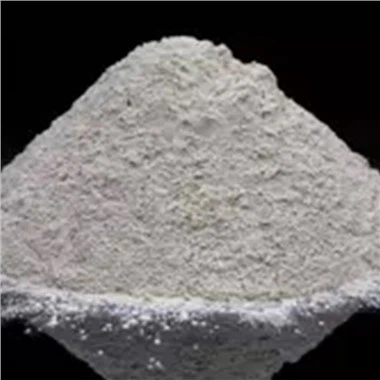
Hey there! As a supplier of Sodium Carboxymethyl, I often get asked about its chemical formula. So, let's dive right into it.
Sodium Carboxymethyl, commonly known as Sodium Carboxymethyl Cellulose (CMC), is a water - soluble polymer. Its chemical formula is typically written as [C₆H₇O₂(OH)₃₋ₓ(OCH₂COONa)ₓ]ₙ. Now, let me break this down a bit for you.
The basic building block of cellulose is the glucose unit. In cellulose, each glucose unit has three hydroxyl (-OH) groups. In the process of making Sodium Carboxymethyl Cellulose, some of these hydroxyl groups are replaced by carboxymethyl groups (-CH₂COONa). The 'x' in the formula represents the degree of substitution (DS), which indicates the average number of carboxymethyl groups per glucose unit. The value of 'x' can range from 0 to 3. Usually, in commercial products, the DS is around 0.6 - 1.4. The 'n' in the formula represents the degree of polymerization, which is the number of glucose units linked together in the polymer chain.
Sodium Carboxymethyl Cellulose has a wide range of applications due to its unique properties. One of the main reasons it's so popular is its ability to thicken, stabilize, and emulsify.
In the food industry, it's a real game - changer. You can find it in all sorts of products. For example, in ice cream, it helps prevent the formation of ice crystals, giving the ice cream a smoother texture. It's also used in salad dressings to keep the oil and water from separating. If you're interested in the food - grade version of CMC, you can check out Food Grade Powder CMC. It meets all the safety standards for food applications.
Another important aspect in the food industry is its E - number. CMC is known as Carboxymethyl Cellulose E466. The E - number system is used in the European Union to identify food additives. Carboxymethyl Cellulose E466 is considered safe for consumption when used within the approved limits. It's a common ingredient in many processed foods, and you might not even realize it's there!
Beyond the food industry, Sodium Carboxymethyl Cellulose has applications in other sectors too. In the pharmaceutical industry, it's used as a binder in tablets, helping to hold the ingredients together. It can also be used as a thickening agent in liquid medications. In the textile industry, it's used as a sizing agent to improve the weaving process of fabrics.
As a supplier, I can tell you that the quality of Sodium Carboxymethyl Cellulose can vary. The degree of substitution, the viscosity, and the purity all play important roles in determining its performance in different applications. That's why it's crucial to choose a reliable supplier.


If you're in the market for Sodium Carboxymethyl Cellulose, you can learn more about our product on Sodium Carboxymethyl Cellulose. We offer high - quality products that are carefully manufactured to meet your specific needs. Whether you're in the food, pharmaceutical, or textile industry, we've got you covered.
We understand that every customer has different requirements. That's why we're always ready to have a chat with you about your project. If you have any questions about the chemical formula, the applications, or the quality of our Sodium Carboxymethyl Cellulose, don't hesitate to reach out. We're here to help you make the best choice for your business.
So, if you're interested in starting a procurement process or just want to have a friendly chat about how Sodium Carboxymethyl Cellulose can benefit your products, get in touch. We're eager to work with you and provide you with the best solution for your needs.
References:
- "Handbook of Water - Soluble Gums and Resins" by Robert L. Davidson
- "Food Additives: Chemistry, Safety, and Function" by A. A. Baker and J. C. Bienvenue