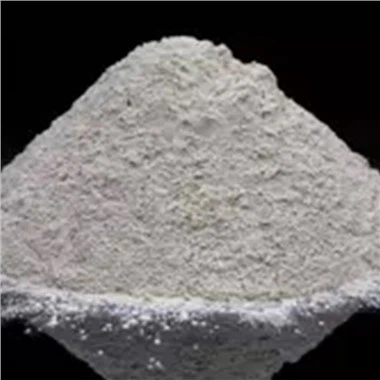
Hey there, fellow oil drilling enthusiasts! I'm an Oil Drilling Grade Organoclay supplier, and today I want to dig deep into how the precise pressure control in managed - pressure drilling interacts with the performance of our amazing Oil Drilling Grade Organoclay.
Let's first talk about what managed - pressure drilling (MPD) is all about. MPD is a technique that allows us to precisely control the pressure in the wellbore during the drilling process. It's like having a super - fine - tuned knob to adjust the pressure just right. This is crucial because in the world of oil drilling, getting the pressure wrong can lead to all sorts of problems, like wellbore instability, lost circulation, or even a blowout.


Now, enter Oil Drilling Grade Organoclay. It's a key ingredient in drilling fluids. Drilling fluids play multiple roles, such as carrying cuttings to the surface, lubricating the drill bit, and maintaining wellbore stability. Organoclay helps to give these drilling fluids the right properties, like viscosity and gel strength.
So, how do these two things interact? Well, the precise pressure control in MPD affects the way Organoclay behaves in the drilling fluid. When the pressure in the wellbore is well - managed, it allows the Organoclay to disperse more evenly in the fluid. This is important because a more even dispersion means better performance of the drilling fluid. For example, if the Organoclay is not dispersed properly, the viscosity of the fluid may not be consistent. Some parts of the fluid may be too thin, and others too thick. This can lead to poor cuttings transport and reduced lubrication.
In MPD, we can adjust the pressure to ensure that the Organoclay particles are not crushed or agglomerated. If the pressure is too high, the Organoclay particles might break down, losing their ability to enhance the fluid's properties. On the other hand, if the pressure is too low, the particles may clump together, forming larger aggregates that can cause blockages in the drilling equipment.
Let's take a look at different types of drilling fluids where Organoclay is used. There's Modified Bentonite with Oil Based Drilling. In this type of fluid, the precise pressure control in MPD helps to maintain the stability of the Organoclay in the oil - based system. The pressure ensures that the Organoclay remains well - dispersed in the oil, providing the necessary viscosity and thixotropy. Thixotropy is the ability of the fluid to become less viscous when agitated and more viscous when at rest. This property is crucial for efficient cuttings transport and preventing the cuttings from settling at the bottom of the wellbore.
Another type is Organic Bentonite with Primarily Diesel - based Drilling Fluids. Diesel - based drilling fluids are widely used in the industry. The pressure control in MPD helps to optimize the interaction between the Organoclay and the diesel. It can prevent the Organoclay from being affected by the diesel's chemical properties, such as its solvent power. If the pressure is right, the Organoclay can form a stable colloidal suspension in the diesel, which is essential for the fluid's performance.
Then there's Organoclay with Synthetic - oil Base Fluids. Synthetic - oil base fluids are becoming more popular due to their environmental and performance advantages. The precise pressure control in MPD is even more critical here. Synthetic oils have different physical and chemical properties compared to traditional oils. The pressure needs to be adjusted to ensure that the Organoclay can interact effectively with the synthetic oil. This interaction can improve the fluid's rheological properties, such as its shear thinning behavior, which is beneficial for reducing pumping costs.
In addition to the dispersion and interaction with different base fluids, the precise pressure control in MPD also affects the long - term performance of the Organoclay. Over time, the drilling fluid is subject to various stresses, such as temperature changes and mechanical agitation. The right pressure control can help the Organoclay to withstand these stresses better. For example, if the pressure is maintained at an optimal level, the Organoclay can retain its structure and properties for a longer time. This means that the drilling fluid can maintain its performance throughout the drilling operation, reducing the need for frequent fluid replacements.
Let's talk about some real - world scenarios. In a deep - water drilling operation, the pressure in the wellbore can vary significantly. MPD allows us to adapt to these pressure changes. When the well is drilled deeper, the pressure increases. By using MPD to control this pressure, we can ensure that the Organoclay in the drilling fluid continues to perform well. This is especially important because deep - water drilling often involves high - cost operations, and any inefficiency in the drilling fluid can lead to significant financial losses.
In a horizontal drilling operation, the wellbore geometry is more complex. The drilling fluid needs to flow through long horizontal sections. Precise pressure control in MPD helps the Organoclay - enhanced drilling fluid to flow smoothly through these sections. It can prevent the fluid from getting stuck in the wellbore and ensure that the cuttings are effectively removed.
Now, as an Oil Drilling Grade Organoclay supplier, I know how important it is to get the right combination of Organoclay and MPD. Our Organoclay products are designed to work well under different pressure conditions. We've conducted extensive research and testing to ensure that our Organoclay can provide the best performance in managed - pressure drilling operations.
If you're involved in the oil drilling industry and are looking for high - quality Oil Drilling Grade Organoclay, I encourage you to reach out. Whether you're using MPD or other drilling techniques, our Organoclay can make a difference in your drilling fluid's performance. Contact us to discuss your specific needs and let's work together to optimize your drilling operations.
References
- Smith, J. (2018). Drilling Fluids Technology. Elsevier.
- Johnson, R. (2019). Managed - Pressure Drilling: Principles and Applications. Wiley.