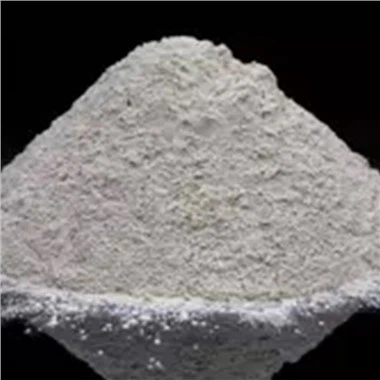
Hey there, fellow enthusiasts in the field of rheology and materials science! I'm a supplier of Fine Powder Organoclay, and today I'm super excited to dive into a topic that's been on the minds of many in our industry: How does the concentration of Fine Powder Organoclay affect the rheology of a system?
Understanding Fine Powder Organoclay
First things first, let's talk a bit about what Fine Powder Organoclay is. It's a special type of organophilic clay that's been treated to make it compatible with organic solvents and polymers. This treatment involves replacing the natural inorganic cations in the clay with organic cations, which gives the clay unique properties.
One of the key features of Fine Powder Organoclay is its high surface area. This allows it to interact strongly with the surrounding medium, whether it's a liquid resin or a polymer melt. When added to a system, it can form a three - dimensional network structure through physical interactions like hydrogen bonding and van der Waals forces.
Rheology Basics
Before we get into how the concentration of Fine Powder Organoclay affects rheology, let's quickly go over what rheology is. Rheology is the study of how materials deform and flow under the influence of external forces. When we talk about the rheology of a system, we're interested in properties like viscosity, shear thinning, and thixotropy.
Viscosity is a measure of a fluid's resistance to flow. A high - viscosity fluid, like honey, flows slowly, while a low - viscosity fluid, like water, flows easily. Shear thinning is a phenomenon where the viscosity of a fluid decreases as the shear rate (the rate at which the fluid is deformed) increases. Thixotropy is the property of a fluid where its viscosity decreases over time when subjected to a constant shear stress and then recovers slowly when the stress is removed.
The Impact of Fine Powder Organoclay Concentration on Viscosity
The concentration of Fine Powder Organoclay in a system has a significant impact on its viscosity. At low concentrations, the clay particles are well - dispersed in the medium. They can move relatively freely, and their interactions with each other are limited. As a result, the increase in viscosity is relatively small.
However, as the concentration of the clay increases, the clay particles start to interact more frequently. The three - dimensional network structure begins to form, and the movement of the fluid is restricted. This leads to a significant increase in viscosity. For example, in a paint formulation, a small amount of Fine Powder Organoclay might just slightly thicken the paint, making it easier to apply without dripping. But if you increase the concentration too much, the paint can become so thick that it's difficult to spread evenly.
Effects on Shear Thinning
Shear thinning behavior is also strongly influenced by the concentration of Fine Powder Organoclay. At low concentrations, the shear thinning effect might be relatively mild. The network structure is not well - developed, and the clay particles can still be re - arranged to some extent under shear stress without a large decrease in viscosity.
As the concentration increases, the network becomes more rigid. When a shear force is applied, the network starts to break down, and the viscosity decreases significantly. This is because the clay particles are forced to slide past each other, and the physical interactions holding the network together are disrupted. In a coating system, this shear - thinning property can be very useful. It allows the coating to flow easily during application (when high shear rates are involved, like brushing or spraying) and then thicken up again once the shear force is removed, preventing sagging.
Influence on Thixotropy
Thixotropy is closely related to the concentration of the clay. At low concentrations, the system may not exhibit significant thixotropy. The recovery of viscosity after the removal of shear stress is relatively fast because the interactions between the clay particles are weak.
As the concentration of Fine Powder Organoclay rises, the thixotropic behavior becomes more pronounced. The broken network takes longer to reform, and the viscosity recovers more slowly. This is great for applications where you need the material to hold its shape after it's been applied. For instance, in putties or caulks, a high - thixotropy material will stay in place where it's been applied, rather than flowing out or slumping.
Practical Applications
Let's take a look at some real - world applications where the concentration - rheology relationship of Fine Powder Organoclay is crucial.


Paints and Coatings
In the paint and coating industry, the right concentration of Fine Powder Organoclay can make or break a product. If the concentration is too low, the paint may sag on vertical surfaces, and the pigments may settle over time. On the other hand, if it's too high, the paint can be difficult to apply and may have a rough finish. Find that sweet spot, and you get a paint that's easy to apply, stays in place, and has a smooth, consistent appearance.
Adhesives
Adhesives need to have the right rheological properties to work effectively. A properly - formulated adhesive with the correct concentration of Fine Powder Organoclay can have good flow during application, so it spreads evenly. Once it's in place, it should thicken up and provide strong bonding. If the clay concentration is off, the adhesive may either drip or not bond well.
Drilling Fluids
In the oil and gas industry, drilling fluids are used to cool and lubricate the drill bit, carry cuttings to the surface, and maintain wellbore stability. Fine Powder Organoclay is often added to these fluids to control their rheology. By adjusting the concentration, engineers can ensure that the fluid has the right viscosity at different depths and shear rates. This helps in efficient drilling operations and prevents wellbore problems.
Finding the Optimal Concentration
So, how do you find the optimal concentration of Fine Powder Organoclay for your system? Well, it's not a one - size - fits - all answer. It depends on several factors, such as the type of medium, the desired rheological properties, and the application requirements.
You'll need to do some experimentation. Start with low concentrations and gradually increase the amount of clay, while measuring the rheological properties of the system at each step. Look for the point where you achieve the best balance between the different properties. For example, if you're making a paint, you want to find the concentration that gives you good leveling during application and minimal sagging on vertical surfaces.
Conclusion
In conclusion, the concentration of Fine Powder Organoclay has a profound impact on the rheology of a system. It affects viscosity, shear thinning, and thixotropy, which are all crucial properties in various industries. Whether you're in the paint, adhesive, or drilling fluid business, understanding this relationship can help you optimize your products.
If you're interested in using Fine Powder Organoclay in your formulations or want to learn more about our Guanual Painting Grade Organoclay, feel free to reach out. We're here to assist you in finding the right solutions for your specific needs. Let's have a chat and see how we can make your products even better.
References
- Bird, R. B., Armstrong, R. C., & Hassager, O. (1987). Dynamics of Polymeric Liquids: Volume 1, Fluid Mechanics. Wiley - Interscience.
- Larson, R. G. (1999). The Structure and Rheology of Complex Fluids. Oxford University Press.
- Oiseth, S., & Elgsaeter, A. (2011). Rheology of nanocomposites. In Nanocomposites: Preparation, Structure, Properties and Applications (pp. 339 - 372). Springer.