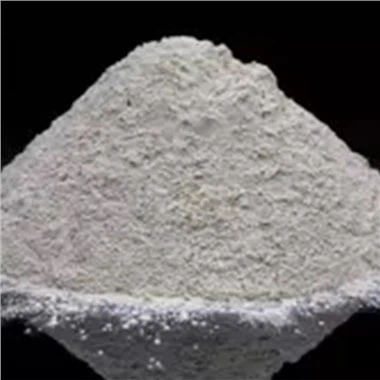
Hey there! I'm a supplier of Polyanionic Cellulose PAC HV, and today I'm super stoked to chat about how this amazing product influences the permeability of membranes.
First off, let's quickly understand what Polyanionic Cellulose PAC HV is. It's a kind of cellulose derivative that's got a whole bunch of cool properties. We've also got other types like Polyanionic Cellulose PAC DHV, Polyanionic Cellulose PAC LV, and Polyanionic Cellulose PAC DLV, but PAC HV has its own unique features.
Now, onto membranes. Membranes are like gate - keepers in a lot of systems. They control what goes in and out, and their permeability is a big deal. Permeability refers to how easily substances can pass through the membrane. It's super important in industries like water treatment, oil and gas drilling, and even in biological systems.
So, how does PAC HV fit into all this? Well, PAC HV has a high - viscosity nature. When it comes into contact with a membrane, it forms a thin layer on the surface. This layer acts as a kind of barrier. Think of it like putting a protective coating on a fence.
In water treatment, for example, membranes are used to filter out impurities. But sometimes, small particles can clog the pores of the membrane, reducing its efficiency. PAC HV can help here. The layer it forms on the membrane surface can prevent these small particles from directly reaching the pores. It kind of catches the particles before they can cause trouble. This means that the membrane can maintain a more consistent permeability over time.
In oil and gas drilling, wellbore stability is crucial. The drilling fluid has to be carefully formulated to control the permeability of the formation around the wellbore. PAC HV in the drilling fluid can interact with the rock membranes in the wellbore. The high - viscosity PAC HV forms a filter cake on the rock surface. This filter cake reduces the permeability of the rock membrane. By doing so, it prevents the drilling fluid from seeping into the formation, which could lead to all sorts of problems like wellbore collapse or formation damage.
Let's talk about the science behind it. PAC HV is a long - chain polymer. These chains can entangle with each other and with the surface of the membrane. The anionic groups on the PAC HV molecules also play a role. They can interact with charged particles on the membrane surface. This interaction helps in stabilizing the layer formed on the membrane and also affects how substances can pass through.


For instance, in a biological membrane, substances like ions and small molecules need to cross the membrane for normal cell function. PAC HV can influence this process. If a cell membrane is exposed to PAC HV, the polymer layer on the membrane can change the electrostatic environment around the membrane. This can either enhance or inhibit the movement of ions through the membrane, depending on the nature of the ions and the specific conditions.
In a laboratory setting, we can measure the effect of PAC HV on membrane permeability. We use techniques like pressure - driven filtration experiments. In these experiments, we apply a certain pressure to force a fluid through a membrane. With PAC HV added to the fluid, we can observe how the flow rate changes over time. A more stable flow rate indicates that the PAC HV is helping to maintain the membrane's permeability.
Another aspect is the concentration of PAC HV. The right concentration is key. If the concentration is too low, the layer formed on the membrane may not be thick enough to have a significant effect on permeability. On the other hand, if the concentration is too high, it could cause other issues like increased viscosity of the fluid to an undesirable level, which might also affect the overall system performance.
We've done a lot of testing to find the optimal concentration for different applications. For water treatment membranes, a concentration of around 0.5 - 1% by weight of PAC HV in the feed solution often gives good results. In oil and gas drilling fluids, the concentration can vary depending on the type of formation and the drilling conditions, but it usually ranges from 2 - 5 pounds per barrel.
The temperature also plays a role. At higher temperatures, the properties of PAC HV can change slightly. The polymer chains may become more flexible, which can affect how they interact with the membrane. In high - temperature oil and gas drilling environments, we've had to adjust the PAC HV formulation to ensure that it still effectively controls membrane permeability.
The pH of the system is another factor. PAC HV is more stable and effective in a certain pH range. In most cases, a slightly alkaline pH (around 8 - 9) is ideal. At extreme pH values, the anionic groups on the PAC HV molecules can be affected, which can change its ability to interact with the membrane and control permeability.
Now, I know all this technical talk can be a bit much, but the bottom line is that PAC HV is a really powerful tool for controlling membrane permeability. Whether you're in the water treatment business, oil and gas industry, or any other field where membrane permeability matters, PAC HV can make a big difference.
If you're interested in learning more about how PAC HV can work for your specific application or if you're looking to purchase this product, don't hesitate to reach out. We're always here to have a chat, answer your questions, and help you find the best solution for your needs.
References
- Some general textbooks on polymer chemistry for the structure and properties of PAC HV.
- Industry reports on oil and gas drilling fluid formulations involving PAC HV.
- Research papers on water treatment membrane fouling prevention using PAC HV.