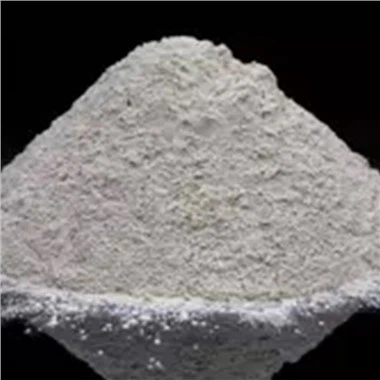
For those in the materials science and manufacturing industries, the performance of composite materials is a critical concern. As a supplier of Pating Grade Organoclay, I am often asked about how this remarkable product interacts with fillers within composites. Understanding this interaction is key to unlocking the full potential of these materials in various applications, from paints and coatings to plastics and more.
The Basics of Pating Grade Organoclay
Before delving into the interaction with fillers, it's essential to understand what Pating Grade Organoclay is. Organoclays are clay minerals that have been modified with organic cations. Our Pating Grade Organoclay, specifically, is engineered to meet the high - standards of the painting and coating industries. It offers unique rheological properties that can significantly enhance the performance of composite materials.
There are different types of Pating Grade Organoclay we supply, such as Guanual Painting Grade Organoclay and Fine Powder Organoclay. These products have distinct characteristics that may influence their interaction with fillers.


Interaction Mechanisms
Physical Adsorption
One of the primary ways Pating Grade Organoclay interacts with fillers is through physical adsorption. The surface of the organoclay has a large number of active sites due to its high - specific surface area. Fillers, which can be particles like calcium carbonate, silica, or talc, can be adsorbed onto these active sites on the organoclay surface.
This adsorption process is driven by van der Waals forces. The weak intermolecular forces between the filler particles and the organoclay surface hold them together. This interaction can help in the dispersion of fillers in the composite matrix. For example, when a fine - powder organoclay is added to a composite containing silica fillers, the organoclay can surround the silica particles and prevent them from agglomerating. Agglomeration of fillers can lead to uneven distribution in the composite, which in turn can cause problems such as reduced mechanical properties and inconsistent appearance.
Hydrogen Bonding
In some cases, hydrogen bonding can also play a role in the interaction between Pating Grade Organoclay and fillers. If the filler has functional groups on its surface that can form hydrogen bonds with the organoclay, such bonding can occur. For instance, if a filler has hydroxyl groups (-OH) and the organoclay has suitable acceptor or donor sites for hydrogen bonding, a relatively strong intermolecular interaction can be established.
This type of bonding can enhance the compatibility between the organoclay and the filler, resulting in a more stable composite structure. The hydrogen - bonded network can also contribute to the reinforcement of the composite, improving properties such as tensile strength and modulus.
Chemical Reactions (in Some Cases)
Although less common, there can be chemical reactions between Pating Grade Organoclay and certain types of fillers. Some reactive fillers may react with the organic cations on the organoclay surface. For example, if a filler contains reactive metals or metal oxides, they may react with the anions or functional groups on the organoclay.
This chemical reaction can lead to the formation of new compounds or structures at the interface between the organoclay and the filler. These new structures can have a profound impact on the properties of the composite, influencing not only its mechanical but also its chemical and thermal stability.
Impact on Composite Properties
Rheological Properties
The interaction between Pating Grade Organoclay and fillers can significantly affect the rheological properties of the composite. When the organoclay adsorbs fillers, it can form a three - dimensional network in the composite matrix. This network can increase the viscosity of the composite at low shear rates, which is beneficial in preventing sagging in paints and coatings.
At high shear rates, such as during application processes, the network structure may break down, allowing the composite to flow easily. This thixotropic behavior is highly desirable in many applications as it ensures easy application and good leveling of the composite while maintaining its stability during storage.
Mechanical Properties
The way the organoclay interacts with fillers can also have a major impact on the mechanical properties of the composite. By improving the dispersion of fillers, the organoclay can ensure that the load is evenly distributed across the composite. This leads to enhanced mechanical strength, such as increased tensile and flexural strength.
The interaction mechanisms like hydrogen bonding and chemical reactions can also reinforce the interface between the filler and the matrix, further improving the mechanical performance of the composite. For example, in a plastic composite, a well - dispersed filler - organoclay system can result in a product with better stiffness and toughness.
Thermal and Chemical Stability
In terms of thermal and chemical stability, the interaction between Pating Grade Organoclay and fillers can play a role in protecting the composite. The adsorption of fillers by the organoclay can act as a barrier, preventing the diffusion of heat and chemicals within the composite.
If there are chemical reactions at the interface, new compounds may be formed that can have better thermal or chemical resistance. This can extend the service life of the composite in harsh environments.
Factors Affecting the Interaction
Particle Size and Shape of Fillers
The particle size and shape of the fillers can have a significant impact on their interaction with Pating Grade Organoclay. Smaller particle - sized fillers have a larger surface area, which means more contact points with the organoclay. This can enhance the adsorption and interaction processes.
Fillers with irregular shapes can also have more opportunities to interact with the organoclay compared to spherical fillers. The irregular surfaces can provide more sites for adsorption and bonding, leading to a stronger interaction.
Concentration of Organoclay and Fillers
The concentration of both the organoclay and the fillers in the composite is another crucial factor. If the concentration of the organoclay is too low, it may not be able to effectively interact with all the filler particles, resulting in poor dispersion. On the other hand, if the concentration is too high, the high viscosity may make the composite difficult to process.
Similarly, the concentration of fillers also needs to be optimized. An excessive amount of fillers can lead to over - agglomeration, even in the presence of organoclay, which can negatively affect the properties of the composite.
Chemical Nature of Fillers and Organoclay
The chemical nature of both the fillers and the organoclay is essential. As mentioned earlier, the presence of functional groups on the fillers that can form hydrogen bonds or react chemically with the organoclay is critical. Different types of organoclays may have different surface chemistries, which can influence their interaction with specific fillers.
For example, a filler with a high - surface charge may interact differently with an organoclay depending on whether the organoclay has a positively or negatively charged surface.
Conclusion and Call to Action
In conclusion, the interaction between Pating Grade Organoclay and fillers in a composite is a complex but fascinating phenomenon. Understanding this interaction is crucial for optimizing the performance of composite materials in various applications. Our range of Guanual Painting Grade Organoclay and Fine Powder Organoclay offers unique opportunities to enhance the properties of composites.
If you are involved in industries such as paints, plastics, or other composite - based products and are interested in exploring how our Pating Grade Organoclay can interact with your fillers, we encourage you to reach out. We are eager to discuss your specific needs and work with you to develop the best solutions for your composite materials. Contact us today to start a productive conversation about your procurement and how our products can add value to your manufacturing processes.
References
- Bergaya, F., & Lagaly, G. (Eds.). (2013). Handbook of Clay Science, 2nd Edition. Elsevier.
- Okada, A., & Usuki, A. (2006). Polymer/layered silicate nanocomposites: A review from preparation to processing. Progress in Polymer Science, 31(2), 118 - 149.
- Mittal, V. (Ed.). (2010). Polymer - Clay Nanocomposites: From Fundamental Research to Industrial Applications. John Wiley & Sons.