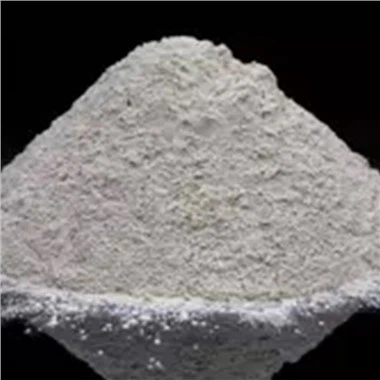
In the intricate world of oil drilling, lost circulation stands as a persistent challenge that can disrupt operations, escalate costs, and pose environmental risks. As a trusted supplier of Oil Drilling Grade Organoclay, I am well - versed in the remarkable role this specialized product plays in controlling lost circulation. This blog post aims to delve into the science behind how Oil Drilling Grade Organoclay helps in this crucial aspect of oil drilling.
Understanding Lost Circulation in Oil Drilling
Lost circulation occurs when drilling fluid, also known as drilling mud, flows uncontrollably into the formation being drilled. This can happen due to various reasons, such as fractures, vugs, or highly permeable zones in the rock. When lost circulation occurs, it leads to a decrease in the hydrostatic pressure exerted by the drilling fluid, which can cause wellbore instability, formation damage, and even blowouts in extreme cases. Moreover, the continuous loss of drilling fluid requires constant replacement, which significantly increases the operational costs.
The Role of Oil Drilling Grade Organoclay
Oil Drilling Grade Organoclay is a modified form of clay that has unique properties making it an effective solution for controlling lost circulation. Organoclays are typically produced by treating natural clays, such as bentonite, with organic cations. This modification changes the surface properties of the clay particles, allowing them to disperse and swell in oil - based drilling fluids.
1. Building Viscosity
One of the primary ways Oil Drilling Grade Organoclay helps in controlling lost circulation is by building viscosity in the drilling fluid. When the organoclay is added to the oil - based drilling fluid, the clay particles disperse and form a three - dimensional network structure. This network structure increases the viscosity of the fluid, making it more resistant to flow. As a result, the drilling fluid can better bridge and seal the fractures or permeable zones in the formation, reducing the rate of fluid loss.
For example, in a highly fractured formation, the viscous drilling fluid containing organoclay can penetrate the fractures and form a filter cake on the fracture walls. This filter cake acts as a barrier, preventing further loss of the drilling fluid into the formation. The ability of organoclay to build viscosity is also beneficial in maintaining the suspension of cuttings in the drilling fluid, which is essential for efficient drilling operations.
2. Sealing Permeable Zones
Oil Drilling Grade Organoclay can also effectively seal permeable zones in the formation. The small, plate - like particles of organoclay can align themselves and form a tight seal over the pores and throats in the rock. This sealing mechanism is enhanced by the electrostatic and van der Waals forces between the organoclay particles and the rock surface.
In oil - based drilling fluids, the organoclay particles are hydrophobic, which means they repel water. This property allows the organoclay to form a stable seal in the presence of water - bearing formations. When the drilling fluid encounters a permeable zone, the organoclay particles are carried into the pores by the fluid flow. Once inside the pores, the particles stack up and form a low - permeability plug, reducing the fluid loss.
3. Compatibility with Different Drilling Fluids
Another advantage of Oil Drilling Grade Organoclay is its compatibility with various types of oil - based drilling fluids. It can be used in Modified Bentonite with Oil Based Drilling, Organoclay with Synthetic - oil Base Fluids, and Organic Bentonite with Primarily Diesel - based Drilling Fluids. This versatility makes it a preferred choice for drillers working in different geological conditions and using different types of drilling fluids.
For instance, in synthetic - oil base fluids, organoclay can provide the same viscosity - building and sealing properties as in diesel - based fluids. This allows drillers to use a single additive to control lost circulation regardless of the type of oil - based fluid they are using, simplifying the drilling fluid formulation process.

Case Studies
To further illustrate the effectiveness of Oil Drilling Grade Organoclay in controlling lost circulation, let's look at some real - world case studies.
In a deep - water drilling project in the Gulf of Mexico, the drilling team encountered severe lost circulation problems in a highly fractured carbonate formation. The initial drilling fluid formulation was unable to control the fluid loss, resulting in high costs and slow drilling progress. After adding Oil Drilling Grade Organoclay to the oil - based drilling fluid, the viscosity of the fluid increased significantly. The organoclay particles effectively bridged the fractures and formed a stable filter cake, reducing the fluid loss by more than 80%. This allowed the drilling operation to resume smoothly, saving both time and money.
In another case, a drilling operation in the Middle East was facing lost circulation issues in a sandstone formation with high permeability. By using an oil - based drilling fluid containing organoclay, the drillers were able to seal the permeable zones and maintain the hydrostatic pressure in the wellbore. The organoclay particles formed a tight seal over the pores in the sandstone, preventing the drilling fluid from escaping into the formation. As a result, the drilling operation was completed on schedule, and the overall drilling costs were reduced.
Conclusion
In conclusion, Oil Drilling Grade Organoclay is a powerful tool in the fight against lost circulation in oil drilling. Its ability to build viscosity, seal permeable zones, and its compatibility with different oil - based drilling fluids make it an essential additive for ensuring the efficiency and safety of drilling operations.
If you are facing lost circulation problems in your oil drilling projects, I encourage you to consider using our high - quality Oil Drilling Grade Organoclay. As a reliable supplier, we are committed to providing you with the best products and technical support. Contact us today to start a discussion about how our organoclay can meet your specific needs and help you overcome the challenges of lost circulation.
References
- Ahmed, T. (2013). Reservoir Engineering Handbook. Gulf Professional Publishing.
- Bourgoyne, A. T., Chenevert, M. E., Millheim, K. K., & Young, F. S. (1986). Applied Drilling Engineering. Society of Petroleum Engineers.
- Nelson, E. B., & Guillot, D. C. (2006). Well Cementing. Schlumberger.