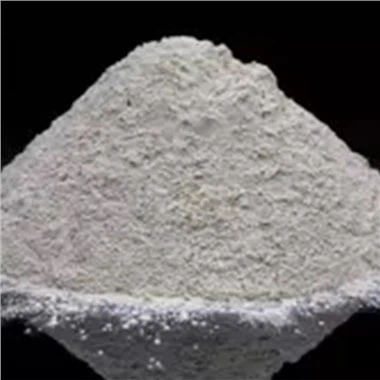
Hey there, drilling enthusiasts! As a supplier of Granular Polyanionic Cellulose (GPAC), I'm super excited to chat with you about how this amazing product can seriously up the game when it comes to drilling fluids.
Let's start with the basics. Drilling fluids, also known as drilling muds, are like the lifeblood of any drilling operation. They've got a bunch of important jobs, like cooling and lubricating the drill bit, carrying the cuttings to the surface, and maintaining the stability of the wellbore. But here's the thing - not all drilling fluids are created equal. That's where Granular Polyanionic Cellulose steps in.
What is Granular Polyanionic Cellulose?
GPAC is a modified cellulose derivative. It's made by treating natural cellulose with certain chemicals to give it some really cool properties. The granular form makes it easy to handle and mix into drilling fluids. It's like a secret weapon that can transform an ordinary drilling fluid into a high - performance one.


Improving Viscosity and Rheology
One of the key ways GPAC improves drilling fluids is by enhancing their viscosity and rheology. Viscosity is basically how thick or thin a fluid is. In drilling, having the right viscosity is crucial. If the fluid is too thin, it won't be able to carry the cuttings effectively. On the other hand, if it's too thick, it can cause problems with pumping and circulation.
GPAC acts as a viscosifier. It forms a network of chains in the drilling fluid, which increases its viscosity. This network also helps in controlling the fluid's rheological properties. Rheology is all about how a fluid flows under different conditions. With GPAC, the drilling fluid can have better flow characteristics, such as a more stable gel strength. This means that when the drilling operation stops, the fluid can form a weak gel that holds the cuttings in place, preventing them from settling at the bottom of the wellbore. When the pumps start again, the gel breaks down easily, allowing for smooth circulation.
For example, in deep - well drilling, where the pressure and temperature conditions are extreme, the right rheology is even more important. GPAC can withstand these harsh conditions and still maintain the desired viscosity and flow properties of the drilling fluid.
Fluid Loss Control
Another major benefit of using GPAC in drilling fluids is its excellent fluid loss control. Fluid loss occurs when the drilling fluid filtrates into the formation through the wellbore wall. This can lead to a bunch of problems, like formation damage, stuck pipe, and reduced drilling efficiency.
GPAC forms a thin, tough filter cake on the wellbore wall. This filter cake acts as a barrier, preventing the fluid from seeping into the formation. It's like putting a protective shield around the wellbore. The filter cake formed by GPAC is also very flexible and can adapt to changes in the wellbore conditions.
In some cases, where the formation has high permeability, fluid loss can be a real headache. But with GPAC in the drilling fluid, the amount of fluid lost can be significantly reduced. This not only saves money on replacing the lost fluid but also protects the formation from damage.
Shale Inhibition
Shales are a common type of rock formation encountered during drilling. Shales have a tendency to absorb water and swell, which can cause wellbore instability. GPAC has excellent shale - inhibition properties. It can prevent the shale from interacting with the water in the drilling fluid, thus reducing the swelling and maintaining the stability of the wellbore.
When the GPAC molecules come into contact with the shale, they form a protective layer on the shale surface. This layer blocks the pores in the shale, preventing water from entering. As a result, the shale remains stable, and the risk of wellbore collapse is minimized.
Compatibility with Other Additives
GPAC is also highly compatible with other additives commonly used in drilling fluids. Whether it's weighting agents, lubricants, or other polymers, GPAC can work well in combination with them. This means that you can customize your drilling fluid to meet the specific requirements of your drilling operation.
For instance, if you need to increase the density of the drilling fluid, you can add a weighting agent like barite. GPAC will not interfere with the function of the barite but will instead enhance the overall performance of the fluid. This compatibility allows for a more efficient and cost - effective drilling fluid formulation.
Our Product Range
We offer two types of fast - dispersed GPAC products that are really popular in the market. You can check out Fast Dispersed Polyanionic Cellulose PAC LV and Fast Dispersed Polyanionic Cellulose PAC HV. The PAC LV is great for applications where a lower viscosity is required, while the PAC HV is suitable for situations where higher viscosity and better fluid - loss control are needed.
Conclusion
In conclusion, Granular Polyanionic Cellulose is a game - changer for drilling fluids. It improves viscosity and rheology, controls fluid loss, inhibits shale swelling, and is compatible with other additives. If you're looking to enhance the performance of your drilling fluids, GPAC is definitely the way to go.
If you're interested in learning more about our Granular Polyanionic Cellulose products or want to start a procurement discussion, don't hesitate to reach out. We're here to help you find the best solution for your drilling needs.
References
- Smith, J. (2018). "Advances in Drilling Fluid Technology". Journal of Petroleum Engineering.
- Johnson, R. (2019). "The Role of Polymers in Drilling Fluids". Drilling Industry Review.