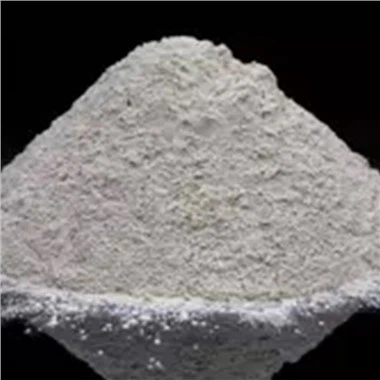
In the ever - evolving landscape of 3D printing, the quest for enhancing printability and achieving high - quality prints has led to the exploration of various additives. One such additive that has shown significant potential is Granular Polyanionic Cellulose. As a leading supplier of Granular Polyanionic Cellulose, I am excited to delve into how this remarkable material affects the printability of 3D printing materials.
Understanding Granular Polyanionic Cellulose
Granular Polyanionic Cellulose is a water - soluble polymer derived from cellulose. It is widely used in various industries due to its excellent thickening, stabilizing, and suspending properties. In the context of 3D printing, these properties can be harnessed to optimize the behavior of printing materials.
The unique molecular structure of Granular Polyanionic Cellulose gives it the ability to form a three - dimensional network in solution. When added to 3D printing materials, this network can influence the rheological properties of the material, which are crucial for printability.
Rheological Effects on Printability
Rheology is the study of the flow and deformation of materials. In 3D printing, the rheological properties of the printing material determine how it behaves during extrusion, deposition, and solidification.
Viscosity Modification
One of the primary ways Granular Polyanionic Cellulose affects printability is by modifying the viscosity of the 3D printing material. Viscosity is a measure of a fluid's resistance to flow. In 3D printing, a material with too low viscosity may flow uncontrollably during extrusion, leading to poor shape retention and a lack of precision. On the other hand, a material with too high viscosity may be difficult to extrude, resulting in clogged nozzles and inconsistent prints.
Granular Polyanionic Cellulose can increase the viscosity of the printing material in a controlled manner. By adjusting the concentration of the additive, we can fine - tune the viscosity to an optimal level. For example, in a filament - based 3D printing process, a slightly higher viscosity can help the filament maintain its shape after extrusion, reducing the chances of sagging or spreading.


We offer Fast Dispersed Polyanionic Cellulose PAC LV and Fast Dispersed Polyanionic Cellulose PAC HV, which can be selected according to the specific viscosity requirements of different 3D printing materials. The PAC LV is suitable for applications where a relatively lower increase in viscosity is needed, while the PAC HV can provide a higher viscosity boost for materials that require more substantial thickening.
Shear - Thinning Behavior
Another important rheological property affected by Granular Polyanionic Cellulose is shear - thinning behavior. Shear - thinning means that the viscosity of the material decreases under shear stress. In 3D printing, shear stress is applied during extrusion through the nozzle. A shear - thinning material is ideal because it can flow easily through the narrow nozzle under the high shear stress during extrusion, but then quickly regain its viscosity once deposited on the build platform.
Granular Polyanionic Cellulose imparts shear - thinning characteristics to the 3D printing material. This allows for smooth extrusion through the nozzle at a reasonable pressure, while also ensuring that the printed layers maintain their shape and do not flow into adjacent layers.
Adhesion and Layer Bonding
In 3D printing, the adhesion between successive layers is crucial for the strength and integrity of the final printed object. Granular Polyanionic Cellulose can improve layer bonding in several ways.
Surface Tension and Wetting
The additive can modify the surface tension of the printing material. A lower surface tension allows the material to spread more evenly on the previously printed layer, enhancing wetting. Good wetting is essential for proper adhesion between layers. When the material wets the underlying layer well, the molecules of the new layer can interact more effectively with those of the previous layer, leading to stronger bonds.
Polymer Interactions
Granular Polyanionic Cellulose can also participate in polymer - polymer interactions within the printing material. These interactions can create a more cohesive structure between layers. As the material solidifies, the additive can help bridge the gaps between polymer chains in adjacent layers, promoting better adhesion and reducing the likelihood of delamination.
Dimensional Stability
Dimensional stability is a key factor in 3D printing, especially for applications where precise dimensions are required. Granular Polyanionic Cellulose can contribute to improved dimensional stability in the following ways.
Shrinkage Reduction
During the solidification process of 3D printing materials, shrinkage can occur due to cooling or chemical reactions. This shrinkage can lead to warping and distortion of the printed object. Granular Polyanionic Cellulose can help reduce shrinkage by forming a network structure within the material. This network can resist the internal stresses that cause shrinkage, keeping the dimensions of the printed object more stable.
Shape Retention
As mentioned earlier, the viscosity - modifying and shear - thinning properties of Granular Polyanionic Cellulose help the material maintain its shape during and after printing. This is crucial for ensuring that the final printed object has the intended dimensions and does not deviate from the design.
Compatibility with Different 3D Printing Technologies
Granular Polyanionic Cellulose is compatible with a wide range of 3D printing technologies, including fused deposition modeling (FDM), stereolithography (SLA), and digital light processing (DLP).
Fused Deposition Modeling (FDM)
In FDM, a thermoplastic filament is melted and extruded through a nozzle. Granular Polyanionic Cellulose can be added to the filament formulation to improve its rheological properties. It helps in better extrusion control, reduces stringing (the formation of thin strands of material between printed features), and enhances layer adhesion.
Stereolithography (SLA) and Digital Light Processing (DLP)
In SLA and DLP, a liquid resin is cured by light. Granular Polyanionic Cellulose can be used to modify the viscosity of the resin, improving its handling and the quality of the printed parts. It can also enhance the adhesion between cured layers, resulting in stronger and more accurate printed objects.
Environmental and Cost - Effectiveness
In addition to its technical benefits, Granular Polyanionic Cellulose is also an environmentally friendly and cost - effective additive. It is derived from natural cellulose, which is a renewable resource. This makes it a sustainable choice for 3D printing applications.
From a cost perspective, a small amount of Granular Polyanionic Cellulose can have a significant impact on the printability of 3D printing materials. By improving the quality of prints and reducing the number of failed prints, it can ultimately lead to cost savings in terms of material waste and production time.
Conclusion
Granular Polyanionic Cellulose offers a multitude of benefits for the printability of 3D printing materials. Its ability to modify rheological properties, improve adhesion, enhance dimensional stability, and be compatible with various 3D printing technologies makes it a valuable additive in the field.
If you are looking to enhance the printability of your 3D printing materials, we invite you to contact us to discuss your specific requirements. Our team of experts can provide you with detailed information on the different grades of Granular Polyanionic Cellulose and how they can be tailored to your 3D printing applications. We are committed to helping you achieve high - quality, reliable 3D prints.
References
- M. A. McCarthy, "Cellulose Derivatives: Properties and Applications", Springer, 2011.
- A. B. Cooper, "Rheology of Polymers in 3D Printing", Polymer Science Journal, 2018.
- C. D. Smith, "Adhesion and Bonding in 3D Printed Structures", Journal of Additive Manufacturing, 2019.