Have you ever wondered what gives your favorite foods that perfect texture? You know, that smoothness in your yogurt, the creaminess in your ice cream, or the stability in your salad dressings. Well, one ingredient that often plays a crucial role in achieving these desired textures is Food Grade Powder CMC. As a supplier of this amazing product, I'm super pumped to share with you how it works its magic in the food industry.
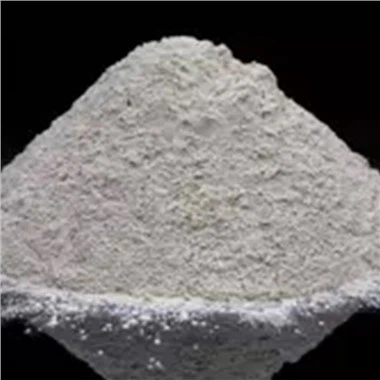
Let's start by getting to know what CMC actually is. CMC stands for Carboxymethyl Cellulose . Carboxymethyl Cellulose Sodium, to be more specific, is a cellulose derivative that's made by chemically modifying natural cellulose, which comes from plants. It's a white or slightly yellowish powder that's odorless and tasteless. And the best part? It's completely safe for consumption, which is why it's widely used in the food industry.
Thickening Agent
One of the primary ways Food Grade Powder CMC improves food texture is by acting as a thickening agent. When added to a food product, it disperses in the liquid and forms a network of molecules. This network traps the liquid, increasing its viscosity and giving the food a thicker consistency.
Take salad dressings, for example. Without a thickening agent, salad dressings would be thin and runny, making them difficult to apply evenly. But when you add Food Grade Powder CMC, it thickens the dressing, giving it a smooth and creamy texture that clings to the salad leaves. It's like giving your salad dressing a makeover!
The same goes for sauces and gravies. Whether it's a rich tomato sauce for pasta or a savory gravy for your roast dinner, CMC can help achieve the perfect thickness. It prevents the sauce from being too thin and watery, ensuring that it has a consistent texture from the first bite to the last.
Stabilizing Agent
Food Grade Powder CMC is also an excellent stabilizing agent. In many food products, there are different components that don't naturally mix well together. For instance, in an emulsion like mayonnaise, you have oil and water, which tend to separate over time. CMC helps to prevent this separation by forming a protective layer around the oil droplets.
This layer keeps the oil droplets dispersed throughout the water phase, ensuring that the mayonnaise stays smooth and creamy. It's like a little bodyguard for the oil droplets, keeping them in place and preventing them from clumping together.
In ice cream, CMC plays a similar role. It helps to prevent ice crystals from forming, which can give the ice cream a grainy texture. By stabilizing the ice cream mixture, CMC ensures that you get a smooth, creamy, and indulgent ice cream every time.
Emulsifying Agent
Another way CMC improves food texture is by acting as an emulsifying agent. Emulsions are mixtures of two immiscible liquids, like oil and water. Without an emulsifying agent, these two liquids would quickly separate. But when you add Food Grade Powder CMC, it helps to form a stable emulsion.
In salad dressings, as I mentioned earlier, CMC helps to keep the oil and vinegar (or other acidic liquids) mixed together. It creates a uniform texture, so you don't have to keep shaking the bottle every time you want to use it.
In baked goods, CMC can also act as an emulsifying agent. It helps to incorporate the fats (like butter or oil) into the dough or batter more evenly, resulting in a lighter and more tender texture.
Film - Forming Properties
Food Grade Powder CMC has film - forming properties, which can improve the texture of certain food products in a unique way. In bakery products, for example, a thin film can form on the surface of the dough or the baked good. This film helps to retain moisture, preventing the bread or cake from drying out too quickly.


It also gives the baked good a nice, smooth crust. You know how some breads can have a hard, dry crust? Well, CMC can help prevent that, giving you a soft and delicious crust that's a pleasure to bite into.
In the case of fruits and vegetables, a coating made from CMC can be applied. This coating helps to protect the produce from moisture loss, oxidation, and microbial growth. It keeps the fruits and vegetables fresh for longer and maintains their texture. They stay crisp and juicy instead of becoming limp and mushy.
Binding Agent
In processed meats and vegetarian meat alternatives, CMC can act as a binding agent. It helps to hold the different ingredients together, improving the texture and integrity of the product.
For example, in a hamburger patty, whether it's made from beef or soy, CMC can prevent the patty from falling apart during cooking. It gives the patty a firm texture, so you can cook it to perfection without worrying about it breaking into pieces.
In vegetarian sausages, CMC helps to bind the soy or other plant - based ingredients, giving the sausage a texture similar to that of a traditional meat sausage. It's a great way to create delicious and realistic vegetarian alternatives.
Why Choose Our Food Grade Powder CMC?
As a supplier, we take pride in offering high - quality Food Grade Powder CMC. Our product is carefully manufactured to meet the strictest food safety standards. We ensure that it has consistent quality, so you can rely on it to achieve the desired texture in your food products every time.
We also offer Food Grade Granular CMC, which has its own advantages in some applications. It may disperse more easily in certain food systems, depending on your needs.
Our team of experts is always ready to provide you with technical support. Whether you're a small - scale food producer or a large - scale manufacturer, we can help you determine the right amount of CMC to use in your products to achieve the best results.
Let's Talk Business!
If you're in the food industry and looking to improve the texture of your products, I'd love to hear from you. Our Food Grade Powder CMC can make a real difference in the quality of your food. Whether you're making dairy products, baked goods, sauces, or any other food item, we have the solution for you.
Contact us today to start a conversation about how our Sodium Carboxymethyl Cellulose can take your food products to the next level. We're excited to work with you and help you create amazing food experiences for your customers.
References
- BeMiller, J. N., & Whistler, R. L. (2009). Handbook of Water - Soluble Gums and Resins. McGraw - Hill.
- Imeson, A. (2011). Thickening and Gelling Agents for Food. Wiley - Blackwell.
- Rutenberg, M. W., & Sobotka, H. A. (1981). Industrial Gums: Polysaccharides and Their Derivatives. Academic Press.