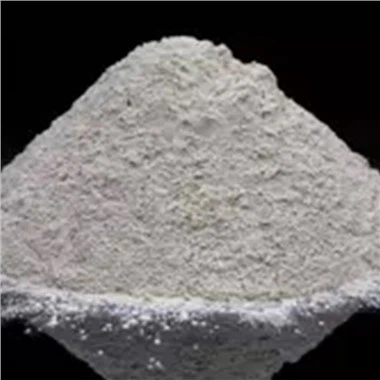
Hey there! As a supplier of Fine Powder Organoclay, I've been getting a lot of questions lately about how this amazing stuff interacts with polymers. So, I thought I'd take a deep dive into the topic and share some insights with you all.
First off, let's talk a bit about what Fine Powder Organoclay is. Fine Powder Organoclay is a specially treated clay that has been modified to make it compatible with organic polymers. You can check out more details about it on our website Fine Powder Organoclay. It's got some pretty unique properties that make it a great additive for all sorts of polymer applications.
One of the key ways Fine Powder Organoclay interacts with polymers is through its ability to form a network structure. When you mix Fine Powder Organoclay into a polymer matrix, the clay platelets can disperse throughout the polymer. These platelets have a high aspect ratio, which means they're really thin and flat. As they disperse, they start to interact with each other and with the polymer chains.
The interaction between the clay platelets and the polymer chains is mainly through physical forces like van der Waals forces and hydrogen bonding. The clay platelets can act as physical cross - links within the polymer matrix. This cross - linking effect can significantly improve the mechanical properties of the polymer. For example, it can increase the tensile strength, modulus, and toughness of the polymer.
Let's say you're working with a thermoplastic polymer like polyethylene. By adding Fine Powder Organoclay, you can enhance its stiffness without sacrificing too much of its flexibility. This is because the clay platelets help to distribute the stress more evenly across the polymer matrix. When a load is applied to the polymer, the stress is transferred from the polymer chains to the clay platelets, which can then bear a portion of the load.


Another important interaction mechanism is related to the barrier properties. Fine Powder Organoclay can improve the gas and vapor barrier properties of polymers. When the clay platelets are well - dispersed in the polymer, they create a tortuous path for gas molecules or vapor to pass through. Instead of being able to move straight through the polymer, the gas or vapor molecules have to wind their way around the clay platelets. This increases the diffusion path length and reduces the rate of gas or vapor transmission through the polymer.
For example, in food packaging applications, polymers with improved barrier properties can help to keep the food fresh for longer. If you use a polymer film with Fine Powder Organoclay as an additive, it can slow down the entry of oxygen and the escape of moisture, which are two major factors that can cause food spoilage.
Now, let's also consider the effect on the rheological properties of polymers. When Fine Powder Organoclay is added to a polymer melt or solution, it can change the flow behavior. At low shear rates, the clay platelets can form a weak gel - like structure in the polymer. This increases the viscosity of the polymer melt or solution. But at high shear rates, the gel structure can break down, and the viscosity decreases. This non - Newtonian behavior can be very useful in processing operations like injection molding and extrusion.
During injection molding, the high shear rates during the filling stage allow the polymer melt with Fine Powder Organoclay to flow easily into the mold cavity. Once the shear rate decreases after the filling is complete, the increased viscosity helps to hold the shape of the molded part and reduces the tendency for sink marks or warping.
In addition to these physical interactions, there can also be some chemical interactions in certain cases. For example, if the polymer has functional groups that can react with the surface of the clay platelets, chemical bonds can form. This can further strengthen the interaction between the clay and the polymer. However, the chemical interactions are usually more complex and depend on the specific chemical nature of the polymer and the surface treatment of the Fine Powder Organoclay.
We also have another product called Guanual Painting Grade Organoclay, which has its own unique interactions with polymers in painting applications. In paint formulations, polymers are used as binders. When Guanual Painting Grade Organoclay is added, it can help to improve the suspension stability of pigments and other additives in the paint. The clay can adsorb onto the surface of the pigment particles and prevent them from settling or flocculating.
It also affects the flow and leveling properties of the paint. Just like in polymer processing, the non - Newtonian rheological behavior of the paint with the organoclay additive allows it to flow smoothly during application but then thicken enough to prevent dripping and sagging on vertical surfaces.
So, as you can see, the interaction between Fine Powder Organoclay and polymers is multi - faceted and offers a wide range of benefits in various applications. Whether you're looking to improve the mechanical, barrier, or rheological properties of your polymers, Fine Powder Organoclay can be a great choice.
If you're interested in learning more about how Fine Powder Organoclay can work for your specific polymer application, or if you're thinking about starting a procurement, I'd love to have a chat with you. Just reach out, and we can discuss the details and see how we can meet your needs.
References
- “Polymer - Clay Nanocomposites” by Alexandre M. and Dubois P.
- “Rheology of Polymer Melts and Solutions” by Larson R. G.
- “Barrier Polymers and Structures” edited by Hernandez R., Hernandez - Munoz P., and Almenar E.