Hey there! As a supplier of Carboxymethyl Cellulose (CMC) Gel, I've been getting a lot of questions lately about how it interacts with lipids. So, I thought I'd dive deep into this topic and share what I've learned.
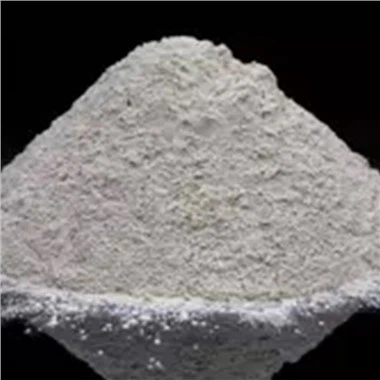
First off, let's talk about what CMC Gel is. It's a water - soluble polymer derived from cellulose. Cellulose is a natural polymer found in the cell walls of plants. Through a chemical process, we convert cellulose into CMC, which can form a gel - like substance. This gel has a whole bunch of applications, from Carboxymethyl Cellulose in Detergent to Carboxymethyl Cellulose in Skin Care and Carboxymethyl Cellulose in Cosmetics.
Now, onto lipids. Lipids are a diverse group of organic compounds that include fats, oils, waxes, and certain vitamins. They are hydrophobic, which means they don't mix well with water. This property is crucial when we start looking at how CMC Gel interacts with them.
Physical Interaction
One of the main ways CMC Gel interacts with lipids is through physical entrapment. The gel forms a three - dimensional network structure. When lipids are present in an aqueous system containing CMC Gel, the lipid droplets can get trapped within the network of the gel. This is similar to how a spider's web traps insects. The long chains of CMC molecules create a sort of mesh that holds the lipid droplets in place.
This physical entrapment can have a few important effects. For example, in food products, it can prevent lipid droplets from coalescing. Coalescence is when small lipid droplets combine to form larger ones. If this happens in a food emulsion, like a salad dressing, the dressing can separate into an oily layer and a watery layer. By entrapping the lipid droplets, CMC Gel helps to maintain the stability of the emulsion, keeping the dressing well - mixed.
In cosmetic and skincare products, the physical entrapment of lipids can also be beneficial. It can help to control the release of lipid - based active ingredients. For instance, if a cream contains lipid - soluble vitamins, the CMC Gel can hold the lipid droplets containing these vitamins and release them slowly over time, providing a more sustained effect on the skin.
Chemical Interaction
There are also some chemical interactions between CMC Gel and lipids. CMC has carboxymethyl groups (-CH₂COO⁻) on its cellulose backbone. These groups can form weak electrostatic interactions with the polar head groups of some lipids. For example, phospholipids, which are a type of lipid found in cell membranes, have polar head groups that can interact with the negatively charged carboxymethyl groups of CMC.
These electrostatic interactions can influence the behavior of lipids in solution. They can affect the orientation of lipid molecules at the interface between the lipid phase and the aqueous phase. In an emulsion, this can lead to a more stable interface. A stable interface is important because it reduces the surface tension between the water and lipid phases, making it harder for the emulsion to break down.
Applications Based on Interaction
Detergents
In detergents, the interaction between CMC Gel and lipids is key to its cleaning power. When you're trying to remove greasy stains from clothes, the lipids in the grease need to be broken up and suspended in the wash water. CMC Gel can help in this process. It can physically entrap the lipid droplets from the grease and prevent them from redepositing on the clothes. The chemical interactions also help to emulsify the grease, making it easier to wash away. So, next time you use a detergent with CMC, you'll know how it's working to get your clothes clean.
Skin Care and Cosmetics
As mentioned earlier, in skin care and cosmetics, the interaction between CMC Gel and lipids is used to improve product performance. In moisturizers, for example, the CMC Gel can entrap lipid - based emollients. Emollients are substances that help to soften and smooth the skin. By entrapping these emollients, the CMC Gel can ensure that they are evenly distributed on the skin and released gradually, providing long - lasting moisturization.
In makeup products, such as foundations and concealers, the interaction can also be useful. It can help to keep the lipid - based pigments and other ingredients in suspension, preventing them from separating during storage and ensuring a smooth application on the skin.
Factors Affecting the Interaction
The interaction between CMC Gel and lipids can be influenced by several factors. One of the most important factors is the degree of substitution (DS) of CMC. The DS refers to the average number of carboxymethyl groups per glucose unit in the cellulose molecule. A higher DS means more carboxymethyl groups, which can lead to stronger electrostatic interactions with lipids.
The concentration of CMC Gel also matters. If the concentration is too low, there may not be enough CMC to effectively entrap the lipid droplets or form strong chemical interactions. On the other hand, if the concentration is too high, the gel may become too viscous, which can affect the overall properties of the product.


The pH of the system is another factor. The carboxymethyl groups of CMC can be protonated or deprotonated depending on the pH. At low pH, the carboxymethyl groups are protonated (-CH₂COOH), which reduces their negative charge and can weaken the electrostatic interactions with lipids. At high pH, the groups are deprotonated (-CH₂COO⁻), which enhances the electrostatic interactions.
Future Prospects
The interaction between CMC Gel and lipids has a lot of potential for future applications. In the field of drug delivery, for example, researchers are exploring the use of CMC Gel to encapsulate lipid - soluble drugs. By entrapping the drug - loaded lipid droplets, CMC Gel can protect the drugs from degradation and control their release in the body.
In the food industry, there is also interest in using CMC Gel to reduce the fat content of products without sacrificing texture and flavor. By carefully controlling the interaction between CMC Gel and lipids, it may be possible to create low - fat products that still have the same mouthfeel and sensory properties as full - fat products.
Conclusion
So, as you can see, the interaction between Carboxymethyl Cellulose Gel and lipids is complex and multi - faceted. It involves both physical and chemical interactions, and these interactions have a wide range of applications in various industries, from detergents to skincare.
If you're in the market for high - quality Carboxymethyl Cellulose Gel for your products, whether it's for detergent, skin care, or cosmetics, I'd love to talk to you. We offer a range of CMC Gel products with different properties to suit your specific needs. Don't hesitate to reach out and start a conversation about how we can work together to improve your products.
References
- McClements, D. J. (2015). Food Emulsions: Principles, Practice, and Techniques. CRC Press.
- Lertwattanasakul, N., & McClements, D. J. (2011). Influence of carboxymethyl cellulose on the physical stability of oil - in - water emulsions. Journal of Food Science, 76(5), N155 - N162.
- Nazaruk, E., & Borowska, A. (2014). Carboxymethyl cellulose (CMC) as an additive to improve physical properties of cosmetic emulsions. Acta Poloniae Pharmaceutica - Drug Research, 71(6), 943 - 952.