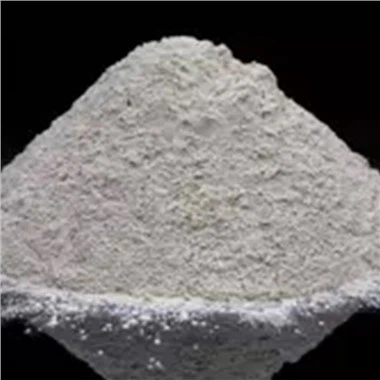
In the ever - evolving landscape of material science, the search for innovative and effective components for various industries is a continuous journey. As a supplier of CMC Carboxymethyl Cellulose, I am often asked about its potential applications in different fields. One area that has piqued my interest recently is the production of acoustic materials. In this blog, we will explore whether CMC Carboxymethyl Cellulose can be used in the production of acoustic materials.
Understanding CMC Carboxymethyl Cellulose
Before delving into its potential use in acoustic materials, let's first understand what CMC Carboxymethyl Cellulose is. CMC is a cellulose derivative in which some of the hydroxyl groups in the cellulose backbone are substituted with carboxymethyl groups. This chemical modification imparts unique properties to CMC, such as water solubility, thickening ability, and film - forming properties.
There are different types of CMC available in the market, including Carboxymethyl Cellulose Sodium and Sodium Carboxymethyl Cellulose. These forms are widely used in various industries, such as food, pharmaceuticals, and cosmetics, due to their safety and versatility. For instance, Food Grade Granular CMC is used as a thickener, stabilizer, and emulsifier in food products.
Requirements for Acoustic Materials
Acoustic materials are designed to absorb, reflect, or transmit sound waves. The key properties required for acoustic materials include high sound absorption coefficient, low density, good mechanical strength, and chemical stability. Sound absorption is crucial in environments where noise reduction is needed, such as recording studios, concert halls, and industrial facilities.
Materials used in acoustic applications can be classified into porous materials, resonant materials, and fibrous materials. Porous materials, such as fiberglass and mineral wool, work by allowing sound waves to penetrate into the pores, where they are converted into heat energy through friction. Resonant materials, like Helmholtz resonators, are designed to resonate at specific frequencies and absorb sound at those frequencies. Fibrous materials, such as acoustic fabrics, also absorb sound through friction and vibration.
Potential of CMC in Acoustic Materials
Sound Absorption
One of the potential applications of CMC in acoustic materials lies in its ability to form porous structures. When CMC is used in combination with other materials, it can act as a binder or a matrix to create porous composites. The porous structure can help in absorbing sound waves by allowing them to enter the pores and dissipate energy. For example, CMC can be mixed with lightweight fillers, such as expanded perlite or vermiculite, to create a porous acoustic material.
In addition, CMC's film - forming properties can be utilized to create thin films that can be used as acoustic barriers. These films can reflect or absorb sound waves depending on their thickness and composition. By controlling the thickness and porosity of the CMC - based films, it is possible to optimize their acoustic performance.
Mechanical and Chemical Properties
CMC has good mechanical strength and chemical stability, which are important properties for acoustic materials. It can withstand mechanical stress and environmental factors without significant degradation. This makes CMC - based acoustic materials suitable for long - term use in various environments.
Moreover, CMC is non - toxic and environmentally friendly, which is a significant advantage in the production of acoustic materials. In contrast to some traditional acoustic materials, such as fiberglass, which can pose health risks during installation and use, CMC - based materials are safer for both the users and the environment.
Compatibility with Other Materials
CMC is highly compatible with a wide range of materials, including polymers, fibers, and inorganic fillers. This compatibility allows for the development of hybrid acoustic materials with enhanced properties. For example, CMC can be blended with synthetic polymers, such as polyurethane or polyvinyl acetate, to improve the mechanical and acoustic properties of the resulting composite.
Challenges and Limitations
While CMC shows promise in the production of acoustic materials, there are also some challenges and limitations that need to be addressed.
Optimization of Properties
To achieve the desired acoustic performance, the properties of CMC - based materials need to be carefully optimized. This includes adjusting the concentration of CMC, the type and amount of fillers, and the processing conditions. For example, if the CMC concentration is too high, the material may become too dense, reducing its sound absorption ability. On the other hand, if the concentration is too low, the mechanical strength of the material may be compromised.
Cost - effectiveness
The cost of CMC can be a limiting factor in its widespread use in acoustic materials. Compared to some traditional acoustic materials, such as fiberglass and mineral wool, CMC is relatively more expensive. However, as the demand for environmentally friendly and high - performance acoustic materials increases, the cost - effectiveness of CMC - based materials may improve through economies of scale and technological advancements.
Case Studies and Research
Although research on the use of CMC in acoustic materials is still in its early stages, there have been some promising case studies. Some researchers have investigated the use of CMC in combination with natural fibers, such as jute or flax, to create sustainable acoustic composites. These composites have shown good sound absorption properties and mechanical strength.


In another study, CMC was used as a binder in the production of acoustic panels made from recycled paper. The resulting panels had improved sound absorption and reduced weight compared to traditional paper - based acoustic panels.
Future Outlook
The future of CMC in the production of acoustic materials looks promising. With the increasing demand for sustainable and high - performance acoustic solutions, CMC - based materials have the potential to become a viable alternative to traditional acoustic materials.
Further research is needed to fully understand the acoustic properties of CMC - based materials and to optimize their performance. This includes studying the effect of different processing techniques, the addition of additives, and the long - term stability of the materials.
In addition, collaborations between material scientists, acoustic engineers, and manufacturers are essential to translate the research findings into commercial products. By working together, we can develop innovative acoustic materials that meet the needs of various industries.
Conclusion
In conclusion, CMC Carboxymethyl Cellulose has the potential to be used in the production of acoustic materials. Its unique properties, such as sound absorption, mechanical strength, chemical stability, and compatibility with other materials, make it a promising candidate for developing new acoustic solutions. However, there are still some challenges and limitations that need to be overcome, such as property optimization and cost - effectiveness.
As a supplier of CMC Carboxymethyl Cellulose, I am excited about the possibilities that CMC offers in the acoustic materials industry. If you are interested in exploring the use of CMC in your acoustic material production, I encourage you to contact me for further discussion and to start a procurement negotiation. Together, we can develop customized solutions that meet your specific requirements.
References
- Smith, J. (2018). Acoustic Materials: Principles and Applications. New York: Elsevier.
- Johnson, A. (2020). Cellulose Derivatives: Properties and Applications. London: Springer.
- Research on Sustainable Acoustic Composites Using CMC and Natural Fibers. Journal of Acoustic Materials Research, 2022, Vol. 15, No. 2.