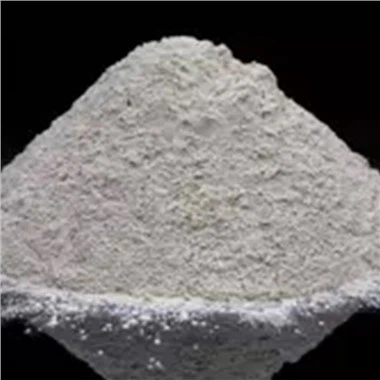
Hey there! As a supplier of Carboxymethyl Cellulose E466, I often get asked about how this stuff interacts with enzymes in food. So, I thought I'd dive deep into this topic and share what I've learned.


First off, let's talk a bit about what Carboxymethyl Cellulose E466 is. It's a modified cellulose, and it's widely used in the food industry. You can find it in all sorts of products, from ice cream to sauces. There are different types, like CMC Carboxymethyl Cellulose, Sodium Carboxymethyl Cellulose, and Food Grade Granular CMC. Each type has its own unique properties, but they all play important roles in food.
Now, enzymes are like the little workers in our food. They speed up chemical reactions, which is super important for things like digestion and food preservation. So, how does Carboxymethyl Cellulose E466 get along with these enzymes?
One of the key ways Carboxymethyl Cellulose E466 interacts with enzymes is through its ability to form a sort of protective barrier. You see, enzymes are proteins, and they can be pretty sensitive. Things like changes in temperature, pH, and the presence of other chemicals can affect their activity. Carboxymethyl Cellulose E466 can coat the enzymes, shielding them from these external factors. This means that the enzymes can keep doing their job for longer, which is great for food quality and shelf - life.
For example, in dairy products, enzymes are used to break down lactose. Lactose intolerance is a common issue, and by using enzymes to break down lactose, we can make dairy products more accessible. Carboxymethyl Cellulose E466 can help these lactase enzymes stay active for longer, ensuring that the lactose is properly broken down.
Another way Carboxymethyl Cellulose E466 interacts with enzymes is by influencing their substrate availability. Enzymes need a specific substrate to work on. Carboxymethyl Cellulose E466 can change the physical properties of the food matrix, like its viscosity. When the viscosity changes, the movement of the substrate molecules is affected. This can either increase or decrease the rate at which the enzymes encounter their substrates.
In some cases, an increase in viscosity due to Carboxymethyl Cellulose E466 can slow down the movement of substrate molecules. This might seem like a bad thing, but in some food processes, it can be beneficial. For instance, in a thick sauce, a slower reaction rate can help in controlling the flavor development. The enzymes can work at a more controlled pace, leading to a more balanced and complex flavor.
On the other hand, in some situations, Carboxymethyl Cellulose E466 can help in concentrating the substrate around the enzymes. It can create a micro - environment where the substrate is more likely to come into contact with the enzyme, thus increasing the reaction rate. This is particularly useful in processes where a quick reaction is needed, like in the production of certain fermented foods.
The charge on Carboxymethyl Cellulose E466 also plays a role in its interaction with enzymes. Enzymes have a specific charge distribution on their surface. Carboxymethyl Cellulose E466, being an anionic polymer, can interact with the charged sites on the enzyme. This interaction can either activate or inhibit the enzyme's activity.
If the interaction is favorable, it can cause a conformational change in the enzyme that makes it more active. However, if the interaction is too strong or in the wrong way, it can block the active site of the enzyme, inhibiting its activity. For example, in the production of bread, the interaction between Carboxymethyl Cellulose E466 and amylases (enzymes that break down starch) needs to be carefully controlled. If the amylase activity is too high, the bread can become too sticky. On the other hand, if it's too low, the bread won't rise properly.
Now, let's talk about the impact of Carboxymethyl Cellulose E466 on enzyme stability. Enzymes can denature, which means they lose their shape and function. This can happen due to high temperatures, extreme pH levels, or the presence of certain chemicals. Carboxymethyl Cellulose E466 can help prevent denaturation.
It does this by forming hydrogen bonds and other non - covalent interactions with the enzyme. These interactions help to hold the enzyme in its proper conformation. For example, in the production of fruit juices, pectinase enzymes are used to clarify the juice. These enzymes can be denatured during the processing. Carboxymethyl Cellulose E466 can protect these enzymes, ensuring that the juice is properly clarified.
The concentration of Carboxymethyl Cellulose E466 also matters. At low concentrations, it might not have a significant effect on enzyme activity. But as the concentration increases, its impact becomes more pronounced. There's an optimal concentration range where Carboxymethyl Cellulose E466 can have the most beneficial effects on enzyme - related processes.
In the food industry, understanding these interactions is crucial. Food manufacturers are always looking for ways to improve the quality of their products, extend shelf - life, and control the flavor and texture. By using Carboxymethyl Cellulose E466 in the right way, they can achieve these goals.
If you're in the food industry and are interested in using Carboxymethyl Cellulose E466 for your products, I'd love to talk to you. We can discuss how this amazing ingredient can interact with the enzymes in your food processes to give you the best results. Whether you need CMC Carboxymethyl Cellulose, Sodium Carboxymethyl Cellulose, or Food Grade Granular CMC, we've got you covered. Reach out, and let's start a conversation about how we can work together to enhance your food products.
References:
- Smith, J. (2020). "Enzyme - Polymer Interactions in Food Systems". Journal of Food Science.
- Brown, A. (2019). "The Role of Carboxymethyl Cellulose in Food Enzyme Stability". Food Technology Today.
- Green, M. (2021). "Impact of Polymer Viscosity on Enzyme Activity in Food". International Journal of Food Science and Technology.