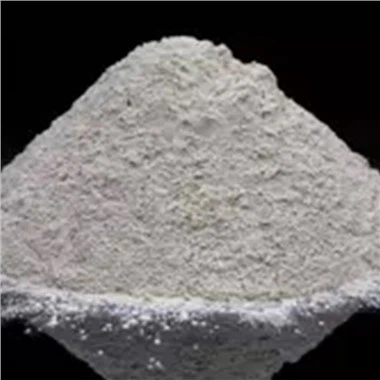
Hey there! As a supplier of Granular Polyanionic Cellulose (GPAC), I've been getting a lot of questions lately about whether GPAC can be used in the production of artificial leather. Well, let's dive right into it and explore this topic.
First off, let's understand what Granular Polyanionic Cellulose is. GPAC is a kind of modified cellulose. It's made by chemically modifying natural cellulose, which gives it some pretty cool properties. It's water - soluble, has good thickening ability, and can form stable colloidal solutions. These properties make it useful in a bunch of industries, like oil drilling, food, and now, we're looking into artificial leather production.
Artificial leather, also known as synthetic leather, is a man - made material that mimics the look and feel of real leather. It's used in a wide range of products, from furniture to fashion items. The production of artificial leather involves several steps, including the preparation of the base material, coating, and finishing.
One of the key requirements in artificial leather production is to have good control over the viscosity and stability of the coating materials. This is where GPAC might come in handy. Its thickening property can help adjust the viscosity of the coating formulations. When we add GPAC to the coating mixture, it can make the liquid thicker, which is beneficial for getting an even and smooth coating on the base material.
For example, in a polyurethane - based artificial leather coating, GPAC can act as a rheology modifier. The coating needs to have the right consistency so that it can be evenly spread on the substrate. If the coating is too thin, it might not cover the base material properly, leading to uneven color and texture. On the other hand, if it's too thick, it can be difficult to apply. GPAC can help strike that perfect balance.
Another important aspect is the stability of the coating. During the production process, the coating mixture needs to remain stable over time. GPAC can prevent the separation of different components in the coating. It forms a network structure in the solution, which holds the particles together and stops them from settling or aggregating. This is crucial for ensuring the quality and uniformity of the artificial leather.
Now, let's talk about the types of GPAC we offer. We have Fast Dispersed Polyanionic Cellulose PAC LV and Fast Dispersed Polyanionic Cellulose PAC HV. The "LV" stands for low viscosity, and the "HV" stands for high viscosity.
The Fast Dispersed Polyanionic Cellulose PAC LV is great for applications where you need a relatively low - viscosity coating. It disperses quickly in water, which means you can save time in the production process. This type of GPAC can be used in the early stages of coating preparation or in formulations where a thinner coating is required.
On the other hand, the Fast Dispersed Polyanionic Cellulose PAC HV is suitable for situations where a higher - viscosity coating is needed. It can provide more thickening power, which is useful for creating a more substantial and durable coating. For example, in the production of high - quality artificial leather for furniture, the HV type might be a better choice.
In addition to its rheology - modifying and stability - enhancing properties, GPAC is also environmentally friendly. It's derived from natural cellulose, which is a renewable resource. Compared to some other chemical additives used in artificial leather production, GPAC has a lower environmental impact. This is becoming increasingly important as consumers are more conscious about the environmental footprint of the products they buy.
However, like any material, there are also some challenges when using GPAC in artificial leather production. One of the main issues is the compatibility with other components in the coating formulation. Different types of polymers, pigments, and solvents are used in artificial leather coatings, and GPAC needs to be able to work well with all of them. We've done a lot of research and testing to ensure that our GPAC products are compatible with a wide range of coating materials, but it's still something that needs to be carefully considered in each specific application.
Another challenge is the cost. While GPAC offers many benefits, it might be more expensive than some traditional additives. But when you consider the improved quality, stability, and environmental friendliness it provides, the cost - benefit ratio can be quite favorable in the long run.
In conclusion, Granular Polyanionic Cellulose has great potential in the production of artificial leather. Its thickening, stability - enhancing, and environmentally friendly properties make it a promising candidate for use in coating formulations. Our Fast Dispersed Polyanionic Cellulose PAC LV and Fast Dispersed Polyanionic Cellulose PAC HV products offer different options to meet various production needs.
If you're in the artificial leather production industry and are interested in exploring the use of GPAC in your processes, I'd love to have a chat with you. We can discuss your specific requirements, conduct some tests, and see how our GPAC products can fit into your production line. Don't hesitate to reach out if you want to learn more or start a procurement negotiation.
References:


- "Cellulose Derivatives: Synthesis, Properties, and Applications" - A comprehensive book on cellulose - based materials.
- Research papers on artificial leather production and rheology modifiers in coating formulations.