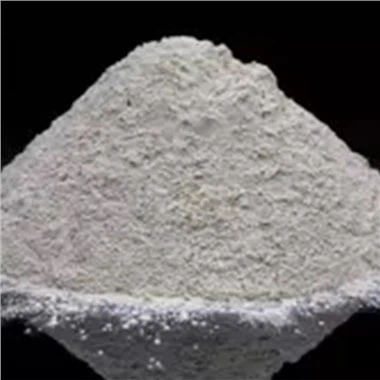
Carboxymethyl Cellulose (CMC), coded as E466 in the food industry, is like a behind - the - scenes magician when it comes to the mouth - feel of food. If you're new to all this, think of CMC as this super - useful additive that's everywhere in our food these days. And guess what? I'm a Carboxymethyl Cellulose E466 supplier. So, let me take you through how this ingredient really affects the way our food feels in our mouths.
Thickening and Gel - forming Abilities
First off, one of the main ways CMC E466 impacts mouth - feel is through its thickening powers. When you add Carboxymethyl Cellulose E466 to a liquid or semi - liquid food, it forms a sort of net - like structure. This structure traps water molecules, making the food thicker.
For example, in salad dressings, a little bit of CMC can transform a runny mixture into a nice, thick dressing that coats your salad leaves evenly. You no longer have that annoying situation where the dressing just pools at the bottom of the bowl. The thickness gives the dressing a more luxurious mouth - feel. It's like going from a watery soup to a rich, velvety sauce.
Moreover, CMC has the ability to form gels under certain conditions. In desserts like jellies or puddings, it can create a firm yet smooth texture. When you take a spoonful, the gel doesn't break up too readily but still melts in your mouth. This gives a very satisfying mouth - feel. It's all about that balance between being solid enough to hold its shape and soft enough to be easily consumed.
Emulsification and Stabilization
Another important role of CMC E466 is in emulsification and stabilization. In foods that contain oil and water, like mayonnaise or dairy - based creams, CMC helps keep the two phases from separating. Oil and water don't naturally mix well, but CMC acts as a mediator.
It attaches to both the oil droplets and the water molecules, creating a stable emulsion. When you taste an emulsion stabilized by CMC, the mouth - feel is smooth and consistent. You don't get that unpleasant feeling of sudden separation in your mouth, where you first taste the oily part and then the watery part. Instead, it's a single, harmonious mouthful.
The stabilization effect also stands up to changes in temperature and storage time. So, whether you're eating the food right after you buy it or a few days later, the mouth - feel remains the same. This is crucial for maintaining the quality of processed foods.
Viscosity and Lubrication
The viscosity, or thickness, that CMC imparts to food isn't just about making it thick. It also affects the way the food moves around in your mouth. A food with the right viscosity doesn't feel sticky or gluey. Instead, it provides a smooth glide as you chew or swallow.
This lubrication effect is particularly noticeable in beverages. For example, in fruit juices or smoothies with added Carboxymethyl Cellulose Sodium, the drink flows easily over your tongue. It doesn't feel clumpy or grainy. And in yogurts, CMC ensures that every bite has a nice, consistent flow, making it pleasant to eat.
Particle Suspension
In foods with solid particles, like sauces with herbs or particles in a drink, CMC helps keep these particles suspended evenly. Without CMC, the particles might sink to the bottom, and you'd get an uneven distribution in every bite or sip.
When CMC is added, it creates an environment where the particles can stay dispersed throughout the food. This means that in every mouthful, you get a balanced taste and texture. Whether you're having a salsa with bits of tomato or a protein shake with added supplements, the presence of CMC ensures a uniform mouth - feel
Impact on Creaminess and Silkiness
CMC has a remarkable ability to enhance the creaminess and silkiness of foods. In dairy products like ice cream, it can make the ice cream smoother and more cream - like. It reduces the formation of ice crystals, which can make ice cream feel granular and unpleasant.
Instead, with CMC, you get a velvety texture that melts on your tongue. The same goes for cream - based soups. The addition of CMC gives the soup a rich, silky mouth - feel that makes you want to keep sipping.
Customizing Mouth - feel
As a Carboxymethyl Cellulose E466 supplier, I know that different food products need different levels and types of CMC. The molecular weight and degree of substitution of CMC can be adjusted to achieve the desired mouth - feel.
For a light, refreshing beverage, you might use a low - viscosity CMC that doesn't add too much thickness but still provides some stability. On the other hand, for a heavy, creamy dessert, a high - viscosity CMC will work better to create that rich texture.
Food manufacturers can really play around with these variables to create unique mouth - feels for their products. It's all about understanding the science behind CMC and tailoring it to the specific food item.
Quality and Purity
When it comes to using CMC E466 in food, quality and purity are key. As a supplier, I make sure that the CMC we provide meets the highest standards. Impurities or low - quality CMC can actually have a negative impact on the mouth - feel of food.
For example, if the CMC has undissolved particles or is contaminated, it can make the food feel gritty or have an off - taste. So, always choose a reliable supplier who can guarantee the quality of the Food Grade Powder CMC.
Conclusion
Carboxymethyl Cellulose E466 is a game - changer when it comes to the mouth - feel of food. Its thickening, emulsifying, stabilizing, and other properties work together to create that perfect sensory experience in our mouths. Whether it's making a sauce thicker, a beverage smoother, or a dessert creamier, CMC has a big role to play.
If you're a food manufacturer looking to enhance the mouth - feel of your products, I'd love to have a chat. We can discuss the specific CMC solutions that will work best for your needs. Let's work together to create amazing food experiences for consumers.


References
- McClements, D. J. (2012). Food emulsions: principles, practices, and techniques. CRC press.
- Nishinari, K., Fang, Y., Guo, S., & Phillips, G. O. (2014). Gelling agents for food. Springer.