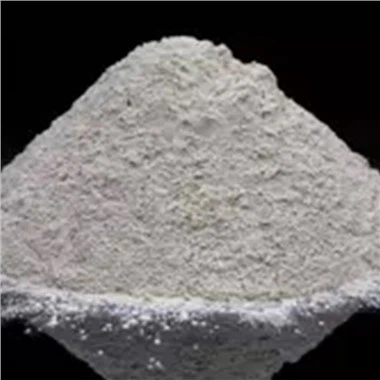
Hey there! As a supplier of Carboxymethyl Cellulose E466, I've gotten tons of questions about how this stuff works as a thickening agent. So, I thought I'd break it down for you in this blog post.
First off, let's talk a bit about what Carboxymethyl Cellulose E466 is. It's a modified cellulose derivative, which basically means it's a tweaked version of the cellulose you find in plants. Cellulose is a super common polymer that gives plants their structure. When we modify it to make Carboxymethyl Cellulose E466, we're adding carboxymethyl groups to the cellulose backbone. This changes its properties big time, making it really useful in a whole bunch of industries, especially as a thickening agent.
So, how does it actually thicken things? Well, it all comes down to its molecular structure and how it interacts with water. Carboxymethyl Cellulose E466 is hydrophilic, which means it loves water. When you add it to a liquid, it quickly absorbs water molecules. The carboxymethyl groups on the CMC chains are negatively charged, and this creates an electrostatic repulsion between the chains. As a result, the chains start to spread out and form a kind of network in the liquid.
This network is what gives the liquid its thickening effect. Think of it like a spider's web in the liquid. The CMC chains are the threads of the web, and they trap the water molecules within the network. This makes the liquid more viscous, or thicker. The more CMC you add, the denser the network becomes, and the thicker the liquid gets.
In food products, this thickening property is super handy. For example, in sauces and dressings, Carboxymethyl Cellulose E466 helps to give them the right consistency. You don't want your ketchup to be too runny, right? CMC makes sure it has that nice, thick texture that stays on your fries. It also helps to prevent the separation of ingredients in emulsions, like in mayonnaise. The CMC network holds the oil droplets and water together, so you don't end up with a layer of oil floating on top.
In the pharmaceutical industry, CMC is used in oral suspensions to make sure the active ingredients are evenly distributed. The thickening effect helps to keep the particles suspended in the liquid, so you get a consistent dose every time you take it.
Now, let's talk about the different forms of Carboxymethyl Cellulose E466 we offer. We have CMC Carboxymethyl Cellulose, which is a general - purpose form that can be used in a wide range of applications. It's great for both food and non - food uses.
We also have Food Grade Granular CMC. The granular form is easy to handle and dissolve. It's often used in food products where you need a quick and uniform thickening effect.
And then there's Food Grade Powder CMC. The powder form is more fine - grained and can be used in applications where you need a more precise control over the thickening process. It's also great for products where you want a clear or transparent appearance, like in some beverages.
The thickening ability of Carboxymethyl Cellulose E466 can also be affected by a few factors. Temperature is one of them. Generally, as the temperature increases, the viscosity of the CMC - containing liquid may decrease. This is because the increased thermal energy makes the CMC chains move more freely, breaking some of the network structure. However, the exact behavior depends on the degree of substitution of the carboxymethyl groups and the concentration of CMC.
pH is another important factor. Carboxymethyl Cellulose E466 is most stable and effective in a slightly acidic to neutral pH range. In very acidic or very alkaline conditions, the carboxymethyl groups may react, and the thickening properties can change.


I hope this gives you a better understanding of how Carboxymethyl Cellulose E466 acts as a thickening agent. If you're in the market for high - quality CMC for your products, whether it's for food, pharmaceuticals, or other industries, we'd love to have a chat with you. Contact us to start a procurement discussion and find out how our Carboxymethyl Cellulose E466 can meet your specific needs.
References
- "Handbook of Hydrocolloids" by G. O. Phillips and P. A. Williams
- "Food Additives: Chemistry, Safety, and Functionality" by F. Shahidi and Y. Ho