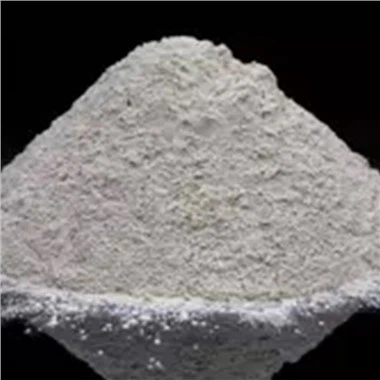
Hey there! As a supplier of Sodium Carboxymethyl, I often get asked some interesting questions about this product. One question that pops up quite a bit is, "Does Sodium Carboxymethyl react with acids?" Well, let's dig into this topic and find out.
First off, let's quickly introduce Sodium Carboxymethyl. It's also known as Sodium Carboxymethyl Cellulose. You can find more detailed info about it Sodium Carboxymethyl Cellulose. This stuff is super versatile and has a wide range of applications, especially in the food industry. Another common name for it is CMC Carboxymethyl Cellulose, and you can check out more about that CMC Carboxymethyl Cellulose. And if you're interested in the food - grade powder version, head over to Food Grade Powder CMC.
Now, let's talk about the reaction with acids. Sodium Carboxymethyl is a salt of carboxymethyl cellulose. In its structure, there are sodium ions attached to the carboxymethyl groups. When it comes into contact with acids, a chemical reaction can occur.
The basic principle behind this reaction is an acid - base reaction. Acids are substances that can donate protons (H⁺ ions), while Sodium Carboxymethyl can act as a base in this context. When an acid donates a proton to the carboxymethyl group of Sodium Carboxymethyl, the sodium ion gets replaced by a hydrogen ion.
For example, if we have hydrochloric acid (HCl) reacting with Sodium Carboxymethyl (let's represent Sodium Carboxymethyl as R - COO⁻Na⁺, where R is the cellulose backbone), the reaction can be written as:
R - COO⁻Na⁺+ HCl → R - COOH+ NaCl
In this reaction, the sodium carboxymethyl group (R - COO⁻Na⁺) reacts with hydrochloric acid to form carboxymethyl cellulose acid (R - COOH) and sodium chloride (NaCl).
The formation of carboxymethyl cellulose acid can have several implications. One of the most notable effects is on the solubility of the compound. Sodium Carboxymethyl is highly soluble in water, which makes it great for many applications like thickening, stabilizing, and emulsifying in various products. However, carboxymethyl cellulose acid has different solubility properties. It is less soluble in water compared to its sodium salt form.
This change in solubility can be both a problem and an advantage depending on the application. In some cases, if you're working in a system where you want to precipitate out the carboxymethyl cellulose, adding an acid can be a way to do it. For example, in some industrial processes where you need to separate the carboxymethyl cellulose from a solution, an acid - induced precipitation can be a useful step.
On the other hand, if you're using Sodium Carboxymethyl in a product where you need it to remain in solution, the presence of acids can cause issues. For instance, in food products like beverages, if the pH of the beverage is too low (i.e., it's acidic), the Sodium Carboxymethyl may start to precipitate, leading to cloudiness or a change in the texture of the product.
The reaction rate and the extent of the reaction also depend on several factors. The strength of the acid is one important factor. Strong acids like hydrochloric acid or sulfuric acid will react more readily with Sodium Carboxymethyl compared to weak acids like acetic acid. The concentration of the acid also matters. A higher concentration of acid will generally lead to a faster and more complete reaction.
Temperature can also play a role. Higher temperatures usually increase the reaction rate. At elevated temperatures, the molecules have more kinetic energy, which means they collide more frequently and with greater energy, facilitating the reaction between the acid and Sodium Carboxymethyl.
Another factor is the degree of substitution of the Sodium Carboxymethyl. The degree of substitution refers to the number of carboxymethyl groups attached to the cellulose backbone. A higher degree of substitution may result in a more reactive Sodium Carboxymethyl towards acids because there are more sites available for the acid to react with.
In some applications, you might want to control the reaction with acids. To do this, you can use buffers. Buffers are substances that can resist changes in pH. By adding a buffer to a system containing Sodium Carboxymethyl and an acid, you can keep the pH within a certain range and prevent the excessive reaction of the Sodium Carboxymethyl with the acid.
Now, let's talk about how this knowledge is useful in different industries. In the food industry, as I mentioned earlier, understanding the reaction of Sodium Carboxymethyl with acids is crucial for product formulation. Food scientists need to carefully control the pH of food products to ensure that the Sodium Carboxymethyl remains soluble and performs its intended function.
In the pharmaceutical industry, Sodium Carboxymethyl is used as a binder, disintegrant, and suspending agent in tablets and liquid formulations. If the pharmaceutical product contains an acidic ingredient, the reaction with Sodium Carboxymethyl needs to be considered to ensure the stability and efficacy of the product.
In the textile industry, Sodium Carboxymethyl is used as a sizing agent. When treating textiles with acidic dyes or finishing agents, the reaction with acids can affect the performance of the sizing agent, which in turn can impact the quality of the textile.


As a supplier of Sodium Carboxymethyl, I've seen firsthand how important it is for our customers to understand these reactions. Whether you're in the food, pharmaceutical, textile, or any other industry that uses Sodium Carboxymethyl, having a good grasp of its reactivity with acids can help you make better - informed decisions about product formulation and processing.
If you're interested in learning more about Sodium Carboxymethyl or have any questions regarding its reaction with acids or other aspects of its use, feel free to reach out. We're here to provide you with the best quality Sodium Carboxymethyl and the technical support you need for your specific applications. Whether you're a small - scale producer or a large - scale manufacturer, we can work with you to meet your requirements.
So, if you're looking to purchase Sodium Carboxymethyl for your business, don't hesitate to contact us. We can have a detailed discussion about your needs, and we'll do our best to offer you the right product at a competitive price. Let's start a conversation and see how we can work together to make your products even better.
References
- Textbook of Organic Chemistry, various editions
- Journal articles on the applications and chemistry of carboxymethyl cellulose
- Industry reports on the use of Sodium Carboxymethyl in different sectors