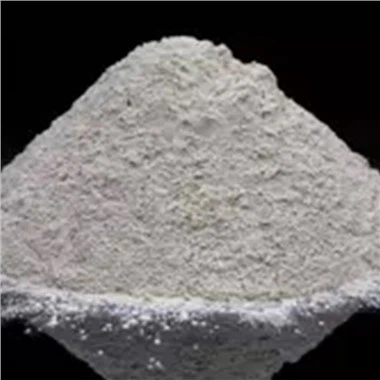
In recent years, the demand for high - performance batteries has been on the rise, driven by the rapid development of electric vehicles, portable electronics, and renewable energy storage systems. As a supplier of Pating Grade Organoclay, I have been exploring the potential of this unique material in battery applications. In this blog, I will delve into the properties of Pating Grade Organoclay and analyze whether it can be effectively used in battery technologies.
Understanding Pating Grade Organoclay
Pating Grade Organoclay is a modified form of clay that has been treated with organic compounds. This treatment imparts special properties to the clay, making it highly compatible with organic solvents and polymers. Our company offers two main types of Pating Grade Organoclay products: Fine Powder Organoclay and Guanual Painting Grade Organoclay.
The fine powder form of organoclay has a large surface area, which allows for enhanced interactions with other substances. This characteristic makes it suitable for applications where dispersion and adsorption are crucial. On the other hand, the guanual painting grade organoclay has specific rheological properties that make it ideal for use in coating formulations, providing excellent thixotropy and sag resistance.
Potential Benefits of Pating Grade Organoclay in Batteries
1. Electrolyte Stabilization
One of the key challenges in battery technology is the stability of the electrolyte. The electrolyte plays a vital role in transporting ions between the anode and the cathode. However, it can be prone to degradation over time, which can lead to reduced battery performance and lifespan.
Pating Grade Organoclay can potentially act as an electrolyte additive. Its high surface area and adsorption capacity allow it to interact with the electrolyte components. For example, it can adsorb impurities or by - products that may form during battery operation, preventing them from interfering with the ion transport process. Additionally, the organoclay can form a protective layer around the electrodes, reducing the likelihood of electrolyte decomposition at the electrode - electrolyte interface.
2. Separator Enhancement
Battery separators are thin membranes that prevent short - circuits between the anode and the cathode while allowing the passage of ions. Pating Grade Organoclay can be incorporated into separator materials to improve their performance.
The organoclay can enhance the mechanical strength of the separator, making it more resistant to puncture and deformation. This is particularly important in high - energy - density batteries, where the electrodes may exert significant pressure on the separator. Moreover, the organoclay can modify the pore structure of the separator, optimizing the ion transport channels. By controlling the pore size and distribution, it can improve the ion conductivity of the separator, leading to better battery performance.


3. Thermal Management
Battery safety is closely related to thermal management. During charging and discharging, batteries generate heat, and excessive heat can cause thermal runaway, which is a serious safety hazard.
Pating Grade Organoclay has good thermal stability and can act as a heat - dissipating agent. It can be added to battery components, such as the electrolyte or the electrode binder, to improve the heat transfer properties of the battery. The organoclay can absorb and dissipate heat, helping to maintain a more uniform temperature distribution within the battery and reducing the risk of thermal runaway.
Challenges and Limitations
1. Compatibility with Battery Chemistry
Not all battery chemistries are equally compatible with Pating Grade Organoclay. Different battery systems, such as lithium - ion, lead - acid, and sodium - ion batteries, have unique electrolyte compositions and electrode materials. The organoclay may react with certain components in the battery, leading to unwanted side reactions or reduced performance.
For example, in lithium - ion batteries, the presence of organoclay may interfere with the lithium - ion intercalation and de - intercalation processes at the electrodes. Therefore, careful evaluation and optimization are required to ensure that the organoclay is compatible with the specific battery chemistry.
2. Manufacturing Complexity
Incorporating Pating Grade Organoclay into battery manufacturing processes can add complexity. The organoclay needs to be properly dispersed in the battery components, such as the electrolyte or the separator material. Achieving a uniform dispersion can be challenging, especially at large - scale production.
Moreover, the addition of organoclay may require modifications to the existing manufacturing equipment and processes. This can increase the production cost and may require significant investment in research and development to optimize the manufacturing procedures.
Case Studies and Research Findings
Although the use of Pating Grade Organoclay in batteries is still in the early stages of research, there have been some promising findings.
Some research groups have investigated the use of organoclay - modified electrolytes in lithium - ion batteries. Their studies have shown that the addition of a small amount of organoclay can improve the cycling stability of the battery. The organoclay helps to reduce the formation of solid - electrolyte interphase (SEI) layers on the electrodes, which can improve the reversibility of the lithium - ion intercalation and de - intercalation processes.
In terms of separator enhancement, researchers have found that organoclay - doped separators can have better mechanical properties and ion conductivity compared to traditional separators. This can lead to improved battery performance, especially in terms of charge - discharge efficiency and power density.
Conclusion
Pating Grade Organoclay shows great potential for use in battery applications. Its unique properties, such as high surface area, adsorption capacity, and thermal stability, make it a promising candidate for electrolyte stabilization, separator enhancement, and thermal management in batteries. However, there are also challenges and limitations that need to be addressed, including compatibility with battery chemistry and manufacturing complexity.
As a supplier of Pating Grade Organoclay, we are committed to collaborating with battery manufacturers and researchers to further explore the potential of this material in battery technologies. We believe that with continued research and development, Pating Grade Organoclay can play an important role in the next - generation of high - performance batteries.
If you are interested in exploring the use of Pating Grade Organoclay in your battery applications, we invite you to contact us for more information and to discuss potential procurement opportunities. Our team of experts is ready to provide you with technical support and customized solutions to meet your specific needs.
References
- "Advanced Battery Materials: Challenges and Opportunities" by X. Zhang et al., published in Journal of Power Sources.
- "Rheological and Thermal Properties of Organoclay - Modified Electrolytes for Lithium - Ion Batteries" by Y. Wang et al., presented at the International Conference on Battery Technology.
- "Separator Materials for High - Performance Batteries: A Review" by Z. Li et al., published in Electrochimica Acta.