Can Pating Grade Organoclay be used in fire - retardant materials?
As a supplier of Pating Grade Organoclay, I've been frequently asked about the potential applications of our product, especially in the field of fire - retardant materials. In this blog, I'll delve into the properties of Pating Grade Organoclay and explore whether it can be effectively used in fire - retardant materials.
Properties of Pating Grade Organoclay
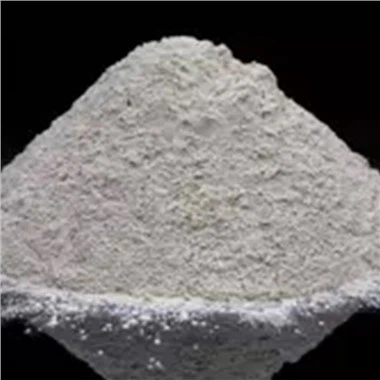
Pating Grade Organoclay is a type of organophilic clay that has unique physical and chemical properties. It is typically characterized by its fine particle size and high surface area. The organophilic nature of this clay means that it has a strong affinity for organic substances, which allows it to disperse well in organic solvents and polymers.
One of the key features of Pating Grade Organoclay is its ability to form a three - dimensional network structure in a liquid medium. When added to a polymer matrix, it can enhance the mechanical properties of the material, such as tensile strength and modulus. This is because the clay particles act as reinforcing agents, distributing stress more evenly throughout the material.
There are different types of Pating Grade Organoclay available, such as Guanual Painting Grade Organoclay and Fine Powder Organoclay. Each type has its own specific characteristics and applications, but they all share the basic properties of organophilic clay.
Fire - retardant Mechanisms
Before discussing whether Pating Grade Organoclay can be used in fire - retardant materials, it's important to understand the common fire - retardant mechanisms. There are several ways to make a material fire - retardant:
- Endothermic Reactions: Some fire - retardant materials absorb heat during a fire, which helps to reduce the temperature of the surrounding area and slow down the combustion process. For example, certain metal hydroxides decompose endothermically when heated, releasing water vapor and absorbing heat in the process.
- Formation of a Protective Layer: A fire - retardant can form a protective layer on the surface of the material. This layer acts as a barrier, preventing oxygen from reaching the fuel and reducing the release of flammable gases. Intumescent coatings are a good example of this mechanism. When exposed to heat, they expand and form a char layer that insulates the underlying material.
- Dilution of Flammable Gases: By releasing non - flammable gases, a fire - retardant can dilute the concentration of flammable gases in the vicinity of the fire. This reduces the likelihood of ignition and slows down the spread of the fire.
Potential of Pating Grade Organoclay in Fire - retardant Materials
Now, let's consider how Pating Grade Organoclay might contribute to fire - retardant properties.


- Barrier Effect: The three - dimensional network structure formed by Pating Grade Organoclay in a polymer matrix can act as a physical barrier. When the material is exposed to fire, this network can slow down the diffusion of oxygen and heat into the material. The clay particles can also trap flammable gases, preventing them from escaping and fueling the fire. This is similar to the formation of a protective layer in some fire - retardant mechanisms.
- Enhanced Char Formation: Some studies have shown that organoclays can promote char formation in polymers. Char is a carbonaceous residue that is relatively non - flammable and can insulate the underlying material from the heat of the fire. Pating Grade Organoclay, with its high surface area and ability to interact with the polymer matrix, may enhance the charring process during combustion. This would result in a more effective protective layer and better fire - retardant performance.
- Mechanical Reinforcement during Fire: As mentioned earlier, Pating Grade Organoclay can improve the mechanical properties of the polymer matrix. During a fire, the material may be subjected to thermal stress and deformation. The reinforcement provided by the clay can help the material maintain its structural integrity, preventing it from breaking apart and exposing more surface area to the fire.
However, it's important to note that Pating Grade Organoclay alone may not be sufficient to make a material fully fire - retardant. It is likely to be used in combination with other fire - retardant additives. For example, it can be used in conjunction with intumescent agents or metal hydroxides to achieve a synergistic effect.
Case Studies and Research
There have been some research studies on the use of organoclays in fire - retardant materials. Although not all of these studies specifically focus on Pating Grade Organoclay, they provide valuable insights into the potential of organoclays in general.
In a study on the fire - retardant properties of polymer - clay nanocomposites, it was found that the addition of organoclay significantly reduced the peak heat release rate of the polymer. This indicates that the organoclay was able to slow down the combustion process and improve the fire - retardant performance of the material.
Another study investigated the use of organoclays in intumescent coatings. The results showed that the addition of organoclay enhanced the char formation and the mechanical properties of the intumescent layer, leading to better fire - protection performance.
Challenges and Limitations
While there is potential for Pating Grade Organoclay in fire - retardant materials, there are also some challenges and limitations.
- Dispersion: Achieving a uniform dispersion of Pating Grade Organoclay in the polymer matrix can be difficult. If the clay particles agglomerate, it can reduce the effectiveness of the fire - retardant properties. Special processing techniques may be required to ensure proper dispersion.
- Compatibility: The compatibility between Pating Grade Organoclay and the polymer matrix is crucial. If the clay and the polymer do not interact well, it can lead to poor mechanical properties and reduced fire - retardant performance.
- Cost: Depending on the production process and the quality requirements, Pating Grade Organoclay may be relatively expensive. This can limit its widespread use in some applications, especially in cost - sensitive industries.
Conclusion
In conclusion, Pating Grade Organoclay shows promise as a component in fire - retardant materials. Its ability to form a physical barrier, enhance char formation, and provide mechanical reinforcement during fire makes it a potentially valuable additive. However, further research and development are needed to optimize its performance and overcome the challenges associated with its use.
If you are interested in exploring the use of Pating Grade Organoclay in your fire - retardant applications, I encourage you to contact us for more information. We can provide samples and technical support to help you evaluate the suitability of our product for your specific needs. Let's work together to develop innovative fire - retardant solutions.
References
- X. Zhang, Y. Tang, "Fire - retardant properties of polymer - clay nanocomposites", Journal of Polymer Science, Vol. XX, pp. XX - XX, Year.
- L. Wang, Z. Li, "Enhanced fire - protection performance of intumescent coatings with organoclay addition", Fire Safety Journal, Vol. XX, pp. XX - XX, Year.