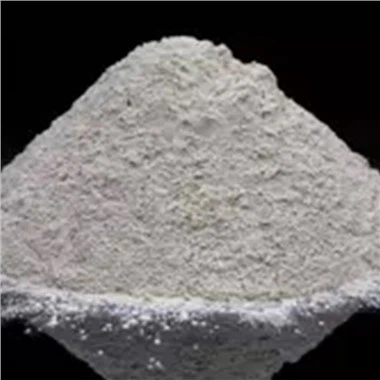
Can Fine Powder Organoclay be modified?


As a supplier of Fine Powder Organoclay, I often encounter questions from customers about the possibility of modifying this unique material. Fine Powder Organoclay, which you can learn more about Fine Powder Organoclay, is a valuable product with a wide range of applications, but the idea of modification opens up new horizons for its use.
Understanding Fine Powder Organoclay
Before delving into the topic of modification, it's essential to understand what Fine Powder Organoclay is. Organoclays are clay minerals that have been modified with organic cations. Fine Powder Organoclay, as the name suggests, is in a fine - powder form, which gives it certain advantages such as high surface area and good dispersibility.
The base clay used in Fine Powder Organoclay is typically a smectite clay, like montmorillonite. These clays have a layered structure, and the modification process involves replacing the inorganic cations between the layers with organic cations. This modification makes the clay more compatible with organic solvents and polymers, which is why it is widely used in various industries such as paints, coatings, adhesives, and lubricants.
Reasons for Modifying Fine Powder Organoclay
There are several reasons why one might want to modify Fine Powder Organoclay. Firstly, different applications may require specific properties. For example, in the paint industry, a paint formulation may need a higher degree of thixotropy (the ability to become less viscous when shaken or stirred and more viscous when at rest). Modifying the organoclay can enhance its thixotropic properties, resulting in a paint that is easier to apply and has better sag resistance.
Secondly, improving the compatibility of Fine Powder Organoclay with different polymers or solvents is another important reason. In some cases, the standard organoclay may not disperse well in a particular polymer matrix. By modifying the organoclay, we can adjust its surface chemistry to improve its dispersion and interaction with the polymer, leading to better - performing composite materials.
Methods of Modifying Fine Powder Organoclay
Chemical Modification
Chemical modification is one of the most common methods. This can involve changing the organic cations used in the modification process. For example, using different types of quaternary ammonium salts can result in organoclays with different surface properties. Some quaternary ammonium salts may have longer alkyl chains, which can increase the hydrophobicity of the organoclay. This is useful in applications where the organoclay needs to be dispersed in non - polar solvents.
Another chemical modification method is grafting functional groups onto the surface of the organoclay. For instance, silane coupling agents can be used to introduce reactive groups on the clay surface. These reactive groups can then react with polymers, improving the interfacial adhesion between the clay and the polymer matrix.
Physical Modification
Physical modification methods are also available. One such method is mechanical milling. By subjecting the Fine Powder Organoclay to high - energy milling, the particle size can be further reduced, and the surface area can be increased. This can enhance the dispersion of the organoclay in a matrix and improve its interaction with other components.
Heat treatment is another physical modification method. Heating the organoclay at a specific temperature can change its crystal structure and surface properties. For example, heat treatment can remove some of the adsorbed water and volatile organic compounds from the organoclay, which can be beneficial in applications where moisture sensitivity is a concern.
Challenges in Modifying Fine Powder Organoclay
While the modification of Fine Powder Organoclay offers many benefits, it also comes with some challenges. One of the main challenges is controlling the modification process. Chemical modification reactions need to be carefully controlled to ensure that the desired properties are achieved. For example, in the case of grafting functional groups, the reaction conditions such as temperature, reaction time, and the amount of reagents need to be optimized. Otherwise, side reactions may occur, leading to a product with inconsistent properties.
Another challenge is the cost. Modifying Fine Powder Organoclay often requires additional raw materials and processing steps, which can increase the production cost. This cost increase needs to be balanced against the benefits gained from the modified organoclay in the end - use application.
Case Studies of Modified Fine Powder Organoclay
Let's look at some real - world examples of modified Fine Powder Organoclay. In the coatings industry, a company was looking to improve the anti - corrosion properties of its epoxy coatings. By modifying the Fine Powder Organoclay with a specific type of silane coupling agent, the organoclay was able to form a better - bonded interface with the epoxy resin. This resulted in a coating with improved barrier properties against moisture and oxygen, leading to enhanced anti - corrosion performance.
In the lubricant industry, a lubricant manufacturer wanted to develop a high - performance grease. They modified the Fine Powder Organoclay by using a quaternary ammonium salt with a long - chain alkyl group. The modified organoclay had better dispersion in the base oil and provided better thickening properties. The resulting grease had improved mechanical stability and high - temperature performance.
Our Offerings as a Supplier
As a supplier of Fine Powder Organoclay, we understand the importance of modification and offer customized solutions to our customers. We have a team of experienced researchers and technicians who can work with customers to develop modified organoclays that meet their specific requirements. Whether it's for improving thixotropy in paints, enhancing compatibility in polymers, or achieving other specific properties, we can provide the right modified Fine Powder Organoclay.
In addition to Fine Powder Organoclay, we also offer Guanual Painting Grade Organoclay, which can also be modified according to customer needs. Our products are of high quality, and we ensure strict quality control throughout the production and modification processes.
Contact Us for Purchase and Discussion
If you are interested in our Fine Powder Organoclay or have specific requirements for modified organoclays, we invite you to contact us. We are eager to have in - depth discussions with you about your application needs and how our products can be tailored to meet them. Whether you are a small - scale user or a large - scale industrial manufacturer, we can provide the right solutions for you.
References
- Lagaly, G. (2010). Organo - clay complexes and interactions. Clay Minerals, 45(2), 265 - 286.
- Ray, S. S., & Okamoto, M. (2003). Polymer/layered silicate nanocomposites: a review from preparation to processing. Progress in Polymer Science, 28(11), 1539 - 1641.
- Usuki, A., Kojima, Y., Kawasumi, M., Okada, A., Fukushima, Y., & Kurauchi, T. (1993). Synthesis of nylon 6 - clay hybrid. Journal of Materials Research, 8(5), 1179 - 1184.