Extended - reach wells, characterized by their high horizontal displacement to vertical depth ratio, have become increasingly important in the oil and gas industry. These wells offer the advantage of accessing larger reservoir areas from a single wellbore, thereby maximizing hydrocarbon recovery. However, maintaining wellbore stability in extended - reach wells is a significant challenge due to factors such as high frictional forces, wellbore pressure differentials, and the complex stress distribution along the wellbore. Oil Drilling Grade Organoclay, a product we are proud to supply, plays a crucial role in addressing these challenges and ensuring the stability of the wellbore.
Understanding Oil Drilling Grade Organoclay
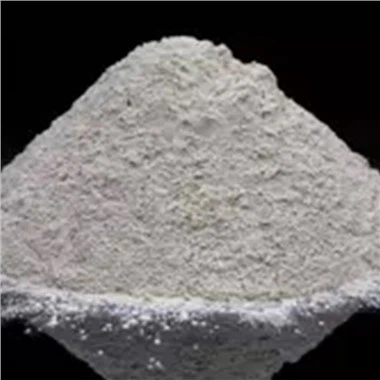
Oil Drilling Grade Organoclay is a type of modified clay that has been treated with organic cations. This modification enhances its ability to disperse and swell in oil - based drilling fluids. The most common starting material for organoclay is bentonite, a clay rich in montmorillonite. Through a process of ion exchange, the natural inorganic cations on the clay surface are replaced with organic cations, such as quaternary ammonium salts. This results in an organophilic clay that can form a stable colloidal suspension in oil - based systems.


The Importance of Wellbore Stability in Extended - Reach Wells
Wellbore stability is of utmost importance in extended - reach wells. Instability can lead to a variety of problems, including hole collapse, stuck pipe, and lost circulation. These issues not only increase the cost and time of drilling operations but also pose significant safety risks. In extended - reach wells, the long horizontal sections and high deviation angles make the wellbore more susceptible to instability. The frictional forces between the drill string and the wellbore wall are higher, and the stress distribution around the wellbore is more complex compared to vertical wells.
Role of Oil Drilling Grade Organoclay in Wellbore Stability
Viscosity and Rheology Control
One of the primary functions of Oil Drilling Grade Organoclay in maintaining wellbore stability is its ability to control the viscosity and rheology of oil - based drilling fluids. The organoclay particles form a network structure in the drilling fluid, which imparts viscosity and thixotropic properties. Viscosity is crucial for carrying cuttings out of the wellbore. In extended - reach wells, where the cuttings need to be transported over long distances, a proper viscosity is essential to prevent cuttings from settling and causing blockages.
The thixotropic nature of the organoclay - containing drilling fluid means that it has a high viscosity when static and a lower viscosity when in motion. This property allows for easy pumping of the fluid during drilling operations and ensures that the cuttings remain suspended when the circulation stops. By controlling the rheology, Oil Drilling Grade Organoclay helps to maintain a stable wellbore by preventing the accumulation of cuttings and reducing the risk of hole collapse.
Filtration Control
Another important role of Oil Drilling Grade Organoclay is in filtration control. When the drilling fluid is in contact with the wellbore wall, it forms a filter cake. The organoclay particles contribute to the formation of a thin, dense, and low - permeability filter cake. This filter cake acts as a barrier, preventing the invasion of drilling fluid into the formation and reducing the risk of formation damage.
In extended - reach wells, the long exposure of the wellbore to the drilling fluid increases the likelihood of fluid invasion. A well - formed filter cake helps to maintain the integrity of the wellbore by reducing the pressure differential between the wellbore and the formation. This is particularly important in preventing wellbore collapse and maintaining the stability of the surrounding rock.
Lubrication
Oil Drilling Grade Organoclay also provides lubrication in the drilling process. The organophilic nature of the clay particles allows them to adsorb onto the surfaces of the drill string and the wellbore wall, reducing the frictional forces. In extended - reach wells, where the frictional forces are high due to the long horizontal sections, lubrication is crucial to prevent stuck pipe and to ensure smooth drilling operations.
By reducing friction, the organoclay helps to maintain the stability of the wellbore by minimizing the mechanical stress on the wellbore wall. This is especially important in preventing wellbore damage and maintaining the integrity of the wellbore during the drilling process.
Different Applications of Oil Drilling Grade Organoclay
Organic Bentonite with Primarily Diesel - based Drilling Fluids
Diesel - based drilling fluids are widely used in the oil and gas industry. Organic bentonite, a type of Oil Drilling Grade Organoclay, is well - suited for use in diesel - based systems. It provides excellent viscosity and rheology control, as well as good filtration and lubrication properties. The organoclay can disperse easily in diesel, forming a stable suspension that helps to maintain the stability of the wellbore in extended - reach wells drilled with diesel - based fluids.
Organoclay with Synthetic - oil Base Fluids
Synthetic - oil base fluids are becoming increasingly popular due to their environmental advantages and improved performance. Organoclay is also compatible with synthetic - oil base fluids. It can enhance the viscosity and rheology of these fluids, ensuring proper cuttings transport and wellbore stability. The use of organoclay in synthetic - oil base fluids helps to overcome the challenges associated with extended - reach wells, such as high frictional forces and complex stress distributions.
Modified Bentonite with Oil Based Drilling
Modified bentonite, another form of Oil Drilling Grade Organoclay, is specifically designed for oil - based drilling applications. It offers enhanced properties compared to natural bentonite, such as better dispersion in oil and improved rheological control. In extended - reach wells, modified bentonite can be used to optimize the performance of oil - based drilling fluids, thereby maintaining wellbore stability.
Conclusion
In conclusion, Oil Drilling Grade Organoclay plays a vital role in maintaining the stability of the wellbore in extended - reach wells. Through its ability to control viscosity and rheology, provide filtration control, and offer lubrication, it helps to overcome the challenges associated with these complex wells. Our company is a reliable supplier of Oil Drilling Grade Organoclay, offering high - quality products that are tailored to meet the specific needs of the oil and gas industry.
If you are interested in learning more about our Oil Drilling Grade Organoclay products or would like to discuss your specific requirements for wellbore stability in extended - reach wells, we invite you to contact us for a procurement discussion. Our team of experts is ready to assist you in finding the best solutions for your drilling operations.
References
- Ahmed, T. (2013). Reservoir Engineering Handbook. Gulf Professional Publishing.
- Bourgoyne, A. T., Chenevert, M. E., Millheim, K. K., & Young, F. S. (1986). Applied Drilling Engineering. Society of Petroleum Engineers.
- Darley, H. C. H., & Gray, G. R. (1988). Composition and Properties of Drilling and Completion Fluids. Gulf Publishing Company.