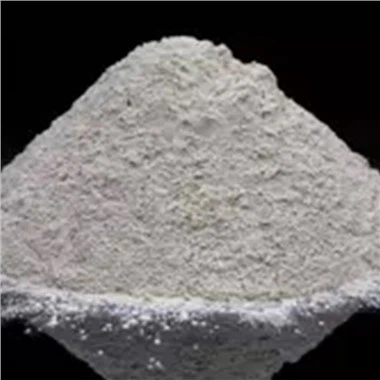
When formulating various products, especially in the fields of paints, coatings, and inks, the addition of Pating Grade Organoclay can significantly enhance the performance of the final product. As a reliable Pating Grade Organoclay supplier, I often receive inquiries about the recommended dosage of this essential additive in a formulation. In this blog, I will delve into the factors influencing the dosage and provide some general guidelines.
Understanding Pating Grade Organoclay
Pating Grade Organoclay is a type of organophilic clay that has been modified to be compatible with organic solvents and polymers. It is widely used in the paint and coating industry due to its excellent thixotropic properties. Thixotropy refers to the ability of a material to become less viscous when subjected to shear stress and return to its original viscosity when the stress is removed. This property is crucial in preventing sagging and settling of paints during application and storage.
There are different types of Pating Grade Organoclay available in the market, such as Guanual Painting Grade Organoclay and Fine Powder Organoclay. Each type has its own characteristics and is suitable for different applications.
Factors Influencing the Dosage
The recommended dosage of Pating Grade Organoclay in a formulation depends on several factors:


1. Type of Formulation
The nature of the formulation plays a significant role in determining the dosage. For example, in high - solids coatings, a higher dosage of organoclay may be required to achieve the desired thixotropic effect. This is because high - solids coatings have a lower amount of solvent, and the organoclay needs to interact more effectively with the polymer matrix to provide the necessary viscosity control.
In contrast, water - based paints may require a different dosage compared to solvent - based paints. Water - based systems have different surface tension and solubility characteristics, which can affect the dispersion and performance of the organoclay. Generally, the dosage in water - based formulations may be adjusted to account for these differences.
2. Desired Rheological Properties
The specific rheological properties required for the final product also influence the dosage. If a high degree of thixotropy is needed to prevent sagging during vertical application, a higher dosage of Pating Grade Organoclay may be necessary. On the other hand, if a more fluid consistency is desired for easy spraying or brushing, a lower dosage can be used.
3. Particle Size and Surface Area
The particle size and surface area of the organoclay can affect its performance and the required dosage. Finer particle sizes, such as those in Fine Powder Organoclay, generally have a larger surface area and can provide better dispersion and rheological control at lower dosages. Coarser particles may require a higher dosage to achieve the same effect.
4. Compatibility with Other Ingredients
The organoclay must be compatible with other ingredients in the formulation, such as resins, solvents, pigments, and additives. Incompatible ingredients can lead to poor dispersion of the organoclay, which may require an increase in dosage to compensate for the reduced effectiveness.
General Dosage Guidelines
While the exact dosage of Pating Grade Organoclay needs to be determined through laboratory testing and formulation optimization, the following general guidelines can be used as a starting point:
1. Solvent - Based Paints and Coatings
In solvent - based systems, the typical dosage of Pating Grade Organoclay ranges from 0.5% to 3% by weight of the total formulation. For general - purpose paints, a dosage of around 1% - 2% is often sufficient to achieve good thixotropic properties. However, for high - performance coatings or those with specific requirements, such as anti - sagging in thick films, the dosage may be increased up to 3%.
2. Water - Based Paints and Coatings
In water - based formulations, the dosage is usually in the range of 0.3% to 2% by weight. The lower dosage is due to the different rheological behavior of water - based systems and the fact that water has a different solvating power compared to organic solvents. It is important to note that proper dispersion techniques are crucial in water - based systems to ensure the organoclay functions effectively at these dosages.
3. Inks
For inks, the recommended dosage of Pating Grade Organoclay is typically between 0.2% and 1.5% by weight. Inks require a delicate balance between viscosity control and printability. A lower dosage is usually sufficient to prevent settling of pigments and maintain the desired flow properties during printing.
Testing and Optimization
It is important to emphasize that these are only general guidelines, and the optimal dosage of Pating Grade Organoclay should be determined through a series of laboratory tests. Formulators should conduct small - scale trials with different dosages to evaluate the rheological properties, such as viscosity, thixotropy, and sag resistance, of the formulated product.
During the testing process, it is also important to consider the long - term stability of the formulation. The organoclay should not cause any adverse effects on the storage stability, such as sedimentation or gelation over time.
Conclusion
Determining the recommended dosage of Pating Grade Organoclay in a formulation is a complex process that requires careful consideration of multiple factors. As a Pating Grade Organoclay supplier, I am committed to providing high - quality products and technical support to help formulators achieve the best results.
If you are interested in using our Pating Grade Organoclay products or have any questions about dosage and formulation, please feel free to contact us for procurement and further discussion. We have a team of experienced technical experts who can assist you in optimizing your formulations and ensuring the success of your products.
References
- "Rheology and Processing of Polymeric Materials" by James L. White and Kenneth P. Porter.
- "Paint and Coating Testing Manual: Fourteenth Edition of the Gardner - Sward Handbook" edited by W. F. Gambogi.
- "Inkjet Printing: Principles and Chemical Properties" by Hiroshi Kawaguchi.