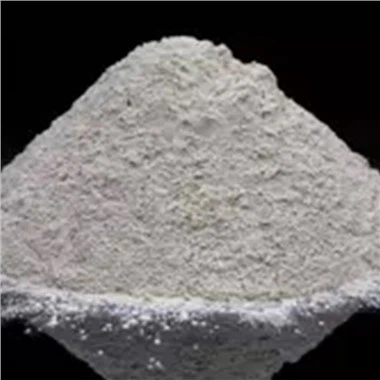
Hey there! As a supplier of Sodium Carboxymethyl, I've been getting a lot of questions lately about the optimal degree of substitution for different applications. So, I thought I'd write this blog to share some insights and help you understand how to get the most out of this versatile compound.
First off, let's quickly go over what Sodium Carboxymethyl is. Sodium Carboxymethyl, also known as Carboxymethyl Cellulose Sodium, is a water-soluble cellulose ether derived from natural cellulose. It's widely used in various industries due to its thickening, stabilizing, emulsifying, and binding properties. The degree of substitution (DS) is a crucial factor that determines its performance in different applications.
Understanding the Degree of Substitution
The degree of substitution refers to the average number of carboxymethyl groups substituted per anhydroglucose unit in the cellulose molecule. It can range from 0 to 3, but in practical applications, it usually falls between 0.4 and 1.5. A higher DS means more carboxymethyl groups are attached to the cellulose backbone, which affects the solubility, viscosity, and other properties of Sodium Carboxymethyl.
Applications and Optimal Degree of Substitution
Food Industry
In the food industry, Sodium Carboxymethyl is used as a thickener, stabilizer, and emulsifier. For example, in dairy products like yogurt and ice cream, a DS of around 0.6 - 0.9 is often preferred. This range provides good thickening and stabilizing properties, preventing the separation of ingredients and giving the products a smooth texture.
In baked goods, a slightly higher DS of 0.8 - 1.2 can be beneficial. It helps improve the dough's water retention, resulting in softer and fresher products with a longer shelf life. In salad dressings and sauces, a DS of 0.7 - 1.0 can enhance the viscosity and stability, preventing oil separation and giving a more appealing consistency.
Pharmaceutical Industry
In pharmaceuticals, Sodium Carboxymethyl is used as a binder, disintegrant, and suspending agent. For tablet formulations, a DS of 0.5 - 0.7 is commonly used. This range provides good binding properties, ensuring the tablets hold together during manufacturing and storage. At the same time, it allows for proper disintegration in the body, releasing the active ingredients effectively.


In liquid medications, a higher DS of 0.8 - 1.2 can be used to increase the viscosity and suspend insoluble particles. This helps maintain a uniform distribution of the active ingredients in the solution, ensuring accurate dosing.
Personal Care Industry
In the personal care industry, CMC Cellulose is used in products like shampoos, conditioners, and lotions. For hair care products, a DS of 0.6 - 0.9 can provide good thickening and conditioning properties. It helps improve the texture of the products, making them easier to apply and giving the hair a smooth and shiny appearance.
In skin care products, a DS of 0.7 - 1.0 can be used to enhance the viscosity and stability of creams and lotions. It also helps improve the moisturizing properties, preventing the products from drying out and providing a long-lasting effect.
Oil and Gas Industry
In the oil and gas industry, Sodium Carboxymethyl is used as a drilling fluid additive. A DS of 0.8 - 1.2 is often preferred in this application. It helps control the viscosity and filtration properties of the drilling fluid, preventing fluid loss into the formation and maintaining wellbore stability.
Factors Affecting the Choice of Degree of Substitution
Besides the specific application, there are other factors that can affect the choice of the optimal degree of substitution. These include the pH of the system, the presence of other ingredients, and the processing conditions.
For example, in acidic environments, a higher DS may be required to maintain the solubility and stability of Sodium Carboxymethyl. If there are other polymers or salts present in the system, they may interact with Sodium Carboxymethyl and affect its performance. In such cases, the DS may need to be adjusted accordingly.
The processing conditions, such as temperature and shear rate, can also have an impact. Higher temperatures and shear rates may cause the viscosity of Sodium Carboxymethyl to decrease. A higher DS may be needed to compensate for these effects and maintain the desired properties.
Finding the Right Balance
Choosing the optimal degree of substitution is all about finding the right balance between different properties. You need to consider the specific requirements of your application, as well as the cost and availability of the product.
In some cases, you may need to conduct some trials to determine the best DS for your particular formulation. This can involve testing different DS values and evaluating the performance of the final product. By doing so, you can ensure that you're getting the most out of Sodium Carboxymethyl and achieving the desired results.
Contact Us for Your Sodium Carboxymethyl Needs
If you're looking for high-quality Sodium Carboxymethyl for your application, we're here to help. As a reliable supplier, we offer a wide range of products with different degrees of substitution to meet your specific requirements. Whether you're in the food, pharmaceutical, personal care, or oil and gas industry, we can provide you with the right solution.
If you have any questions or need more information about our products, feel free to reach out to us. We're always happy to assist you and discuss your needs. Let's work together to find the optimal degree of substitution for your application and take your products to the next level.
References
- Davidson, R. L. (1980). Handbook of Water-Soluble Gums and Resins. McGraw-Hill.
- Rutenberg, M. W., & Sobotka, H. (1981). Cellulose Ethers. In Encyclopedia of Polymer Science and Engineering (Vol. 3, pp. 324-354). Wiley.
- Whistler, R. L., & BeMiller, J. N. (1993). Industrial Gums: Polysaccharides and Their Derivatives. Academic Press.