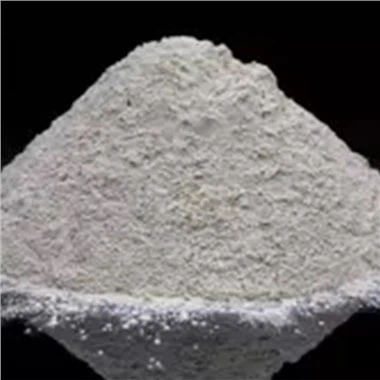
As a supplier of Fine Powder Organoclay, I've witnessed firsthand the growing interest in its application in the rubber industry, particularly in the vulcanization process. In this blog, I'll delve into the effects of Fine Powder Organoclay on the vulcanization of rubber, exploring its mechanisms, benefits, and practical implications.
Understanding the Vulcanization Process
Vulcanization is a chemical process that transforms natural rubber or other polymers into more durable materials by introducing cross - links between polymer chains. This process significantly improves the mechanical properties of rubber, such as its strength, elasticity, and resistance to heat and chemicals. The vulcanization process typically involves the use of sulfur or other vulcanizing agents, along with accelerators and activators to control the reaction rate and quality of the cross - linking.
The Role of Fine Powder Organoclay in Vulcanization
Fine Powder Organoclay, available at Fine Powder Organoclay, is a type of modified clay that has unique physical and chemical properties. It consists of layered silicate minerals with organic cations intercalated between the layers. When incorporated into the rubber matrix, Fine Powder Organoclay can have several effects on the vulcanization process.
1. Accelerating the Vulcanization Reaction
One of the primary effects of Fine Powder Organoclay is its ability to accelerate the vulcanization reaction. The organic cations on the surface of the clay particles can interact with the vulcanizing agents and accelerators, increasing their reactivity. This interaction reduces the activation energy required for the cross - linking reaction, leading to a faster vulcanization rate. As a result, the production cycle of rubber products can be shortened, which is beneficial for large - scale manufacturing.
2. Improving the Dispersion of Vulcanizing Agents
Fine Powder Organoclay has a large specific surface area, which allows it to adsorb and disperse vulcanizing agents and accelerators more effectively within the rubber matrix. This improved dispersion ensures a more uniform distribution of the vulcanizing components, leading to a more homogeneous cross - linking structure. A homogeneous cross - linking structure is crucial for the overall performance of rubber products, as it enhances the mechanical properties and reduces the likelihood of weak spots or defects.
3. Enhancing the Mechanical Properties of Vulcanized Rubber
The incorporation of Fine Powder Organoclay can also enhance the mechanical properties of vulcanized rubber. The clay particles act as reinforcing fillers, which can increase the modulus, tensile strength, and tear resistance of the rubber. The strong interaction between the clay particles and the rubber matrix helps to transfer stress more effectively, preventing crack propagation and improving the overall durability of the rubber.
4. Improving the Thermal and Chemical Resistance
Fine Powder Organoclay can improve the thermal and chemical resistance of vulcanized rubber. The layered structure of the clay provides a barrier effect, which can slow down the diffusion of heat and chemicals into the rubber matrix. This property is particularly important for rubber products that are exposed to high temperatures or harsh chemical environments, such as automotive seals and industrial hoses.
Mechanisms of Action
The effects of Fine Powder Organoclay on the vulcanization process can be attributed to several mechanisms.


Intercalation and Exfoliation
When Fine Powder Organoclay is mixed with rubber, the rubber molecules can intercalate between the clay layers, causing the layers to separate and exfoliate. This exfoliation process increases the contact area between the clay and the rubber, enhancing the interaction between them. The exfoliated clay platelets can then act as nucleation sites for the cross - linking reaction, promoting the formation of a more uniform cross - linking network.
Surface Chemistry
The surface chemistry of Fine Powder Organoclay plays a crucial role in its interaction with the vulcanizing agents and rubber matrix. The organic cations on the clay surface can form weak bonds with the vulcanizing agents, altering their electronic structure and increasing their reactivity. Additionally, the surface of the clay can adsorb polar molecules in the rubber matrix, which can further influence the vulcanization reaction.
Practical Implications
The application of Fine Powder Organoclay in the vulcanization process has several practical implications for the rubber industry.
Cost - effectiveness
By accelerating the vulcanization reaction and improving the mechanical properties of rubber, Fine Powder Organoclay can reduce the production cost of rubber products. The shorter production cycle means lower energy consumption and higher productivity. Moreover, the enhanced mechanical properties can reduce the need for additional reinforcing fillers, which can also save costs.
Product Quality
The use of Fine Powder Organoclay can improve the quality and consistency of rubber products. The more uniform cross - linking structure and enhanced mechanical properties result in products with better performance and longer service life. This is particularly important for high - performance applications, such as aerospace and automotive industries.
Environmental Benefits
Fine Powder Organoclay is a natural and environmentally friendly material. Its use in the rubber industry can reduce the reliance on synthetic reinforcing fillers, which often have a higher environmental impact during production. Additionally, the improved durability of rubber products can reduce waste generation and the need for frequent replacements.
Comparison with Other Organoclays
Another product in our range is the Guanual Painting Grade Organoclay. While both Fine Powder Organoclay and Guanual Painting Grade Organoclay are organoclays, they have different properties and applications. Guanual Painting Grade Organoclay is mainly used in the paint and coating industry, where it provides thixotropic properties and improves the dispersion of pigments. In contrast, Fine Powder Organoclay is more suitable for the rubber industry due to its unique effects on the vulcanization process.
Conclusion
In conclusion, Fine Powder Organoclay has significant effects on the vulcanization process of rubber. It can accelerate the vulcanization reaction, improve the dispersion of vulcanizing agents, enhance the mechanical properties, and increase the thermal and chemical resistance of vulcanized rubber. These effects are due to its unique physical and chemical properties, such as its layered structure and surface chemistry. The application of Fine Powder Organoclay in the rubber industry offers several practical benefits, including cost - effectiveness, improved product quality, and environmental friendliness.
If you are interested in exploring the potential of Fine Powder Organoclay for your rubber vulcanization process, I encourage you to contact us for more information and to discuss your specific requirements. We are committed to providing high - quality products and excellent technical support to help you achieve the best results in your rubber manufacturing.
References
- X. Zhang, Y. Zhang, "Effect of Organoclay on the Vulcanization Kinetics and Properties of Natural Rubber", Polymer Composites, Vol. 35, No. 6, pp. 1178 - 1186, 2014.
- J. Wang, L. Wang, "The Reinforcement Mechanism of Organoclay in Rubber Composites", Journal of Applied Polymer Science, Vol. 120, No. 3, pp. 1628 - 1636, 2011.
- R. Singh, S. Jana, "Role of Organoclay in the Cure and Properties of Styrene - Butadiene Rubber", Rubber Chemistry and Technology, Vol. 85, No. 3, pp. 423 - 435, 2012.