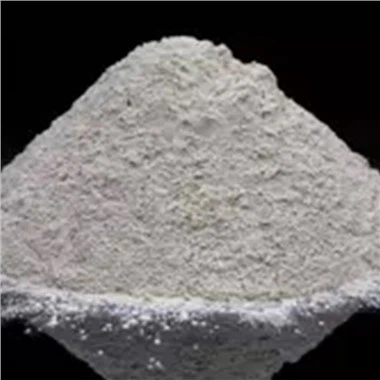
Hey there! As a supplier of Food Grade Powder CMC, I often get asked about the degree of substitution of this nifty ingredient. So, let's dive right in and break it down in a way that's easy to understand.
First off, what the heck is Food Grade Powder CMC? Well, it stands for Food Grade Powder Carboxymethyl Cellulose. You can learn more about it by checking out this link Food Grade Powder CMC. It's a widely used food additive that comes in powder form. It's derived from cellulose, which is a natural polymer found in plants. CMC has a bunch of cool properties that make it super useful in the food industry.
Now, let's talk about the degree of substitution (DS). The degree of substitution is basically a measure of how many of the hydroxyl groups (-OH) in the cellulose molecule have been replaced by carboxymethyl groups (-CH₂COO⁻). In simpler terms, it tells us how much of the original cellulose structure has been modified.
The DS can range from 0 to 3. A DS of 0 means that none of the hydroxyl groups have been substituted, so it's just plain old cellulose. On the other hand, a DS of 3 means that every single hydroxyl group has been replaced by a carboxymethyl group. In reality, most Food Grade Powder CMC products have a DS between 0.6 and 1.2.
Why does the degree of substitution matter? Well, it has a big impact on the properties of the CMC. For example, a higher DS generally means better solubility in water. This is because the carboxymethyl groups are hydrophilic (they love water), so the more of them there are, the easier it is for the CMC to dissolve. This is really important in food applications where you want a clear, homogeneous solution.
Another property that's affected by the DS is the viscosity. Viscosity is a measure of how thick or thin a liquid is. A higher DS usually results in a higher viscosity. This can be useful in foods like sauces, dressings, and ice cream, where you want a certain thickness or texture. For instance, in ice cream, CMC with a higher DS can help prevent ice crystal formation and give the ice cream a smoother, creamier texture.
The degree of substitution also affects the stability of the CMC in different environments. For example, a higher DS can make the CMC more resistant to changes in pH and temperature. This is important in food processing, where the CMC may be exposed to different conditions during cooking, storage, and transportation.
Let's take a closer look at some specific food applications and how the degree of substitution plays a role.


Beverages
In beverages, CMC is often used as a stabilizer and thickener. A CMC with a moderate DS (around 0.7 - 0.9) is usually a good choice. It can help keep the ingredients in suspension, prevent sedimentation, and give the beverage a nice mouthfeel. For example, in fruit juices, CMC can help keep the pulp evenly distributed throughout the juice, so you don't get a layer of pulp at the bottom of the glass.
Dairy Products
In dairy products like yogurt and cheese, CMC can be used to improve the texture and stability. A higher DS (around 0.9 - 1.2) may be preferred in these applications. It can help prevent whey separation in yogurt and give cheese a smoother, more consistent texture. You can find more information about the use of CMC in dairy products on this page about Sodium Carboxymethyl Cellulose.
Baked Goods
In baked goods, CMC can be used as a dough conditioner and to improve the shelf life. A lower DS (around 0.6 - 0.8) may be suitable. It can help improve the dough's elasticity and prevent staling. For example, in bread, CMC can help keep the bread soft and fresh for longer.
As a supplier of Food Grade Powder CMC, I understand that choosing the right degree of substitution is crucial for our customers. That's why we offer a range of CMC products with different DS values to meet the specific needs of different food applications.
When you're considering which CMC product to use, it's important to think about the specific requirements of your food product. You need to consider factors like solubility, viscosity, stability, and the overall desired texture and quality. It's also a good idea to do some testing with different DS values to see which one works best for your particular application.
If you're in the food industry and are looking for a reliable supplier of Food Grade Powder CMC, we'd love to hear from you. We have a team of experts who can help you choose the right product based on your specific needs. Whether you're making beverages, dairy products, baked goods, or any other food product, we can provide you with high-quality CMC that will meet your expectations.
You can learn more about the general uses of CMC in food on this page about Carboxymethyl Cellulose E466. And if you have any questions or want to discuss your CMC requirements further, don't hesitate to reach out. We're here to help you make the best choice for your food products.
In conclusion, the degree of substitution of Food Grade Powder CMC is a key factor that affects its properties and performance in food applications. By understanding how the DS impacts solubility, viscosity, and stability, you can choose the right CMC product to achieve the desired texture, quality, and shelf life of your food products. So, if you're in the market for Food Grade Powder CMC, give us a shout, and let's work together to find the perfect solution for your business.
References
- "Food Additives: Properties, Applications, and Health Effects" by John E. Lancaster
- "Handbook of Food Science, Technology, and Engineering" edited by Y.H. Hui