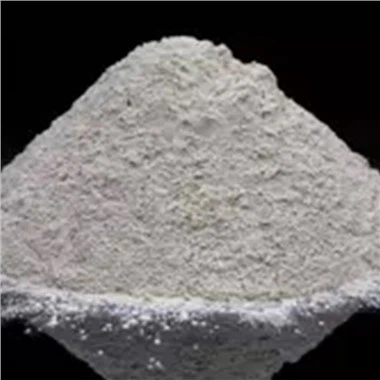
As a supplier of Granular Polyanionic Cellulose (GPAC), I understand the importance of accurately analyzing its composition. GPAC is a versatile polymer with a wide range of applications, including in the oil and gas industry, food industry, and pharmaceutical industry. Knowing its composition is crucial for ensuring product quality, optimizing performance, and meeting regulatory requirements. In this blog post, I will discuss several methods for analyzing the composition of Granular Polyanionic Cellulose.
1. Elemental Analysis
Elemental analysis is a fundamental method for determining the elemental composition of GPAC. This technique provides information about the presence and quantity of elements such as carbon (C), hydrogen (H), oxygen (O), nitrogen (N), and sulfur (S) in the sample.
1.1 Combustion Analysis
Combustion analysis is a widely used method for elemental analysis. In this process, a known mass of GPAC is burned in an excess of oxygen. The combustion products, such as carbon dioxide (CO₂), water (H₂O), and nitrogen oxides (NOₓ), are then collected and analyzed quantitatively. By measuring the amounts of these products, the percentages of carbon, hydrogen, and nitrogen in the sample can be calculated.
For example, the amount of carbon in the sample can be determined by measuring the mass of CO₂ produced during combustion. The carbon content is then calculated based on the stoichiometry of the reaction:
C + O₂ → CO₂
The mass of carbon in the sample is equal to the mass of CO₂ produced multiplied by the ratio of the atomic mass of carbon to the molar mass of CO₂.
1.2 Inductively Coupled Plasma - Mass Spectrometry (ICP - MS)
ICP - MS is a powerful technique for analyzing trace elements in GPAC. This method can detect a wide range of elements at very low concentrations. In ICP - MS, the sample is first dissolved in a suitable acid to form a solution. The solution is then introduced into an inductively coupled plasma, where the sample is atomized and ionized. The ions are then separated and detected based on their mass - to - charge ratio.
ICP - MS can provide information about the presence of elements such as sodium (Na), potassium (K), calcium (Ca), and magnesium (Mg) in GPAC. These elements may be present as impurities or as part of the polymer structure. By analyzing the elemental composition, we can ensure the purity and quality of our Fast Dispersed Polyanionic Cellulose PAC LV and Fast Dispersed Polyanionic Cellulose PAC HV products.
2. Functional Group Analysis
Functional group analysis is essential for understanding the chemical structure of GPAC. GPAC contains several functional groups, such as carboxymethyl groups (-CH₂COO⁻), hydroxyl groups (-OH), and ether linkages (-O -).
2.1 Fourier Transform Infrared Spectroscopy (FTIR)
FTIR is a commonly used technique for functional group analysis. In FTIR, the sample is irradiated with infrared light, and the absorption of the light by the sample is measured as a function of wavelength. Different functional groups absorb infrared light at characteristic frequencies, which can be used to identify the presence of specific functional groups in the sample.
For example, the carboxymethyl group in GPAC shows characteristic absorption bands in the FTIR spectrum. The carbonyl group (C = O) in the carboxymethyl group absorbs infrared light at around 1700 cm⁻¹, while the C - O stretching vibration in the carboxylate anion absorbs at around 1400 - 1600 cm⁻¹. By analyzing the FTIR spectrum of GPAC, we can confirm the presence of carboxymethyl groups and other functional groups in the polymer.
2.2 Nuclear Magnetic Resonance (NMR) Spectroscopy
NMR spectroscopy is another powerful technique for functional group analysis. NMR provides information about the chemical environment of atoms in the molecule. In GPAC, ¹H NMR and ¹³C NMR are commonly used to analyze the structure of the polymer.
¹H NMR can be used to determine the number and types of hydrogen atoms in the molecule. For example, the hydrogen atoms in the carboxymethyl group and the cellulose backbone have different chemical shifts in the ¹H NMR spectrum. By analyzing the ¹H NMR spectrum, we can obtain information about the degree of substitution of the carboxymethyl groups in GPAC.
¹³C NMR provides information about the carbon atoms in the molecule. The chemical shifts of carbon atoms in different functional groups are characteristic, allowing us to identify the presence of specific carbon - containing functional groups in GPAC.
3. Molecular Weight Analysis
The molecular weight of GPAC is an important parameter that affects its physical and chemical properties. Several methods can be used to analyze the molecular weight of GPAC.
3.1 Gel Permeation Chromatography (GPC)
GPC, also known as size - exclusion chromatography, is a widely used method for molecular weight analysis. In GPC, the sample is dissolved in a suitable solvent and injected into a column packed with porous beads. The molecules in the sample are separated based on their size. Smaller molecules can enter the pores of the beads and have a longer retention time in the column, while larger molecules pass through the column more quickly.
The eluent from the column is then detected by a suitable detector, such as a refractive index detector or a multi - angle light scattering detector. By comparing the retention times of the sample with those of standard polymers with known molecular weights, the molecular weight distribution of GPAC can be determined.
3.2 Viscosity Measurement
Viscosity measurement is a simple and practical method for estimating the molecular weight of GPAC. The viscosity of a polymer solution is related to the molecular weight of the polymer. In general, the higher the molecular weight of the polymer, the higher the viscosity of its solution.
The viscosity of a GPAC solution can be measured using a viscometer. The intrinsic viscosity, which is a measure of the contribution of the polymer to the viscosity of the solution, can be determined by measuring the viscosity of solutions at different concentrations and extrapolating to zero concentration. The molecular weight of GPAC can then be estimated using the Mark - Houwink equation:
[η] = KMa
where [η] is the intrinsic viscosity, K and a are constants that depend on the polymer - solvent system, and M is the molecular weight of the polymer.
4. Degree of Substitution (DS) Analysis
The degree of substitution (DS) of GPAC refers to the average number of carboxymethyl groups substituted per anhydroglucose unit in the cellulose backbone. DS is an important parameter that affects the properties of GPAC, such as solubility, viscosity, and ionic strength.
4.1 Titration Method
The titration method is a traditional method for determining the DS of GPAC. In this method, the carboxymethyl groups in GPAC are first converted to the acid form by treatment with a strong acid. The acid - form GPAC is then titrated with a standard base solution, such as sodium hydroxide (NaOH). The end - point of the titration can be determined using an indicator or a pH meter.
The DS can be calculated based on the amount of base consumed during titration and the mass of the sample. The reaction between the carboxymethyl groups and the base is as follows:
R - COOH + NaOH → R - COONa + H₂O
where R represents the cellulose backbone.


4.2 Elemental Analysis - Based Method
The DS of GPAC can also be determined based on elemental analysis. By measuring the percentage of carbon and hydrogen in the sample, and knowing the chemical structure of GPAC, the DS can be calculated. This method is based on the fact that the introduction of carboxymethyl groups into the cellulose backbone changes the elemental composition of the polymer.
Conclusion
Accurately analyzing the composition of Granular Polyanionic Cellulose is crucial for ensuring product quality and performance. Elemental analysis, functional group analysis, molecular weight analysis, and degree of substitution analysis are all important methods for understanding the composition and structure of GPAC.
As a supplier of Granular Polyanionic Cellulose, we use these methods to monitor the quality of our products, including Fast Dispersed Polyanionic Cellulose PAC LV and Fast Dispersed Polyanionic Cellulose PAC HV. If you are interested in purchasing our GPAC products or have any questions about the composition analysis, please feel free to contact us for further discussion and cooperation.
References
- Skoog, D. A., West, D. M., Holler, F. J., & Crouch, S. R. (2014). Fundamentals of Analytical Chemistry. Cengage Learning.
- Albert, A., & Serjeant, E. P. (1984). The Determination of Ionization Constants: A Laboratory Manual. Chapman and Hall.
- Barth, H. G., & Mays, J. W. (2000). Modern Methods of Polymer Characterization. Wiley - VCH.