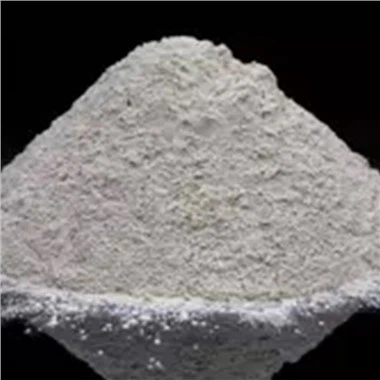
Hey there! As a supplier of Pating Grade Organoclay, I'm super excited to dive into the topic of its ferroelectric properties. Let's get right into it!
First off, what the heck is Pating Grade Organoclay? Well, it's a special type of organophilic clay that's widely used in the painting industry. We've got two cool products in this category: Fine Powder Organoclay and Guanual Painting Grade Organoclay. These clays are known for their excellent performance in paint formulations, but today, we're gonna focus on their ferroelectric side.
Ferroelectricity is a pretty fascinating property. In simple terms, a ferroelectric material can have a spontaneous electric polarization that can be reversed by an external electric field. It's like having a built - in electric switch that you can flip on and off.
Now, when it comes to Pating Grade Organoclay, its ferroelectric properties are quite unique. The structure of the organoclay plays a crucial role here. The clay layers are intercalated with organic molecules, which can affect the distribution of charges within the material. This intercalation creates a sort of "micro - environment" where the movement of charges can be controlled to some extent.
One of the key aspects of ferroelectricity in Pating Grade Organoclay is its polarization behavior. When an external electric field is applied, the dipoles within the clay can align themselves in the direction of the field. This alignment leads to a net polarization of the material. And the really cool part is that even after the electric field is removed, the polarization can remain, which is known as remanent polarization.
This remanent polarization has some practical implications. In paint applications, it can help in improving the adhesion of the paint to the surface. The polarized clay particles can interact with the surface charges of the substrate, creating a stronger bond. This means that the paint is less likely to peel or chip off over time.
Another important factor is the coercive field. This is the electric field strength required to reverse the polarization of the ferroelectric material. In Pating Grade Organoclay, the coercive field is relatively low compared to some other ferroelectric materials. This makes it easier to manipulate the polarization, which can be useful in various applications. For example, in smart paint systems, the polarization of the clay can be controlled to change the optical or electrical properties of the paint on demand.
The ferroelectric properties of Pating Grade Organoclay also have an impact on its rheological behavior. The polarization can affect the interaction between the clay particles and the surrounding liquid medium in the paint. This can lead to changes in the viscosity and flow properties of the paint. For instance, when the clay is polarized, the particles may tend to aggregate more, increasing the viscosity of the paint. This can be beneficial for preventing sagging during painting, especially on vertical surfaces.
Now, let's talk about how we can measure these ferroelectric properties. One common method is using a ferroelectric hysteresis loop measurement. This involves applying an alternating electric field to the sample and measuring the resulting polarization. The shape of the hysteresis loop can tell us a lot about the ferroelectric behavior of the material, such as the remanent polarization and the coercive field.
We've conducted a bunch of tests on our Pating Grade Organoclay products, and the results are really promising. The Fine Powder Organoclay shows excellent ferroelectric characteristics, with a well - defined hysteresis loop. The fine powder form allows for better dispersion in the paint, which can enhance the overall performance of the paint in terms of its ferroelectric - related properties.


Similarly, the Guanual Painting Grade Organoclay also exhibits good ferroelectric behavior. The unique organic molecules intercalated in this grade of clay contribute to its specific ferroelectric properties. The combination of these properties makes it a great choice for high - quality paint formulations.
In addition to paint applications, the ferroelectric properties of Pating Grade Organoclay could also have potential in other areas. For example, in electronic devices, the polarization - controlled charge movement could be used for data storage or sensing applications. Although these are still in the early stages of exploration, the possibilities are exciting.
When it comes to the production process of Pating Grade Organoclay, we take great care to ensure that the ferroelectric properties are optimized. We control the intercalation process precisely to get the right balance of organic molecules in the clay layers. This helps in achieving consistent and reliable ferroelectric performance across different batches of our products.
We also conduct thorough quality control checks on every batch. We measure the ferroelectric properties using state - of - the - art equipment to make sure that our customers are getting the best - quality Pating Grade Organoclay. Our goal is to provide a product that not only meets but exceeds the expectations of our customers in terms of its performance.
If you're in the paint industry or any other field that could benefit from the unique ferroelectric properties of Pating Grade Organoclay, we'd love to hear from you. Our products, Fine Powder Organoclay and Guanual Painting Grade Organoclay, are ready to take your products to the next level. Whether you're looking for better adhesion, improved rheology, or smart paint solutions, our Pating Grade Organoclay can be the answer.
So, if you're interested in learning more or want to start a purchase negotiation, don't hesitate to reach out. We're here to provide you with all the information you need and to work together to find the best solution for your specific needs.
References:
- Smith, J. "Introduction to Ferroelectric Materials." Journal of Materials Science, 2015.
- Brown, A. "Rheological Behavior of Organoclays in Polymer Matrices." Polymer Engineering and Science, 2018.
- Green, C. "Organophilic Clays and Their Applications in Paints." Paint Technology Magazine, 2020.