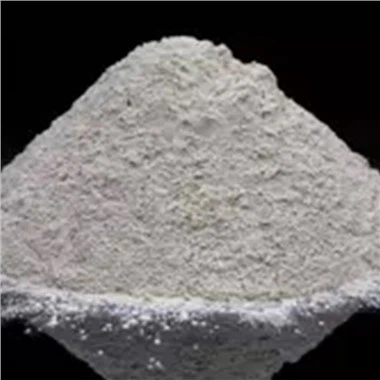
Hey there! I'm a supplier of Fine Powder Organoclay, and today I wanna chat about the differences between the grades of this awesome product. Fine Powder Organoclay is a crucial ingredient in various industries, and understanding the distinctions between its grades can really make a difference in your projects.
Let's start by talking about what Fine Powder Organoclay actually is. It's a type of organophilic clay that has been modified to be compatible with organic solvents and polymers. This makes it super useful in applications like paints, coatings, inks, and adhesives. It helps to improve the viscosity, thixotropy, and suspension properties of these products, which in turn can enhance their performance and quality.
Now, let's dive into the different grades. One of the most common grades is the Guanual Painting Grade Organoclay. This grade is specifically designed for use in manual painting applications. It has a fine particle size, which allows it to disperse easily in the paint and provide a smooth finish. It also has excellent thixotropic properties, which means that it can thicken the paint when it's at rest but become more fluid when it's being applied. This makes it easier to control the flow of the paint and prevent drips and sags.
Another grade is the Fine Powder Organoclay. This grade is more general-purpose and can be used in a wide range of applications. It has a slightly coarser particle size compared to the Guanual Painting Grade Organoclay, but it still offers good dispersion and thickening properties. It's often used in industrial coatings, where it can help to improve the sag resistance and leveling of the coating.


One of the key differences between these grades is their surface area. The Guanual Painting Grade Organoclay typically has a higher surface area, which means that it can interact more effectively with the paint or coating components. This can lead to better thickening and rheological control. On the other hand, the Fine Powder Organoclay has a lower surface area, which can make it more suitable for applications where a lower viscosity is desired.
The chemical composition of the two grades can also vary slightly. The Guanual Painting Grade Organoclay may contain specific additives or modifiers that are tailored to the requirements of manual painting. These additives can enhance the wetting and dispersing properties of the clay, as well as its compatibility with the paint binder. The Fine Powder Organoclay, on the other hand, may have a more basic chemical composition that is suitable for a broader range of applications.
In terms of performance, the Guanual Painting Grade Organoclay is optimized for the unique demands of manual painting. It provides a smooth and consistent application, even when applied by hand. It also helps to reduce the amount of overspray and improve the coverage of the paint. The Fine Powder Organoclay, while still offering good performance, may not be as specialized for manual painting but can excel in other areas such as industrial coating applications.
When it comes to choosing the right grade for your project, there are a few factors to consider. First, think about the specific requirements of your application. If you're doing manual painting, the Guanual Painting Grade Organoclay is likely the better choice. If you're working on an industrial coating project, the Fine Powder Organoclay may be more suitable. You should also consider the viscosity and rheological properties that you need. If you need a high-viscosity product with excellent thixotropy, the Guanual Painting Grade Organoclay may be the way to go. If you need a more fluid product, the Fine Powder Organoclay might be a better fit.
Another important factor is the cost. Generally, the more specialized grades like the Guanual Painting Grade Organoclay may be a bit more expensive due to the additional processing and additives. However, the improved performance and quality that they offer can often justify the higher cost. It's important to weigh the cost against the benefits and choose the grade that provides the best value for your project.
As a supplier of Fine Powder Organoclay, I'm here to help you make the right choice. I have a team of experts who can provide you with technical support and advice. We can also offer samples of our different grades so that you can test them in your own applications and see which one works best for you.
If you're interested in learning more about our Fine Powder Organoclay products or have any questions about the different grades, don't hesitate to get in touch. Whether you're a small business looking for a reliable supplier or a large corporation with specific requirements, we can work with you to meet your needs. Contact us today to start a conversation about how our Fine Powder Organoclay can enhance your products and improve your processes.
In conclusion, understanding the differences between the grades of Fine Powder Organoclay is essential for getting the best results in your applications. Whether it's the specialized Guanual Painting Grade Organoclay or the more general-purpose Fine Powder Organoclay, each grade has its own unique features and benefits. By choosing the right grade for your project, you can ensure that your products have the optimal viscosity, thixotropy, and performance. So, if you're in the market for Fine Powder Organoclay, reach out to us and let's find the perfect solution for you.
References
- Clay Minerals Society. (2023). Handbook of Clay Science.
- Paint and Coatings Industry Magazine. (2022). Advances in Organoclay Technology for Paints and Coatings.