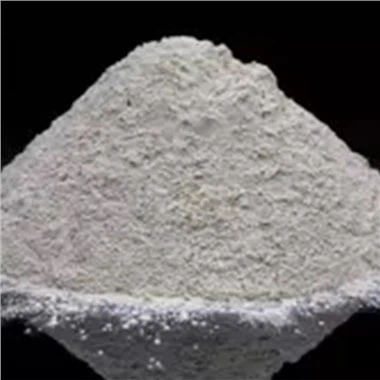
Hey there! As a supplier of Fine Powder Organoclay, I've got a lot to share about the common modification methods for this nifty product. Fine Powder Organoclay is a game - changer in many industries, and understanding how it can be modified is super important.
Ion - Exchange Modification
One of the most common ways to modify Fine Powder Organoclay is through ion - exchange. You see, organoclays are usually based on natural clays like montmorillonite. These natural clays have a negative charge on their surface due to isomorphous substitution within their crystal structure.
In ion - exchange modification, we replace the inorganic cations (like sodium or calcium) that are originally present on the clay surface with organic cations. These organic cations can be quaternary ammonium salts. The process is pretty straightforward in theory. We mix the Fine Powder Organoclay with a solution of the organic cation in water or an appropriate solvent.
The organic cations are attracted to the negatively charged clay surface and exchange places with the inorganic cations. This results in a clay that has a more organophilic surface. Why is this important? Well, a more organophilic surface makes the clay more compatible with organic polymers. For example, in the production of polymer nanocomposites, an organophilic organoclay can disperse more easily in the polymer matrix, enhancing the mechanical, thermal, and barrier properties of the polymer.
Grafting Modification
Grafting is another cool modification method. In grafting, we attach organic molecules directly to the surface of the Fine Powder Organoclay. This can be done through chemical reactions. For instance, we can use silane coupling agents.


Silane coupling agents have a unique structure. One end of the silane molecule can react with the hydroxyl groups on the clay surface, while the other end can have functional groups that are compatible with organic polymers or other materials. When we treat the Fine Powder Organoclay with silane coupling agents, the silane molecules form covalent bonds with the clay surface.
This grafting modification can improve the dispersion of the clay in organic solvents or polymers. It also enhances the interfacial adhesion between the clay and the polymer matrix. In applications like coatings, a well - dispersed and strongly bonded organoclay can improve the scratch resistance and chemical resistance of the coating.
Intercalation Modification
Intercalation is all about inserting organic molecules between the clay layers. Fine Powder Organoclay has a layered structure, and there is space between these layers. We can introduce organic molecules into this interlayer space.
There are different ways to achieve intercalation. One method is to use small organic molecules as intercalants. These molecules can penetrate the interlayer space of the clay due to their small size and appropriate chemical properties. For example, some polar organic solvents can act as intercalants.
Another approach is to use polymer chains for intercalation. In this case, the polymer chains diffuse into the interlayer space of the clay. This can be done during the melt - blending process of polymers and organoclays. Intercalated organoclays can significantly improve the properties of polymers. For example, they can increase the modulus and reduce the gas permeability of polymer films.
Applications of Modified Fine Powder Organoclay
The modified Fine Powder Organoclay has a wide range of applications. In the paint industry, Guanual Painting Grade Organoclay is a great example. The modified organoclay can improve the viscosity and thixotropy of paints. This means that the paint can be easily applied and will not drip or sag. It also helps in preventing the settling of pigments during storage.
In the plastics industry, Fine Powder Organoclay can be used to make high - performance polymer nanocomposites. These nanocomposites have better mechanical properties, such as higher strength and stiffness, compared to pure polymers. They can also have improved thermal stability, which is crucial in applications where the plastic will be exposed to high temperatures.
Why Choose Our Fine Powder Organoclay
As a supplier, we take pride in offering high - quality Fine Powder Organoclay. Our products are carefully modified using the latest techniques to ensure optimal performance. We have a team of experts who are constantly researching and developing new modification methods to meet the evolving needs of our customers.
We also understand the importance of consistency. Every batch of our Fine Powder Organoclay undergoes strict quality control to make sure it meets the same high standards. Whether you're in the paint, plastics, or any other industry that uses organoclays, we can provide you with the right product for your application.
Let's Connect
If you're interested in our Fine Powder Organoclay or want to learn more about the modification methods and how they can benefit your business, don't hesitate to reach out. We're always happy to have a chat about your specific requirements and how our products can fit into your production process. Whether you're looking for a small - scale sample or a large - scale supply, we're here to help.
References
- "Organoclay - Based Polymer Nanocomposites" by some well - known polymer scientists.
- "Surface Modification of Clays for Advanced Applications" in a well - respected materials science journal.
- Industry reports on the use of organoclays in different sectors.