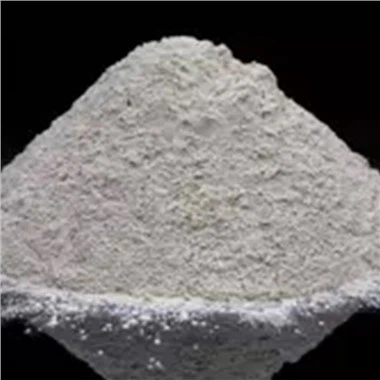
Hey there, fellow oil drilling enthusiasts! I'm an Oil Drilling Grade Organoclay supplier, and today I want to chat about how the characteristics of coiled - tubing drilling can impact the application of our awesome organoclay.
First off, let's quickly understand what coiled - tubing drilling is. Coiled - tubing drilling involves using a continuous length of tubing that's spooled on a large reel. It's a bit different from traditional drilling methods, and these differences bring some unique characteristics that can really affect how our Oil Drilling Grade Organoclay works.
One of the key characteristics of coiled - tubing drilling is its flexibility. The coiled tubing can be bent and spooled easily, allowing for quick mobilization and deployment. This is great for drilling in hard - to - reach areas or in situations where you need to change the drilling location frequently. But here's the thing. This flexibility also means that the wellbore conditions can change more rapidly compared to traditional drilling. Our organoclay is used to stabilize the drilling fluid and maintain its properties. With the rapid wellbore changes in coiled - tubing drilling, the organoclay needs to be able to adapt quickly. For example, if the wellbore temperature or pressure changes suddenly, the organoclay has to keep the drilling fluid's viscosity and gel strength in check. You can find out more about how our organoclay can handle these challenges in different drilling fluids on our page about Modified Bentonite with Oil Based Drilling.
Another characteristic is the continuous nature of coiled - tubing drilling. Unlike traditional drilling, where you have to stop and add new sections of drill pipe, coiled - tubing drilling can keep going without those interruptions. This leads to a more consistent flow of drilling fluid. But it also puts more stress on the organoclay in the fluid. Since the fluid is constantly in motion and under pressure, the organoclay particles need to stay well - dispersed. If they start to agglomerate, it can cause issues like reduced fluid flow and even blockages in the coiled tubing. Our Organoclay with Synthetic - oil Base Fluids is specifically formulated to maintain good dispersion in these continuous - flow situations.
The size and diameter of the coiled tubing also play a role. Coiled tubing is generally smaller in diameter compared to traditional drill pipes. This means that the flow area for the drilling fluid is reduced. As a result, the fluid has to flow at a higher velocity to maintain the same volumetric flow rate. Higher fluid velocity can cause more shear stress on the organoclay particles. The organoclay needs to be able to withstand this shear stress without losing its ability to thicken and stabilize the fluid. Our Organic Bentonite with Primarily Diesel - based Drilling Fluids has been tested to handle these high - shear conditions effectively.
Now, let's talk about the wellbore cleaning aspect. In coiled - tubing drilling, efficient wellbore cleaning is crucial. The continuous drilling process generates a lot of cuttings, and the drilling fluid with organoclay needs to carry these cuttings out of the wellbore. The organoclay helps to increase the fluid's carrying capacity. But due to the smaller diameter of the coiled tubing, there's less room for the cuttings to be transported. So, the organoclay has to work extra hard to ensure that the cuttings don't settle and cause problems like stuck pipe.
The depth of the well is another factor. Coiled - tubing drilling can reach significant depths. As the depth increases, the temperature and pressure in the wellbore also increase. High temperatures can cause the organoclay to break down or lose its effectiveness. Our organoclay is designed to have good thermal stability, but in extremely deep wells, we might need to adjust the formulation or the concentration of the organoclay in the drilling fluid.
In addition, the rate of penetration (ROP) in coiled - tubing drilling can be quite high. A high ROP means that more cuttings are being generated in a shorter period. The organoclay in the drilling fluid has to keep up with this increased production of cuttings and maintain the fluid's properties. If the ROP is too high and the organoclay can't handle it, the drilling fluid might become too thin to carry the cuttings, leading to poor wellbore cleaning and potential drilling problems.
When it comes to cost - effectiveness, coiled - tubing drilling is often more cost - efficient than traditional drilling in certain situations. As an organoclay supplier, we understand that you need a product that can work well in this cost - conscious environment. Our organoclay is priced competitively, and it offers great performance. You can get the most out of your drilling fluid with our organoclay, which helps to reduce the overall cost of the drilling operation by improving the efficiency of the process.
Finally, the environmental impact is also a consideration. Coiled - tubing drilling can be more environmentally friendly in some ways, such as reduced emissions and less surface disturbance. Our organoclay is also designed with the environment in mind. It's formulated to be non - toxic and biodegradable, so it won't cause harm to the environment during the drilling process.

In conclusion, the characteristics of coiled - tubing drilling present both challenges and opportunities for the application of our Oil Drilling Grade Organoclay. We've spent a lot of time and effort developing our organoclay products to meet the specific needs of coiled - tubing drilling. If you're involved in coiled - tubing drilling and are looking for a reliable organoclay supplier, I encourage you to reach out for a chat. We can discuss your specific requirements and how our products can help you achieve better drilling results. Whether you're dealing with wellbore changes, high - shear conditions, or cost - effectiveness, we've got the solution for you.
References
- Industry reports on coiled - tubing drilling technology
- Technical papers on the application of organoclay in drilling fluids