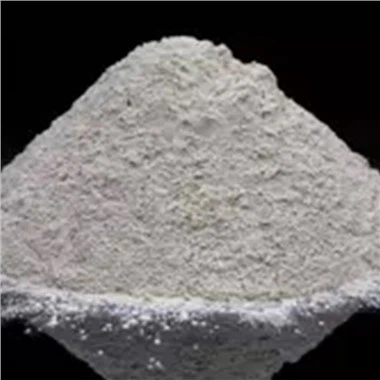
Carboxymethyl Cellulose (CMC), a versatile cellulose derivative, has found extensive applications in various industries due to its unique properties. As a leading CMC supplier, I am excited to explore the applications of CMC in the water-based paint industry. In this blog, we will delve into the specific roles and benefits of CMC in water-based paints, highlighting its importance in enhancing paint performance and quality.
Rheology Modification
One of the primary applications of CMC in water-based paints is its use as a rheology modifier. Rheology refers to the study of the flow and deformation of materials, and in the context of paints, it is crucial for achieving the desired application properties. CMC can significantly influence the viscosity and flow behavior of water-based paints, making them easier to apply and ensuring uniform coverage.
Viscosity Control
CMC acts as a thickening agent in water-based paints, increasing their viscosity. This is particularly important for preventing sagging and dripping during application. When paint has the right viscosity, it can be applied evenly on vertical surfaces without running down, ensuring a smooth and professional finish. For example, in architectural paints used for interior and exterior wall coatings, proper viscosity control is essential for achieving a consistent appearance.
Thixotropy
Thixotropy is the property of a material to become less viscous when subjected to shear stress and return to its original viscosity when the stress is removed. CMC imparts thixotropic behavior to water-based paints. When the paint is stirred or sprayed (subjected to shear stress), its viscosity decreases, allowing for easy application. Once the shear stress is removed, the viscosity increases again, preventing the paint from flowing or leveling too much and maintaining the desired texture. This property is highly beneficial in applications such as spray painting, where the paint needs to flow easily through the spray gun and then set quickly on the surface.
Pigment Dispersion
Another important role of CMC in water-based paints is to aid in pigment dispersion. Pigments are responsible for giving the paint its color and hiding power. However, pigments tend to agglomerate in water-based systems, which can lead to uneven color distribution and reduced paint quality.
Stabilizing Pigment Particles
CMC acts as a dispersant by adsorbing onto the surface of pigment particles. This creates a steric and electrostatic barrier around the particles, preventing them from coming together and agglomerating. As a result, the pigments are uniformly dispersed throughout the paint, ensuring consistent color and improved hiding power. For instance, in automotive paints, where color accuracy is of utmost importance, proper pigment dispersion is crucial for achieving a high-quality finish.
Improving Color Stability
By preventing pigment agglomeration, CMC also helps to improve the color stability of water-based paints over time. Agglomerated pigments can settle at the bottom of the paint container, leading to color variations in the paint film. With CMC, the pigments remain well-dispersed, and the paint retains its color consistency during storage and application.
Film Formation and Adhesion
CMC plays a significant role in the film formation process of water-based paints and enhances the adhesion of the paint film to the substrate.
Film Formation
During the drying process of water-based paints, CMC helps to form a continuous and uniform film. It can interact with other components in the paint, such as binders and polymers, to promote the coalescence of paint particles and the formation of a cohesive film. A well-formed paint film provides better protection against environmental factors such as moisture, UV radiation, and abrasion.
Adhesion
CMC can improve the adhesion of water-based paints to various substrates, including wood, metal, and plastic. It can form strong bonds with the substrate surface, ensuring that the paint film adheres firmly and does not peel or flake off easily. This is particularly important in industrial coatings, where the paint needs to withstand harsh conditions and mechanical stress.
Water Resistance
Water resistance is a critical property for water-based paints, especially in applications where the painted surface is exposed to moisture. CMC can contribute to improving the water resistance of water-based paints.
Hydrophobicity
Although CMC is a water-soluble polymer, it can be modified to have some hydrophobic properties. By incorporating certain additives or through chemical modification, CMC can help to reduce the water absorption of the paint film. This is important for preventing water damage, such as blistering and peeling, in areas prone to high humidity or direct contact with water, like bathrooms and kitchens.


Barrier Effect
CMC can form a physical barrier on the surface of the paint film, preventing water molecules from penetrating into the substrate. This barrier effect helps to protect the substrate from corrosion and other forms of water-related damage.
Cost-Effectiveness
In addition to its technical benefits, CMC is also a cost-effective additive for water-based paints. It is relatively inexpensive compared to some other high-performance additives, and a small amount of CMC can have a significant impact on the paint properties. This makes it an attractive option for paint manufacturers looking to improve the quality of their products without increasing the production cost significantly.
Our CMC Products for the Water-Based Paint Industry
As a CMC supplier, we offer a range of high-quality CMC products suitable for the water-based paint industry. Our Sodium Carboxymethyl Cellulose is widely used for its excellent rheology modification and pigment dispersion properties. It can be easily incorporated into water-based paint formulations to achieve the desired viscosity and color consistency.
We also provide Food Grade Powder CMC and Food Grade Granular CMC, which can be used in water-based paints where food contact safety is a concern, such as in the coating of food packaging materials. These products meet strict quality and safety standards, ensuring that they are suitable for use in applications where human health and environmental protection are important.
Conclusion
In conclusion, CMC has a wide range of applications in the water-based paint industry, including rheology modification, pigment dispersion, film formation, adhesion improvement, water resistance enhancement, and cost-effectiveness. As a CMC supplier, we are committed to providing high-quality CMC products that can help paint manufacturers improve the performance and quality of their water-based paints. If you are interested in learning more about our CMC products or would like to discuss potential applications in your water-based paint formulations, please feel free to contact us for further information and to start a procurement discussion.
References
- ASTM International. (20XX). Standard test methods for paint and related coatings.
- Paint and Coatings Industry Association. (20XX). Technical guidelines for water-based paint formulation.
- Smith, J. (20XX). Rheology of water-based paints. Journal of Coatings Technology and Research.