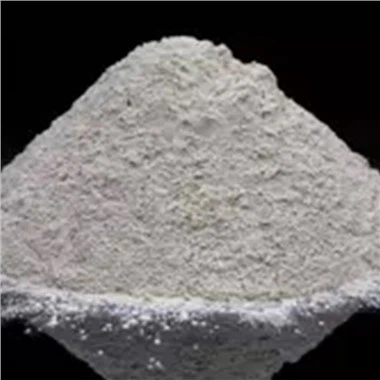
Hey there! As a supplier of Carboxymethyl Cellulose E466, I'm super stoked to share with you all the awesome applications this nifty product has in the paper industry.


First off, let's get a basic understanding of what Carboxymethyl Cellulose E466 is. It's a cellulose derivative that's been modified with carboxymethyl groups. You can learn more about it on this page: Carboxymethyl Cellulose E466. It's got some really cool properties that make it a game - changer in various industries, and the paper industry is no exception.
1. As a Retention Agent
One of the key applications of Carboxymethyl Cellulose E466 in the paper industry is as a retention agent. In papermaking, a whole bunch of fine particles like fillers and fine fibers are floating around in the pulp. These fine components are super important for the quality of the paper, but they can easily get lost during the water - removal process.
Carboxymethyl Cellulose E466 acts like a superhero here. It can form a complex network with the fine particles and fibers in the pulp. This network helps to hold the fine materials together and keep them in the paper web. As a result, you get a higher retention rate of fillers and fine fibers. This is not only good for the quality of the paper, which becomes smoother and has better printing properties, but it also reduces the loss of materials. That means cost - savings for paper manufacturers. And trust me, every penny counts in a big - scale industry like papermaking.
2. Improving Dry and Wet Strength
Another major benefit of using Carboxymethyl Cellulose E466 is its ability to improve both the dry and wet strength of paper. When we talk about dry strength, it refers to how well the paper can hold up under normal, dry conditions. The wet strength is about how strong the paper remains when it comes into contact with water.
On a molecular level, Carboxymethyl Cellulose E466 can form hydrogen bonds with the cellulose fibers in the paper. These bonds act as bridges between the fibers, making the paper structure more cohesive. In dry conditions, this enhanced cohesion means the paper is less likely to tear or break. For instance, a brochure or a magazine made with paper treated with Carboxymethyl Cellulose E466 will be more durable on the shelves and in the hands of readers.
When it comes to wet strength, the presence of carboxymethyl groups in Carboxymethyl Cellulose E466 plays a crucial role. These groups can interact with water molecules in a way that helps the paper maintain its integrity even when wet. This is particularly important for products like paper towels or packaging materials that might get exposed to moisture during storage or transportation.
3. As a Surface Sizing Agent
Surface sizing is an important step in papermaking. It involves applying a thin layer of a sizing agent to the surface of the paper. Carboxymethyl Cellulose E466 is a great choice for this job. When used as a surface sizing agent, it can form a protective film on the paper surface.
This film has several advantages. Firstly, it reduces the porosity of the paper. That means ink won't spread or bleed when the paper is printed on. So, you get sharper and more vivid prints. Whether it's a high - end book or a colorful poster, the print quality is significantly improved.
Secondly, the surface film created by Carboxymethyl Cellulose E466 enhances the smoothness of the paper. This makes the paper feel nicer to touch and also improves its compatibility with various printing processes. It can even reduce the amount of dust generated during printing, which is a big plus for the printing equipment and the working environment.
4. In Coating Formulations
In the paper coating industry, Carboxymethyl Cellulose E466 is also widely used. Paper coating is done to give the paper a better appearance, improved printability, and other desired properties.
When incorporated into coating formulations, Carboxymethyl Cellulose E466 acts as a thickener and an adhesive. It helps to control the viscosity of the coating suspension. A proper viscosity is essential for a smooth and even coating application. If the coating is too thin, it might not cover the paper surface evenly. If it's too thick, it could be difficult to apply and might lead to a rough finish.
As an adhesive, it helps the coating particles stick to the paper surface. This ensures that the coating layer remains intact during subsequent processing steps like calendering (a process to smooth and densify the paper) and printing. The result is a paper with a high - quality, glossy finish that is suitable for high - end packaging, magazines, and other premium paper products.
5. For Fiber Dispersion
In the papermaking process, it's crucial to have a uniform dispersion of fibers in the pulp. Unevenly dispersed fibers can lead to weak spots in the paper, as well as variations in thickness and other properties.
Carboxymethyl Cellulose E466 can help with fiber dispersion. It has the ability to reduce the surface tension between the fibers and the water in the pulp. This allows the fibers to move more freely and separate from each other more easily. As a result, you get a more homogeneous pulp, which in turn leads to a more consistent and high - quality paper.
Why Choose Our Carboxymethyl Cellulose E466?
We take pride in offering high - quality Carboxymethyl Cellulose E466. Our product is carefully manufactured to meet the strictest industry standards. We've got a team of experts who monitor every step of the production process to ensure that you get a product that performs consistently.
Whether you need Carboxymethyl Cellulose Sodium or Food Grade Granular CMC, we've got you covered. Our Carboxymethyl Cellulose E466 is available in different grades and specifications to suit the diverse needs of the paper industry.
If you're in the paper - making business and looking to improve the quality of your products, reduce costs, or enhance your production efficiency, our Carboxymethyl Cellulose E466 could be the solution you've been looking for.
Let's Connect!
I'd love to have a chat with you about how our Carboxymethyl Cellulose E466 can benefit your paper - making operations. Whether you have questions about the product, need a sample, or want to discuss a potential purchase, don't hesitate to reach out. We're always here to help you make the most of this amazing product in the paper industry.
References
- Hubbe, M. A., Rojas, O. J., Venditti, R. A., & Barbour, R. C. (2008). Cellulosic Fibers: Structure, Properties and Applications. Springer.
- Casey, J. P. (1980). Pulp and Paper: Chemistry and Chemical Technology. Wiley - Interscience.