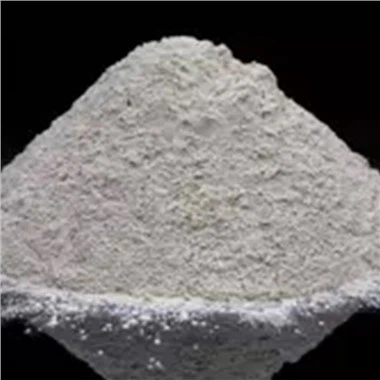
As a CMC Cellulose supplier, I understand the critical importance of testing the compatibility of CMC Cellulose with other materials. Compatibility testing is essential to ensure that the end - product meets the desired quality, performance, and safety standards. In this blog, I will share some effective methods and considerations for testing the compatibility of CMC Cellulose with other substances.
Understanding CMC Cellulose
Before delving into compatibility testing, it's crucial to have a clear understanding of CMC Cellulose. CMC Cellulose is a water - soluble cellulose ether derived from natural cellulose. It is widely used in various industries such as food, pharmaceuticals, cosmetics, and detergents due to its excellent thickening, stabilizing, emulsifying, and suspending properties.
One of the most common forms is Carboxymethyl Cellulose Sodium, which is highly versatile and has a wide range of applications. Food Grade Granular CMC is specifically designed for use in the food industry, where it must comply with strict safety and quality regulations.


Importance of Compatibility Testing
When CMC Cellulose is used in combination with other materials, compatibility issues can arise. These issues may include chemical reactions, physical incompatibilities, or changes in the functional properties of the materials. For example, in a food product, an incompatible combination may lead to changes in texture, flavor, or shelf - life. In a pharmaceutical formulation, it could affect the stability and efficacy of the drug. Therefore, thorough compatibility testing is necessary to avoid such problems.
Methods for Compatibility Testing
1. Visual Inspection
Visual inspection is the simplest and most straightforward method of compatibility testing. It involves mixing CMC Cellulose with the other material in question and observing any visible changes such as color changes, precipitation, phase separation, or the formation of lumps.
To conduct a visual inspection, prepare a series of samples with different ratios of CMC Cellulose and the other material. Mix them thoroughly under controlled conditions (e.g., temperature, pH). Observe the samples immediately after mixing and at regular intervals over a period of time. For example, if you are testing the compatibility of CMC Cellulose with a particular oil in a cosmetic formulation, you may notice that the mixture becomes cloudy or that the oil separates from the aqueous phase, indicating a potential compatibility issue.
2. Physical Property Testing
Physical property testing can provide more detailed information about the compatibility of CMC Cellulose with other materials. This includes testing properties such as viscosity, density, and particle size.
- Viscosity Testing: Viscosity is an important property, especially in applications where CMC Cellulose is used as a thickening agent. Changes in viscosity can indicate a chemical or physical interaction between CMC Cellulose and the other material. Use a viscometer to measure the viscosity of the mixture at different time intervals. If the viscosity changes significantly over time, it may suggest that the materials are not compatible.
- Density Testing: Density changes can also be an indicator of compatibility. Measure the density of the individual materials and the mixture using a pycnometer. A significant change in density may imply that a chemical reaction or a physical change has occurred.
- Particle Size Analysis: If the mixture contains particles, particle size analysis can be used to detect any changes in the particle size distribution. A change in particle size may indicate agglomeration or dispersion issues, which can affect the stability and performance of the product.
3. Chemical Analysis
Chemical analysis is used to detect any chemical reactions that may occur between CMC Cellulose and the other material. This can be done using techniques such as spectroscopy, chromatography, and titration.
- Spectroscopy: Spectroscopic techniques such as infrared (IR) spectroscopy and nuclear magnetic resonance (NMR) spectroscopy can be used to identify the chemical bonds and functional groups in the materials. By comparing the spectra of the individual materials and the mixture, you can detect any new chemical bonds or changes in the existing bonds, which may indicate a chemical reaction.
- Chromatography: Chromatographic techniques such as high - performance liquid chromatography (HPLC) and gas chromatography (GC) can be used to separate and analyze the components of the mixture. This can help to identify any degradation products or reaction by - products, which may indicate a compatibility issue.
- Titration: Titration can be used to measure the concentration of certain chemical species in the mixture. For example, if CMC Cellulose is reacting with an acid or a base in the other material, titration can be used to measure the change in pH or the concentration of the acid or base over time.
4. Stability Testing
Stability testing is used to evaluate the long - term compatibility of CMC Cellulose with other materials. This involves storing the samples under different conditions (e.g., temperature, humidity, light) for an extended period of time and monitoring any changes in physical, chemical, or functional properties.
- Accelerated Stability Testing: In accelerated stability testing, the samples are stored at elevated temperatures and humidity levels to simulate long - term storage conditions in a shorter period of time. This can help to identify potential compatibility issues more quickly. For example, if a food product containing CMC Cellulose and a flavoring agent is stored at 40°C and 75% relative humidity for a few weeks, any changes in flavor, texture, or color can be detected.
- Real - Time Stability Testing: Real - time stability testing involves storing the samples under normal storage conditions and monitoring them over a longer period of time. This provides a more accurate assessment of the long - term compatibility of the materials.
Considerations for Compatibility Testing
1. Concentration and Ratio
The concentration and ratio of CMC Cellulose to the other material can have a significant impact on compatibility. It's important to test a range of concentrations and ratios to determine the optimal combination. For example, a low concentration of CMC Cellulose may be compatible with a particular material, but a high concentration may lead to compatibility issues.
2. Environmental Conditions
Environmental conditions such as temperature, pH, and humidity can affect the compatibility of CMC Cellulose with other materials. It's important to conduct the compatibility testing under conditions that are representative of the intended use of the product. For example, if a food product is intended to be stored at refrigerated temperatures, the compatibility testing should be conducted at low temperatures.
3. Regulatory Requirements
In some industries, such as food and pharmaceuticals, there are strict regulatory requirements regarding the compatibility of materials. It's important to ensure that the compatibility testing meets these requirements. For example, in the food industry, the use of CMC Cellulose and other ingredients must comply with food safety regulations.
Conclusion
Testing the compatibility of CMC Cellulose with other materials is a complex but essential process. By using a combination of visual inspection, physical property testing, chemical analysis, and stability testing, you can ensure that the end - product meets the desired quality, performance, and safety standards.
As a CMC Cellulose supplier, I am committed to providing high - quality products and technical support to our customers. If you are interested in learning more about CMC Cellulose or need assistance with compatibility testing, please feel free to contact us for further discussion and potential procurement opportunities.
References
- Davidson, R. L. (1980). Handbook of Water - Soluble Gums and Resins. McGraw - Hill.
- Osterberg, M., & Lindström, T. (2003). Cellulose Derivatives. In Encyclopedia of Polymer Science and Technology (Vol. 3, pp. 1 - 38). Wiley.
- Rowe, R. C., Sheskey, P. J., & Quinn, M. E. (Eds.). (2012). Handbook of Pharmaceutical Excipients. Pharmaceutical Press.