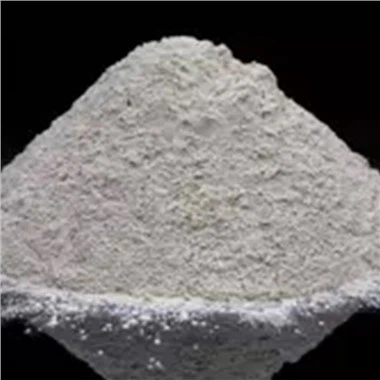
Viscosity is a crucial parameter in understanding the flow behavior of granular polyanionic cellulose (GPAC) solutions, which has wide applications in various industries such as oil drilling, food, and pharmaceuticals. As a supplier of high - quality granular polyanionic cellulose, I am well - versed in the importance of accurately measuring its solution viscosity. In this blog, I will share some effective methods for measuring the viscosity of GPAC solutions.
Understanding Granular Polyanionic Cellulose
Before delving into the measurement methods, it's essential to understand what granular polyanionic cellulose is. GPAC is a water - soluble polymer derived from cellulose. It is a versatile additive that can increase the viscosity and stability of solutions. We offer two popular types of fast - dispersed products: Fast Dispersed Polyanionic Cellulose PAC LV and Fast Dispersed Polyanionic Cellulose PAC HV. The "LV" and "HV" stand for low viscosity and high viscosity respectively, which indicates their different thickening capabilities.
Factors Affecting the Viscosity of GPAC Solutions
Several factors can influence the viscosity of GPAC solutions. The concentration of GPAC in the solution is one of the most significant factors. Generally, as the concentration of GPAC increases, the viscosity of the solution also increases. Temperature also plays a vital role. Higher temperatures usually lead to a decrease in viscosity because the increased thermal energy allows the polymer chains to move more freely, reducing the internal friction.
The shear rate is another factor. GPAC solutions often exhibit non - Newtonian behavior, which means their viscosity changes with the applied shear rate. At low shear rates, the polymer chains are entangled, resulting in higher viscosity. As the shear rate increases, the chains align in the direction of flow, and the viscosity decreases.
Methods for Measuring Viscosity
Capillary Viscometry
Capillary viscometry is a classic method for measuring the viscosity of fluids. It is based on the principle of Poiseuille's law, which describes the laminar flow of a fluid through a capillary tube. In this method, a known volume of the GPAC solution is allowed to flow through a capillary tube under the influence of gravity. The time taken for the solution to flow between two marked points on the tube is measured.
The viscosity can be calculated using the following formula:
[ \eta = K\rho t ]
where (\eta) is the viscosity, (K) is the viscometer constant (which is determined by calibrating the viscometer with a fluid of known viscosity), (\rho) is the density of the solution, and (t) is the flow time.
Capillary viscometry is relatively simple and inexpensive. However, it is mainly suitable for Newtonian fluids or fluids with low non - Newtonian behavior. For GPAC solutions, which are often non - Newtonian, the results may be affected by the shear rate during the flow through the capillary.
Rotational Viscometry
Rotational viscometry is a more versatile method for measuring the viscosity of non - Newtonian fluids like GPAC solutions. It involves rotating a spindle or a bob in the solution and measuring the torque required to maintain the rotation at a constant speed.


There are two common types of rotational viscometers: coaxial cylinder viscometers and cone - and - plate viscometers. In a coaxial cylinder viscometer, a cylindrical bob is placed inside a coaxial outer cylinder, and the solution is filled in the gap between them. The outer cylinder is rotated, and the torque on the bob is measured.
In a cone - and - plate viscometer, a flat plate and a cone with a small angle are used. The solution is placed between the cone and the plate, and the cone is rotated. The advantage of the cone - and - plate viscometer is that the shear rate is uniform across the sample, which allows for accurate measurement of the viscosity at different shear rates.
The viscosity is calculated from the measured torque and the rotational speed using the viscometer's calibration equation. Rotational viscometry can provide a comprehensive understanding of the non - Newtonian behavior of GPAC solutions by measuring the viscosity at different shear rates.
Falling Sphere Viscometry
Falling sphere viscometry is based on the principle of Stokes' law, which describes the motion of a sphere falling through a viscous fluid. A small sphere of known density and diameter is dropped into the GPAC solution, and the time taken for the sphere to fall a certain distance is measured.
The viscosity can be calculated using the following formula:
[ \eta=\frac{2}{9}\frac{(\rho_s - \rho_f)gd^2}{v} ]
where (\eta) is the viscosity, (\rho_s) is the density of the sphere, (\rho_f) is the density of the solution, (g) is the acceleration due to gravity, (d) is the diameter of the sphere, and (v) is the terminal velocity of the sphere.
This method is relatively simple and can be used for a wide range of viscosities. However, it is also affected by the non - Newtonian behavior of the fluid, and the results may be inaccurate if the shear rate around the sphere is not well - controlled.
Procedure for Measuring GPAC Solution Viscosity
Regardless of the measurement method, there are some general steps to follow when measuring the viscosity of GPAC solutions.
Sample Preparation
First, prepare the GPAC solution with the desired concentration. Accurately weigh the required amount of GPAC and add it to a known volume of water or other solvents. Stir the solution gently to ensure uniform dispersion of the GPAC particles. It is important to let the solution stand for a sufficient time to allow for complete hydration of the GPAC particles.
Temperature Control
Maintain a constant temperature during the viscosity measurement. As mentioned earlier, temperature has a significant effect on the viscosity of GPAC solutions. Most viscometers are equipped with temperature control systems, such as water jackets, to keep the sample at a desired temperature.
Measurement and Data Analysis
After the sample is prepared and the temperature is stabilized, perform the viscosity measurement using the chosen method. Take multiple measurements to ensure the accuracy and repeatability of the results. Analyze the data and calculate the viscosity according to the relevant formula or the viscometer's calibration equation.
Importance of Accurate Viscosity Measurement
Accurate viscosity measurement of GPAC solutions is crucial for several reasons. In the oil drilling industry, GPAC is used as a drilling fluid additive to control the viscosity and rheological properties of the drilling mud. The proper viscosity of the drilling mud is essential for efficient drilling, wellbore stability, and cuttings transport.
In the food and pharmaceutical industries, GPAC is used as a thickening agent, stabilizer, or emulsifier. The viscosity of the final product affects its texture, appearance, and shelf - life. Therefore, accurate viscosity measurement is necessary to ensure the quality and consistency of the products.
Conclusion
Measuring the viscosity of granular polyanionic cellulose solutions is an important task that requires careful consideration of the factors affecting viscosity and the choice of appropriate measurement methods. Capillary viscometry, rotational viscometry, and falling sphere viscometry are all viable methods, each with its own advantages and limitations.
As a reliable supplier of granular polyanionic cellulose, we are committed to providing high - quality products and technical support. If you are interested in our Fast Dispersed Polyanionic Cellulose PAC LV or Fast Dispersed Polyanionic Cellulose PAC HV products, or if you have any questions about viscosity measurement or other aspects of GPAC, please feel free to contact us for further discussion and procurement negotiation.
References
- Barnes, H. A., Hutton, J. F., & Walters, K. (1989). An Introduction to Rheology. Elsevier Science.
- Bird, R. B., Armstrong, R. C., & Hassager, O. (1987). Dynamics of Polymeric Liquids: Volume 1, Fluid Mechanics. Wiley - Interscience.
- ASTM International. (2019). Standard Test Methods for Viscosity of Transparent and Opaque Liquids (the Brookfield Method). ASTM D2983 - 19.